
Photo-Illustration: Vulture; Photo: Courtesy of the subject
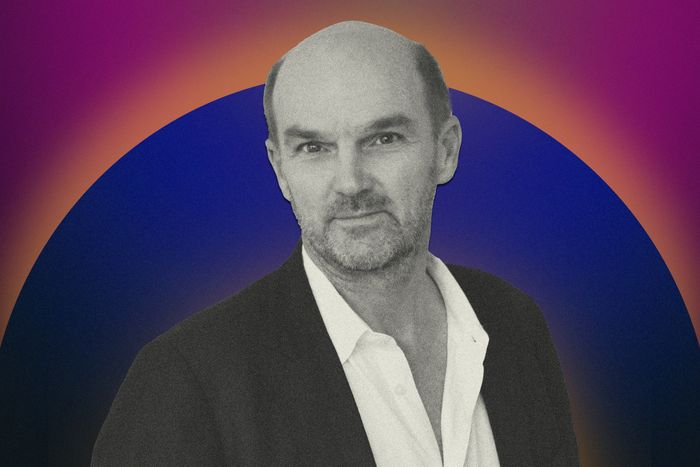
Stephen Lambert is not being cocky when he says he knew The Traitors was going to be a hit before the first episode aired. The veteran British producer behind the Peacock and BBC versions of the series says his 40-plus years of making television simply made him confident the format would, as he puts it, “pop” with audiences on both sides of the Atlantic. “Generally in my career, one knows what’s going to be a hit,” he says.
Reality Masterminds
Our inaugural celebration of the most powerful people in unscripted television.

That confidence probably has something to do with the many hits Lambert has overseen since launching his own production company, Studio Lambert, in 2008. In addition to the two versions of The Traitors, Lambert gave Netflix one of its earliest reality breakouts (The Circle) and one of its biggest unscripted smashes (Squid Game: The Challenge). Before that, Undercover Boss and Wife Swap had long runs in both the U.S. and Britain with localized versions around the globe running for years. In the U.K., his résumé includes popular titles Gogglebox, Race Around the World, and Faking It.
According to Sharon Vuong, the NBC unscripted executive VP who helped bring The Traitors to Peacock, Lambert and his team strike gold so often because they are “very specific about building immersive worlds” in which audiences can get lost — think of The Circle’s social-media-inspired set or the shadowy rotunda inside The Traitors’s turret. Plus, she adds, Lambert remains “granularly involved” when it comes to key details of his productions, particularly casting. “I think he finds it exciting to meet the cast and pick the Traitors himself. He doesn’t want to miss out.”
Studio Lambert’s recent success with event-size unscripted shows has made its services even more in demand among streamers. This year alone, the company has snagged a series order from Prime Video to turn video game Fallout Shelter into a reality competition, won the right to produce Netflix’s upcoming adaptation of Monopoly, and began production on The Mob, a celebrity-packed game of intrigue set up at Hulu. As one of Vulture’s inaugural Reality Masterminds, Lambert looks back on The Traitors’s journey to transcontinental phenomenon and his plans to do it again with The Mob at Hulu.
Let’s talk about the origin story for The Traitors. It was a Dutch format first, but how did it get on your radar? How did that translate to you actually making this show with your team?
We have a very close relationship with All 3 Media International, who are the distributors for our group and control the rights everywhere. They knew the show had potential. It had launched in Holland and had done pretty well. They got in touch with me and said, “We’ve got the show, would you like to look at it and would you be interested in taking the American and British rights?” Around the same time, NBC and the BBC both became aware of the show, and they got in touch and said, “Oh, we hear that you’ve got the rights, because we’ve spoken to All 3 International. We’re very interested in this show.” It was an unusual situation for a seller, because we had buyers who were knocking on our door as opposed to the other way around.
So it never got into any sort of bidding war? It was always thought of as bringing this to the BBC and Peacock?
We could see that the benefit of doing the two versions in the same location would be great. Missions could be shared, and there were all kinds of cost savings. As a result, we’d be able to deliver more to both parties than we would if we were making them as two separate versions.
The biggest challenge was that the BBC said they wanted to do the show, but in Britain, we have all kinds of government-imposed regulations as to how much programming gets made in different parts of the country. They have to make a certain amount of programming in Scotland, so they said, “We want to make this show, but you’ve got to make it out of Scotland,” and we said “Okay … but I thought we were also going to try and make a version at the same in the same place with NBC?” And they said, “Yeah, that sounds good,” and I said, “Well, how are we going to do that because NBC are talking about doing it in an Italian villa?” So we had to persuade NBC that the best place in the world to make this show was midge-infested, freezing-cold Scotland that rains a lot. Which we did, amazingly. And then we all agreed that Alan Cumming would be the perfect host with his Scottish roots. It helped make that Scottish location make real sense for NBC.
Speaking of camp, an executive at NBC told me that going after Alan Cumming was a Studio Lambert idea. Was it yours specifically, or was that someone on your team?
I don’t remember who first suggested him, but we all quickly thought that was a good idea. I think we were worried: Would he do it? He was a very established, successful actor, but he’d never taken a host role in an unscripted show. He was a bit unsure initially, but it then clicked with him and he said, “It’s not me. It’s me playing a role like I do in other acting jobs, this time acting as the lord of this castle running this game.” That made him much more comfortable and gave him a sort of clarity as to what he was doing. He turns out to be extremely good at it. We all secretly hoped he would be able to do it as well as he did, but it was a gamble because he’d never hosted a reality show before.
What was the adaptation process like working for two buyers at the same time from day one? How did you figure out how to take a format that had done gangbusters in the Netherlands and translate it for these two distinct audiences?
We could see that it was a very good format. The fact that we were making the two versions in the same location gave us a much, much bigger budget than the Dutch version. The sense of ambition and scale became possible. We started tweaking a few things. In the first Dutch version, the missions didn’t seem to play into the central narrative of trying to identify the Traitors, so we tried to construct missions that would do that. I’m not sure we got it right the first time, but as the seasons have gone on, we’ve gotten much better at it so that now the missions feel integral. Things happen in the missions that determine who gets banished, the kind of revealing of character in a way that both the original Dutch version and to some extent our original versions didn’t. We also improved the ending. We needed some clever way of bringing the show to a climactic end, so it was this idea that the contestants themselves would decide. If they all voted to not banish, the game would stop.
You ended up taking two very different approaches to casting the Peacock and BBC versions of the show. How did that come about?
We’re very proud of having a reputation for being very good at casting. The BBC were very clear they wanted it to be civilians, people who didn’t have any celebrity profile. They wanted a show where the prize money would matter to people in a big way. Peacock initially took the same view, but then as we got closer to the shoot, there was a sudden wobble and the worry that “Oh, God, how are we ever going to get this show noticed?” It’s a much more competitive marketplace in the States, and Peacock is a much smaller relative platform than BBC One is in the U.K. So Peacock said, “Actually, we think it would be good to have some celebrity cast.”
So we had this slightly odd mixture of some great civilians that we’d found with some celebrities, in the sense that they were people who had acquired fame as a result of being successful on long-running reality shows. When it came to the second season, we leaned into that whole approach. The Peacock version has quite a different sort of celebrity, I would argue, than the BBC celebrities when we decided to do The Celebrity Traitors U.K. By that time, the BBC civilian version had become such a big show. And also, there’s a much bigger tradition in Britain, particularly on the BBC, of really very famous people taking part in, well, they’d call them “unscripted” or “factual” shows. And so you can get people who would be very hard to get in America to take part. In the first season of Celebrity Traitors on the BBC, they were really very famous people.
As the Peacock version became ever more successful, especially after it not only increased its ratings but won the Primetime Emmy for Best Reality Competition two years in a row, everybody started thinking, Well, maybe NBC itself should have a civilian version. It’s a reverse of what we had done on the BBC. I think it makes sense. Going first with civilians in Britain gave us those people who really wanted to win. It made the show very dramatic and enabled us to have this amazing casting for when we did go down the celebrity route. Whereas in America, we probably wouldn’t have built the profile we have if we hadn’t gone down the route of having celebrities. Now that the American show has that profile, it’ll be interesting to have a civilian version. So many successful broadcast shows cast non-celebrities. Why can’t we make this one equally successful?
When did you know Tthe Traitors was a hit in the U.K.?
Generally in my career, one knows what’s going to be a hit. It’s when everybody working on the show is buzzing about it. It’s when the people who are editing the final versions hang around and are actually watching the show and caring about it. It’s when the first press people come back and say, “Oh my God, this is amazing.” It’s rare that you can’t tell whether something is going to pop by the time you get into the final stages of putting the show together. Having said that, sometimes you’re surprised, and sometimes things don’t do quite as well as you expect, but then they usually build if you have that confidence. Word of mouth will bring people in.
Why is casting so key to the success of your shows?
Well, we don’t have a script and we don’t have writers. All the words that come out of the mouths of our cast are their words. If you pick the wrong people, they’re not going to say very interesting words. So many of these shows are about the cast as a group. You find some that you’re very excited about and then you have to work out who goes with that group. You build it piece by piece or like a house of cards. Sometimes there are great people who come along later and they don’t quite fit.
We tend to find people who don’t want to be on television. That doesn’t necessarily apply to Peacock’s version of The Traitors, because they’re all people who have made a success of being on television and want to do more, but as a company in general, we want to find people who don’t want to do the show because they’ll be more interesting than the wannabes who want to be on TV. One of our most successful shows, the biggest home-grown show on Channel 4 in the U.K., is Gogglebox. We’ve never put a casting call out for that. We’ve gone and found people we think would be interesting and persuaded them to take part. It’s what gives that show, and many other shows that we make, a kind of authenticity.
But with the celeb U.K. and U.S. versions — they’re both “celebrities” and yet they feel different from each other. Is it just because one group is reality stars and the others come from so many different kinds of celebrity?
A lot of it’s to do with the fact that the people on the Peacock version are American and the people on the BBC version are British. That partly explains the difference to the extent that there is a difference. I mean, The Traitors is a kind of camp show with this gothic setting, with murders and banishments and treachery, so it encourages people to be larger than life and somewhat extravagant in the way in which they behave. And I think that that possibly comes more naturally to Americans, particularly Americans who’ve achieved fame as a result of being in Housewives shows on Bravo or the competition shows to some extent. Whereas Celia Imrie, a famous British actress — she’s more used to playing in Hamlet rather than in reality shows. A lot of the people in our British celebrity version had never taken part in a reality show. That’s an immediate difference.
Was there anything in the U.S. that made you know that it was breaking out here?
It was the press getting behind it quite quickly. Peacock’s decision to do an early batch release of a few episodes and then weekly, and you started hearing about people having weekly watch parties — that was obviously very encouraging. And again, there was equal buzz among everybody involved in making the U.S. version.
Peacock made two great decisions, one going for Love Island and one going for The Traitors. Having two hits is really good because it means the audience knows you can get some high-quality shows on Peacock. They’ll come and find it. Whereas, if one was on one’s own, it might be harder.
How are you approaching episode length for NBC’s civilian version of The Traitors? On broadcast TV here, an hourlong show has about 42 minutes of content in order to squeeze in 18 minutes or so of ads. But the Peacock and BBC episodes all run for at least an hour, sometimes a bit longer.
We’re thinking about how much you squeeze into a particular episode and whether some stuff can exist over more than one episode. The BBC versions are 60 full minutes, no ad breaks, and often the BBC give us extensions beyond 60 minutes. But with American broadcast networks you might jump to 90 minutes in some cases or have two episodes back-to-back. But your running time in an hour is short — 42 minutes.
Generally, we choose where to end the episodes. It’s not as if it’s a format that always ends at the same point in the narrative. And we’re having to be very thoughtful about that with the 42-minute broadcast version for NBC.
So is it definitely going to be 42 minutes an episode?
We’re still talking to NBC about it. I’m not saying they’re not sympathetic or appreciative of this problem. What I’m saying is that we’re acutely aware, particularly when there’s been so much success with this civilian version in Britain and elsewhere, where the running times of the episodes has been at least 60 minutes.
What do you make of all The Traitors’s copycats? Just par for the course?
Obviously, imitation is the highest form of flattery, but I wouldn’t call them copycats myself because they’re not copies. There obviously comes a time when a particular show becomes something of a paradigm for what people are enjoying and talking about. And when that happens, it has an impact on both people pitching ideas and people buying them. I mean, there definitely was a copycat when we launched Wife Swap on ABC and Fox raced in with Trading Spouses. That was a copycat show. I’m not sure these other ones are quite as clear-cut as that.
Why do you think the show resonates with viewers around the world?
Viewers love the fact that they’re watching people playing a game. They have the pleasure of the dramatic irony of knowing who the Traitors are, and they find it very enjoyable watching the Faithful be so certain and yet often so wrong. That process of observing people construct theories about how the world is with such confidence and then presenting that is intrinsically entertaining. I think the players like it because the Traitors are given license to lie. Often a reality show is designed in such a way that certain characters behave badly and that tends to be perceived as a reflection of their real character. That can leave you, as a viewer, with a slightly bad taste, and it certainly can make the player who ends up being seen that way feel not great about it. Whereas The Traitors is like a game of poker. Nobody says, “Oh, you’ve just been lying.” They say, “Well done. You played brilliantly as a Traitor.”
Netflix decided it wanted to do a Squid Game show, from what I understand, and you’ve said that you were reluctant to pitch a take on this show at first. How were you finally able to figure out the format?
Brandon Riegg at Netflix talked to a handful of companies, and everybody’s reluctance — both ours as producers and his as head of unscripted — was about the fact that this Korean drama had become such an enormous show for Netflix — their biggest show. On the one hand, it invited an unscripted version to be made since it was a scripted show about a game. But on the other hand, screw it up and you could end up damaging their most precious show. That was the tension.
We had to work out, How are you going to make people care about 456 players? We put a lot of energy into the backstory interviews that we would drop in throughout the show. You got to know somewhere between 20 to 25, maybe 30, and then you were interested in their journey. As producers, we kind of accepted the fact that we might be very involved with someone and suddenly they’re gone. And we’ve now got to somehow switch to all the other people that we’re going to make you interested in. I often thought of Band of Brothers, which was such a brilliant scripted show, because people died when you didn’t expect them to die, yet somehow it managed to cope with that and got you interested in other characters. If you can pull off that trick, which is hard, it can feel very fresh.
Can you say anything about the upcoming celebrity edition of Squid Game: The Challenge?
It’ll be very good.
I’ve read that your philosophy at Studio Lambert is “Fewer, bigger, better.” What does that mean in practice?
Tim Harcourt and I are equal partners in the company and realized a few years ago that the buyers in Britain and America had come to the conclusion that they needed big shows. When I first started in television in the ’90s, people were saying, “Oh, the middle is going to disappear; it’s going to be the big and the small” — but it never happened. The middle kind of stayed there. But then in the last few years, it really has started to happen. The middle is disappearing.
These big shows are the shows that get noticed. They are expensive. If you’re a buyer, and you’re buying a show that costs tens of millions of dollars, you’re going to look pretty bad if it’s terrible. The buyers, more than ever, have to worry about not just what is the idea for a show but who’s making it. The people that they’re going to trust with these very expensive, big shows are the people who have got a track record. There aren’t many people in that club, and if you can get into the club, it’s a very good place to be.
That was our philosophy, and it seems to be working. The Circle was the first big show that we made, initially for Channel 4, but then seven seasons for Netflix. That was on a massive scale with an extraordinary number of cameras and complicated technical setup, and clearly it worked. Netflix doesn’t do seven seasons of unscripted shows very often. But more importantly, it gave us a kind of credibility to do a lot of other very big shows.
With Squid Game, that took us not only into something that’s very big but also the idea of making an unscripted version of a very successful scripted show. That has become a very important stem of our development. We see that with Fallout Shelter, which we’re doing with Kilter Films, who make the scripted show, and Bethesda, who designed the original video game, and of course Amazon Prime. We’re hugely excited by that, as well as Squid, and we’re very excited by the fact that we won the commission for Monopoly. That’s not quite the same thing; it’s not a scripted show on a network. But it’s a fantastically well-known and loved game.
Can you talk about The Mob, the show you’re doing for Hulu? The name sort of made me think you’re doing a riff on the game Mafia, which of course has often been seen as an inspiration for The Traitors. Is there a connection there?
The Mob obviously echoes with Mafia, which is a starting point for Traitors, but it’s nothing like Mafia the game. It’s not about trying to work out who’s telling the truth. It’s much more a show about being able to hold power.
Is that for later in 2026?
That will be whenever Hulu in its wisdom decides to release it to the world.
What is the difference between working with the major TV platforms now? You’ve got projects at Netflix, Peacock, ABC, Hulu, Prime, and of course multiple U.K. outlets. How do they compare?
They’re all wonderful. [Laughs.] You know, the biggest difference is the rights position. Netflix and to a large extent Amazon, they take the world. And we’re all companies that historically have hoped that when we made a show, we weren’t making it for the world; we were making it for one specific territory or a few. And then if it turned out to be a hit, we would be able to make versions of that show around the world. That meant that there would be a jackpot if you were lucky enough to have a big hit. You don’t get that with a global streamer who takes the world. What you do get is their big budgets, the fact that they order a lot, and a lot of people watch their shows. And that’s satisfying.
‘ Este Articulo puede contener información publicada por terceros, algunos detalles de este articulo fueron extraídos de la siguiente fuente: www.vulture.com ’