Paste is the place to kick off every New Music Friday. We follow our regular roundups of the best new songs by highlighting the most compelling new records you need to hear. Find the best new albums of the week below.
Dua Saleh: Of Earth & Wires
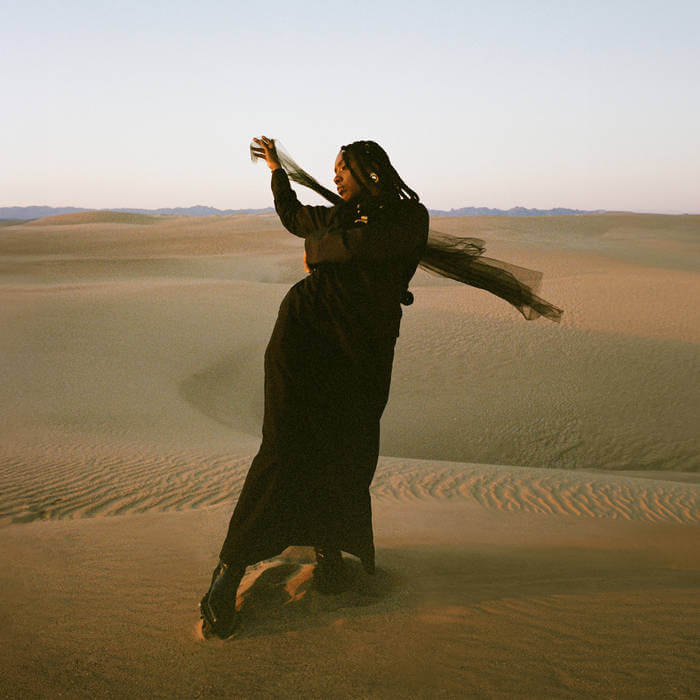 Dua Saleh’s new duets with Bon Iver happened in a Travis Scott session. That’s not a sentence I ever expected to write, but it speaks to Of Earth & Wires’ existence: these songs, which circle ideas of displacement, queer romance, and spirituality, could come alive anytime, anywhere. Saleh wrote these songs after the LA wildfires and Cardiff floods, using her knowledge of drum ‘n’ bass, Sudanese folk, bossa nova, and hip-hop music to make her most dramatic, sublime pop blend yet. “Flood,” “Firestorm,” and “Glow” see Saleh’s falsetto undercutting the chaos. The album is a lesson in contrast: body and mind, tragedy and rebirth, compsure and wildness. Of Earth & Wires is sexy, sophisticated, and sharply grounded. I SHOULD CALL THEM introduced me to Saleh two years ago. Of Earth & Wires confirms that I’ll be seeking out her music for a very long time. —Matt Mitchell [Ghostly International]
Genesis Owusu: REDSTAR WU & THE WORLDWIDE SCOURGE
 Genesis Owusu’s last album, STRUGGLER, was an amalgam of everything that he does best and does brilliantly. It was the type of music someone who thinks of themselves as an outsider would make; it doesn’t fit anywhere, and that’s where the magic comes from. On REDSTAR WU & THE WORLDWIDE SCOURGE, he’s hosting a dance party at the end of the free world. “It’s a jam, man. Just something to have fun and feel good to,” Owusu said in a press release. “In the context of everything I’ve been releasing—the political, the disruptive, the punk—it’s important to remember what all that fighting is for: we’re fighting to be able to live life to the fullest. Live, laugh, love and all that. Fight for your right to party, as some wise men once said.” The music uses rap, funk, and rock and roll to cast a human light over REDSTAR WU’s greatest divisions. As paranoia and capitalism creep into the moshpit, Owusu’s hope gets louder and more righteous. “Pirate Radio,” “Big Dog,” and “Death Cult Zombie” are some of his most urgent songs yet—frustrated and strange upgrades from his previous Samuel Beckett, Franz Kafka, and Kentaro Miura inspirations. I don’t know if Owusu is still under the radar like he was when STRUGGLER came out, but the Aussie just keeps adding more hyphens to his legacy. —Matt Mitchell [Ourness]
Jeff Parker / ETA IVtet: Happy Today
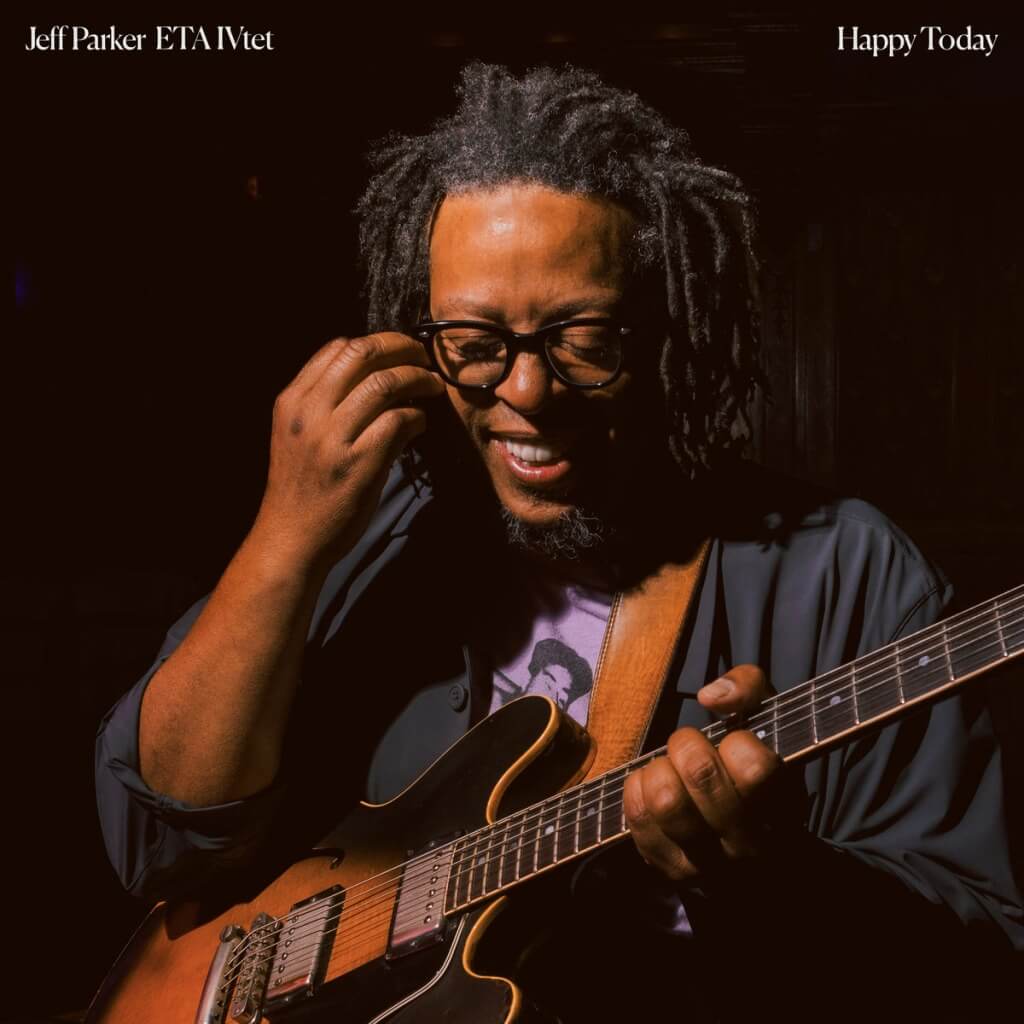 Turn your ears on, and you’ll hear Jeff Parker’s guitar cooing and coiling all around Highland Park. It slithers down bowling alley lanes and soda pop shop aisles. It crawls up the back of Chicken Boy. The notes are sopping with northeastside nightshade. And trailing them are Josh Johnson’s saxophone, Anna Butterss’ bass, and Jay Bellerose’s drum kit. Recorded at the Lodge Room just off Figueroa, “Like Swimwear” is a 20-minute arrangement that emphasizes Parker and the ETA IVtet’s strongest impulses. In the aftermath of Trump’s despotism and the Eaton fire’s citywide displacement, they gathered for a concert last August and performed together in a “statement of joy,” according to Parker, who titled their new album Happy Today in protest of this country’s ongoing dismantlement. Pings of cymbal brush against syncopated brass puffs. The bass vibrates but never overwhelms. Parker’s hand sprints up and down the fretboard, his other plucking curiously. What this music reveals is true harmony—four experts in sync with themselves and each other. —Matt Mitchell [International Anthem]
Kevin Morby: Little Wide Open
 In the case of his eighth and latest album, Little Wide Open, Kevin Morby pens a love letter to his home in the heartland. Here in Kansas City, where both Morby and I live, tornado sirens squeal every springtime and vast skies dominate the horizon line, and the rolling plains encircle the city like a golden-brown halo. Whereas Tom Petty wrote a paean to the great wide open, Morby documents something at once sprawling and intimate. Middle America is vast yet isolating, and that tension animates what Morby dubs the “Little Wide Open.” Here, something as lofty and intangible as Heaven is just another place on Earth. Little Wide Open is the most feature-heavy album in Morby’s discography, but, aside from Lucinda Williams, the album’s guests are more like an ensemble cast, serving the greater force at hand. Similar to how Blood Orange’s Dev Hynes taps high-profile pals for the subtlest of contributions, Morby’s friends sound as if they’re all standing behind him, ushering him down a path toward self-realization. That introspection presents itself in its manifold meditations on time and new beginnings. Morby and his long-term partner, Waxahatchee’s Katie Crutchfield, are expecting their first child in August. Though the news came after he wrote Little Wide Open, Morby’s illustrations of major life changes—a partial move to L.A., the anticipation of marriage—are clear-eyed and linear. He has crafted something eternal, something that encapsulates the Midwest in all its rugged glory. It may just be his true masterpiece. —Grant Sharples [Dead Oceans]
Porches: MASK
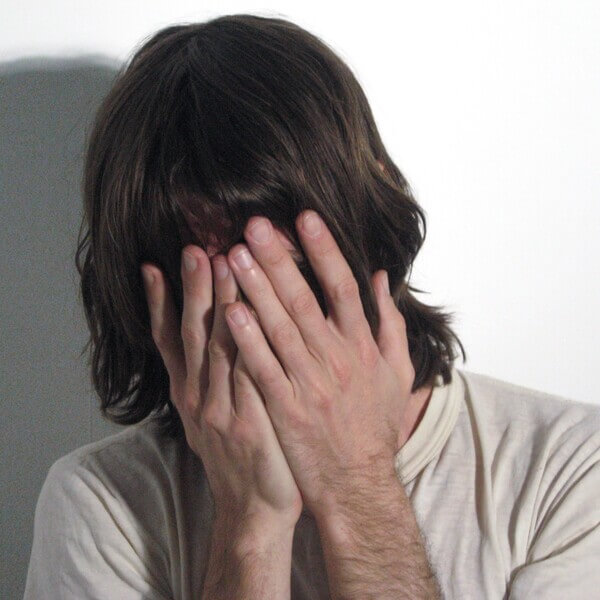 Great news for people who like to be upset: Porches is back. MASK was made on a four-track in Aaron Maine’s basement, and it sounds as homemade as it is. Rough and angry, Maine’s voice curdles and scratches with a wallowing insistence as the album careens through nine short, propulsive tracks. “DO THAT,” a softer piece girded with buzzy acoustics and dissonant harmonies, begins with the gut-puncher of a lyric, “I don’t wanna hurt you, but I will.” On “EVERYONE GOES TO HEAVEN,” a Songs: Ohia-reminiscent dirge for the American dream, violins clash and cry as Maine croaks and warbles with crushing emotion. On “HABIT,” a thrumming guitar and a stomping guitar sketch out a bad hangover, one performed convincingly by Maine’s stony croon. The record is a prime example of Maine’s chameleonic capabilities: now he is thrashing and upset, now he is resigned and stoic, now he is having what sounds like the worst acid trip of anyone’s life ever. Sticky and self-possessed, it’s a gorgeous album, but buyer beware: it’s also one that will make you all too aware of your own half-concealed melancholia. Miranda Wollen [Self-Released]
Rhododendron: Ascent Effort
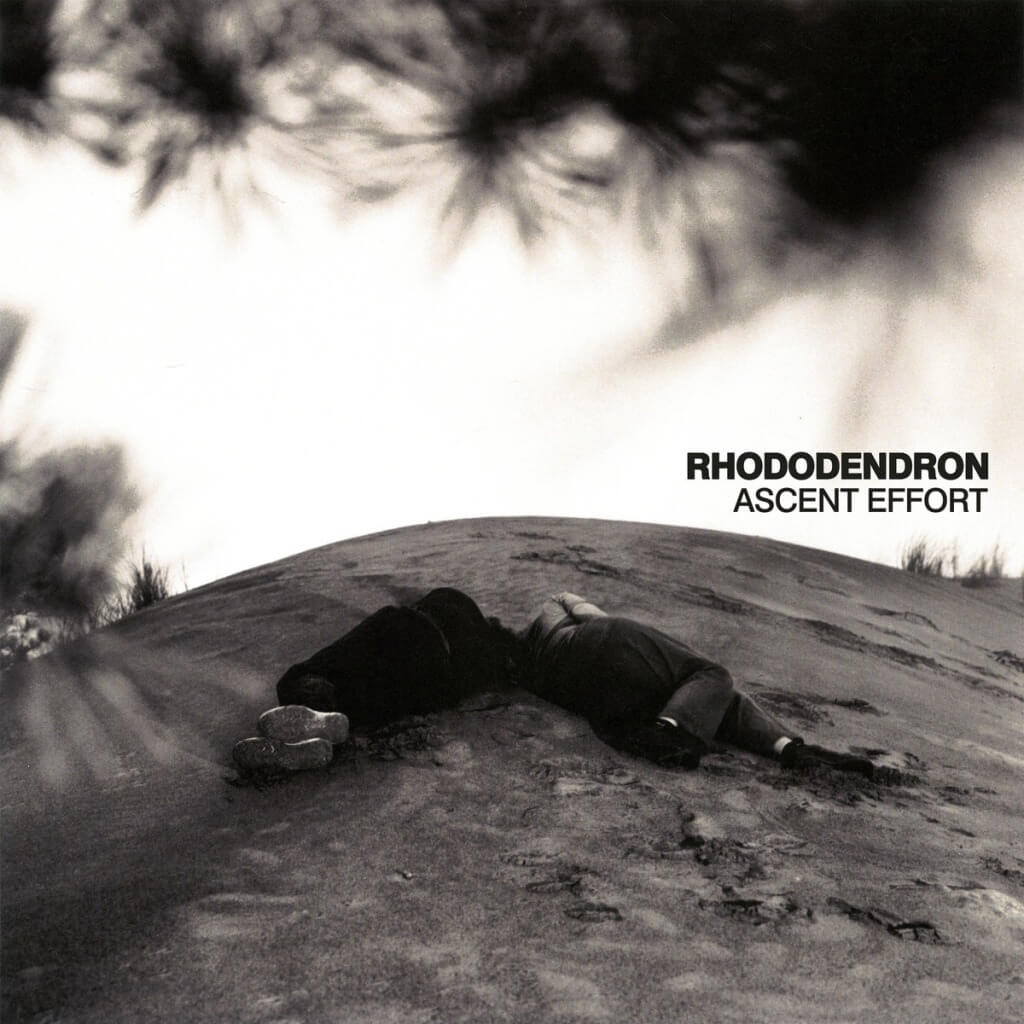 Rhododendron’s second full-length LP might only be five songs, but don’t let that fool you; the runtime clocks in at roughly forty minutes. It’s hard to prescribe the Portland trio a genre—their music lives somewhere in the world of fucked-up proggy darkwave, of mathy and jazzy post-post-hardcore. Opener “Firmament” rides on gritty guitar lines and percussive eruptions, shrinking small before exploding into prolonged catharsis by the track’s end. We don’t get any vocals until “Like Spitting Out Copper,” which alternates between slow, smooth jazz and riotous walls of noise. Both there and on “Stow,” Ezra Chong’s ragged howls could be heard from another galaxy. “Family Photo” is on the sparser side, providing a nice break from the potential monotony of an all-hardcore-all-the-time record; “Within Crippling Light” sprawls across thirteen minutes, showcasing genuine technical mastery in each one. Ascent Effort certainly isn’t a record you would, say, throw on in the car; it’s made for dark rooms, not daylight drives. So flick off that light switch and blast that shit. —Casey Epstein-Gross [The Flenser]
Rostam: American Stories
 With each record, Rostam has grown creatively, synthesizing the elegant string arrangements and kinetic drum patterns that fueled Vampire Weekend’s best stuff, folding in touches of Auto-Tune and Middle Eastern influence while keeping his lyrics as elliptical and hushed as his vocals. This modesty makes sense, given Rostam’s more behind-the-scenes role in Vampire Weekend and collaborating with other musicians. But on American Stories, his third and latest solo project, he attempts to branch out of his comfort zone a little more by mixing the personal with the political, using the images, symbols, and myths of American culture to examine issues of otherness, freedom, and the stories we internalize about ourselves. He demonstrates those themes most effectively through the album’s sonic design, flexing his signature jangly guitar riffs and cascading piano notes while supplanting his usual electronic textures with a warmer Americana folk/country-pop palette. These intimate existential and romantic musings are the strongest elements of American Stories and also incidentally reflect how inconsequential the album’s Americana motif ultimately is. There are subtle allusions to intergenerational differences in faith (“The Road to Death”) and social activism (“Come Apart”), as well as soft critiques of the systemic corruption corroding our country (“The Weight”). —Sam Rosenberg [Matsor]
Shakey Graves: Fondness, Etc.
 Fondness, etc. is said to reflect the new contours of Alejandro Rose-Garcia’s life with his wife and young daughter, who was born in 2024. That means these songs are in many ways about change as Rose-Garcia lets go of the easy, expansive self-absorption of a young artist spending much of his time on the road and takes up the much larger adult responsibility that comes with tending to a marriage and caring for a new life. Shaping those parental realities into something more than general platitudes is the tricky part, and Rose-Garcia only partially succeeds. That’s not such a shock: the Austin singer, songwriter, and guitarist has on his previous albums shown a penchant for embracing conventional wisdom in lyrics with a yard-sale philosophy: they’re true enough, if somewhat pedestrian and a little tattered around the edges. Many of these nine tracks—two of which are instrumentals—lean toward the obvious, but there are flashes of depth when Shakey Graves is thinking about how parenthood reshapes your relationship with time. —Eric R. Danton [Secret Identity]
Smerz: Easy EP
 Smerz’s airy, lo-fi Easy EP is a lesson in restraint: the songs are short, ambient, soft, often sounding more like studio outtakes than numbers meant for release. This lack of intentionality, of plot, creates a cosiness within which the EP resides; interlinked between minute-long tracks made up of mostly background noise and throwaway beats, Henreitte Motzfeldt and Catharina Stoltenberg offer up three smooth, R&B-inspired tunes. “Spring summer” is reminiscent of a toned-down version of The Internet’s early work: synths and a light drumbeat offer most of the instrumentation as a sultry voice drips through the chords. On “Its here,” a buzzing synth is laid under an Auto-Tuned reflection on selfhood, filtering in and out of reality: “Am I slowly fading into something real?” On “The room you described,” a sweet falsetto dialogues with no one; a third of the number is suspended in silence. It’s a disoriented record, nine minutes of questions left unanswered and things left unsaid, but it achieves a remarkable pathos. At their best, Smerz make you want to lean in, see, and hear more. Easy leaves the listener hungry for the group; it’s less a record than a teaser, but if it’s any indication of their next step, I’m sat. —Miranda Wollen [Escho]
Telehealth: Green World Image
 Telehealth is a weird band. This is in large part because they describe themselves not as a band but as a “scalable music startup.” (Their fans, then, are their shareholders.) They’re like a version of Guerilla Toss born on r/Kalshi and raised entirely inside a TikTok FYP: all sparking, bright angles and squiggles arranged in inexplicably danceable formations and covered head-to-toe in both sarcastic odes to neoliberalism and terminally online slang. It’s synthy art-punk for the freaks, weirdos, and venture capitalists—one of these things is not like the others—that begs the eternal question: “Can you be DIY and have good SEO?” Green World Image begins with “[user onboarding sequence],” which is exactly what it sounds like: an all-too-pleasant female voice regurgitating corporate lingo to welcome us into the future of the company that is Telehealth. I’m actually just going to list some song titles now, since I think you get the gist of what the Seattle outfit is doing from pretty much those alone: “Donor Country (A gOoD cAuSe),” “Yassify Me,” “Villain Era,” “Living, Laughing, Loving, Trying.” We live in a thoroughly gross age of working from home, DoorDashing lunch, Amazon-ing groceries, socializing through Instagram, and scrolling, scrolling, scrolling—an age that Green World Image simultaneously reflects, refracts, and resides within. —Casey Epstein-Gross [Sub Pop]
The All-American Rejects: Sandbox
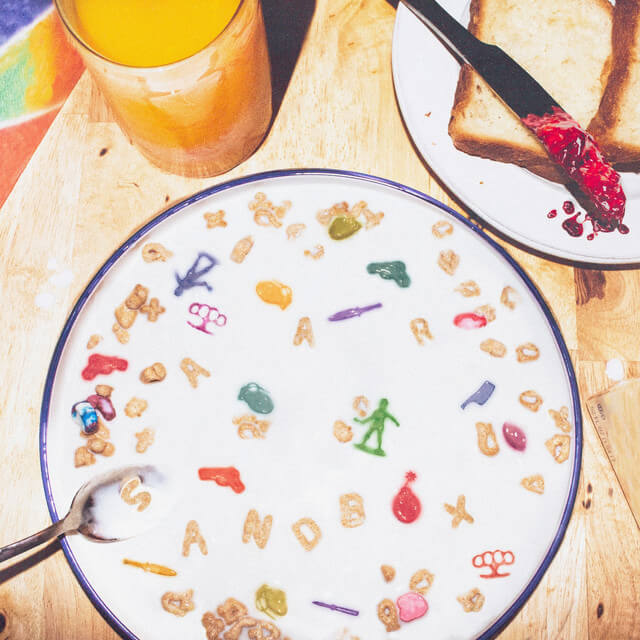 The All-American Rejects have still got it. On Sandbox, the band’s first album in fourteen years, the group remains punky, gritty, and enormously easy to listen to. Returning to the slick garage rock that saw them become staples of the 2000s pop-punk scene, the band’s fifth avenue focuses on hometown blues, restless discontent, and messy relationships. Album opener “Easy Come, Easy Go” is a sticky, jagged guitar piece full of verve and tenacity, with deliciously discontented lyrics like “Spitting on the shoulder that you used to cry on.” “Eggshell Tap Dancer” is wry and bouncy, bursting into a weird, wonderful, melancholic rock opera worthy of its name. Tyson Ritter sounds as pouty and purring as ever as he implores, “Give me just one kiss”; Nick Wheeler’s and Mike Kennerty’s guitars slice and climb with the best of them. Raucous and just the right amount of self-serious, it’s a record that will make you want to put on a pair of dirty black Converse and smoke a covert cigarette in an empty playground. Over the course of listening to this album, my hair parted to the side, and my eyes became mysteriously tight-lined. Viva la tweemo resistance! —Miranda Wollen [Self-Released]
Touch Girl Apple Blossom: Graceful
 Much like their peers in indie rock’s current twee revival, Touch Girl Apple Blossom balance sweetness and edge, nestling their more bitter or sorrowful lyrics in cutesy, homespun arrangements and overlapping power pop harmonies. Having seen their tourmates, Good Flying Birds, play to a moshpit that rivaled the rowdiness of ones I’ve seen at venue-destroying hardcore shows, I’m not surprised that Touch Girl Apple Blossom have inspired similarly raucous crowds. Even in Graceful’s mellower moments, the songs have a spring in their two-step, a pop jauntiness that only punks can muster—even if a bit reluctantly. A song like “Heart-Go” comes alive in its yelps, drumrolls, and kinetic riffs. “Where does the heart go when the heart’s not in it?” Olivia Garner asks at the chorus. The following “Dustin’s Song” flickers between daydreams, regular dreams, and real life (the latter of which, of course, pales in comparison to its counterparts) along wafer-thin cymbal taps and a tangled web of guitar distortion. Drummer Daniel Charles Powell’s light touch lends these songs a nimbleness and buoyancy; rather than grounding these songs, Touch Girl Apple Blossom’s rhythm section (rounded out by bassist Dustin Pilkington) makes them feel weightless. The feathery production only adds to the dreamlike, faded-at-the-edges effect. —Grace Robins-Somerville [K Records]
‘ Este Articulo puede contener información publicada por terceros, algunos detalles de este articulo fueron extraídos de la siguiente fuente: www.pastemagazine.com ’