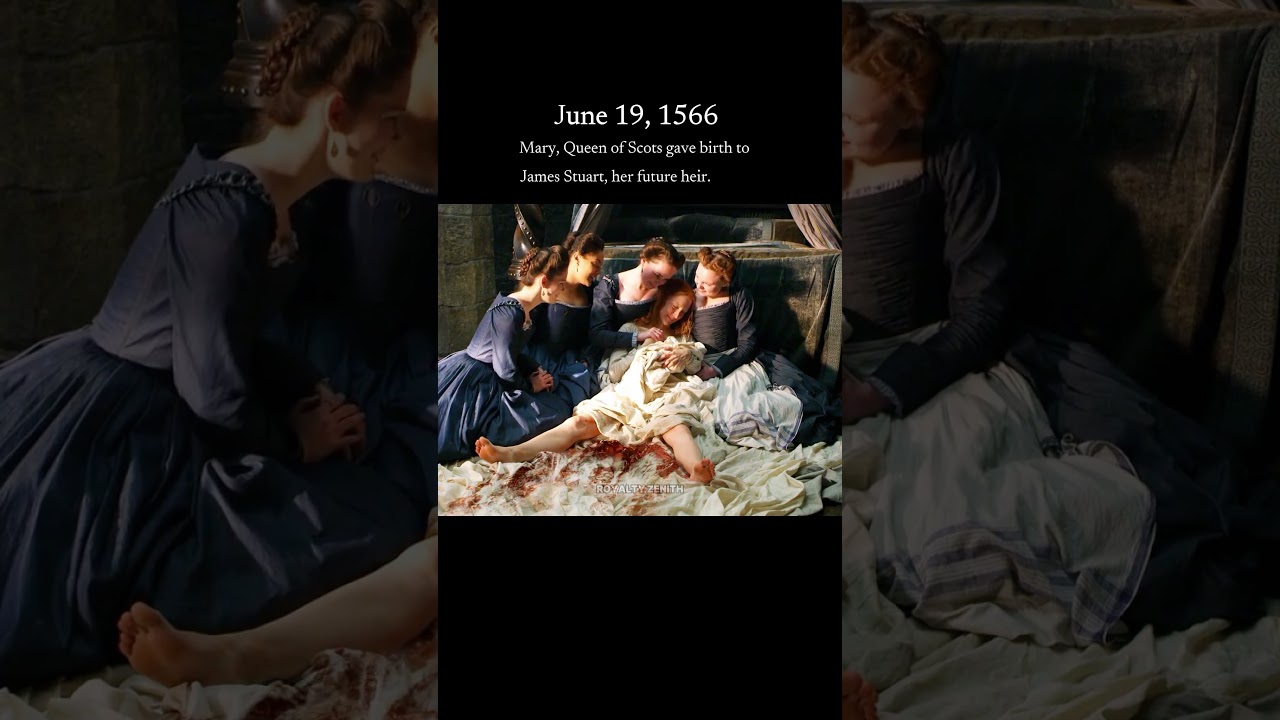
In 1566, James Stuart was born to Mary, Queen of Scots, and her second husband, Lord Darnley. As the only son of the reigning Queen of Scotland, he was immediately heir to the Scottish throne. This birth was a vital event for both Scotland and England, as James also held a strong claim to the English throne through his great-grandmother, Margaret Tudor, the elder sister of Elizabeth I.
In 1567, when James was only thirteen months old, his mother, Mary, was captured and imprisoned. Under intense duress, she was forced to abdicate the Scottish throne in his favor. Consequently, James Stuart was crowned King James VI of Scotland in a Protestant ceremony at Stirling. He became a “cradle king,” with a series of regents ruling on his behalf during his minority. Mary never saw her son again.
Twenty years later, in 1587, James’s mother, Mary, Queen of Scots, was executed. Having fled to England from Scotland in 1568 due to political upheaval, she became a constant threat to the Protestant reign of her cousin, Queen Elizabeth I, as a focus for Catholic plots. After years of imprisonment, she was implicated in the Babington Plot and subsequently condemned and beheaded. Her execution removed a major rival to Elizabeth I and, paradoxically, strengthened the position of her Protestant son, James, as Elizabeth’s presumptive heir.
Finally, in 1603, the Union of the Crowns occurred when King James VI of Scotland ascended the English throne upon the death of Elizabeth I, who had no direct heir. He became King James I of England, ruling both kingdoms simultaneously as the first monarch of the House of Stuart in England. This personal union meant that while the two kingdoms retained separate parliaments and legal systems, they were governed by a single monarch, laying the groundwork for the later political union that would create Great Britain.
Video Source