“I never wanted to work in America or for a Studio,” veteran UK producer Tessa Ross began this morning when prompted on her working relationship with the Hollywood studios during an expansive and illuminating career Q&A session with BFI chief Ben Roberts.
Across her decades-long career, Ross has held commissioning and exec roles at virtually every public funding body, from the now-defunct British Screen to the BBC, Channel 4, and Film4.
More from Deadline
Ross continued to explain that her dedication to the UK industry gave her power when it came to working and negotiating with Studios.
“There is power in knowing that you’re fine where you are, and therefore, not pleasing those studios is quite important,” she said. “From time to time, I’d tell my team that we have to bend over and take it, because deals are never ever in favor of money that isn’t theirs.”
Ross’s experience producing British features with the studios was one of the most interesting notes covered during this morning’s lengthy session, which served as the keynote event of the London Film Festival’s industry forum.
Ross described the studio exes she tussled with over the years as “brilliant people” who simply had different priorities, which can often be difficult to juggle when a project brings together “complicated mixtures of money.” Ross said that her goal was to simply protect her projects and collaborators. She used the example of selling projects to Harvey Weinstein to illustrate her point.
“Harvey Weinstein was still active when I was at Film4,” Ross explained. “We sold two films to Harvey, Carol, and The Iron Lady. And I remember thinking, How do we protect the filmmakers and films from how he works?”
Ross worked at Film4 from 2000. She served as Head of Film4 from 2003 and subsequently took on the role of Controller of Film and Drama in 2008. She left the broadcast in 2014. Under her watch, Film4 developed and financed critical and commercial hits like Steve McQueen’s 12 Years a Slave, Danny Boyle’s Slumdog Millionaire, Kevin Macdonald’s The Last King of Scotland, and Shane Meadows’ This is England.
Ross arrived at the broadcaster during its rebuilding phase, after it was essentially disbanded and restructured after a commercially-focused period that failed to reap rewards.
Ross said her initial job at the company was to make her chief executive “proud of spending and losing 10 million pounds” per year on projects. “What is it that 10 million pounds can do and be consistent and sustainable for the industry?” Ross said she asked herself.
“I had to do two things. I had to go outwards and say, How do I make this the most attractive place for people to come? I had to make people believe we could do it again,” Ross said. “I had to ask myself, how does our money work? What do we believe in? And what’s the minimum I need to please the channel?”
Ross said Channel 4/Film4 was a “really exciting place” at the time, shaped by an attitude of “bravery and boldness” where “things that were different and experimental, at the edges, not the center” were prioritized.
“When you have those words swirling around your head with regard to film, that’s a very exciting place to be, particularly here in the UK,” Ross said. “So I was able to say to the board, I’m going to give you at the very least 10 million pounds worth of things that you’ll be proud to transmit under the brand Film4 on your channel.”
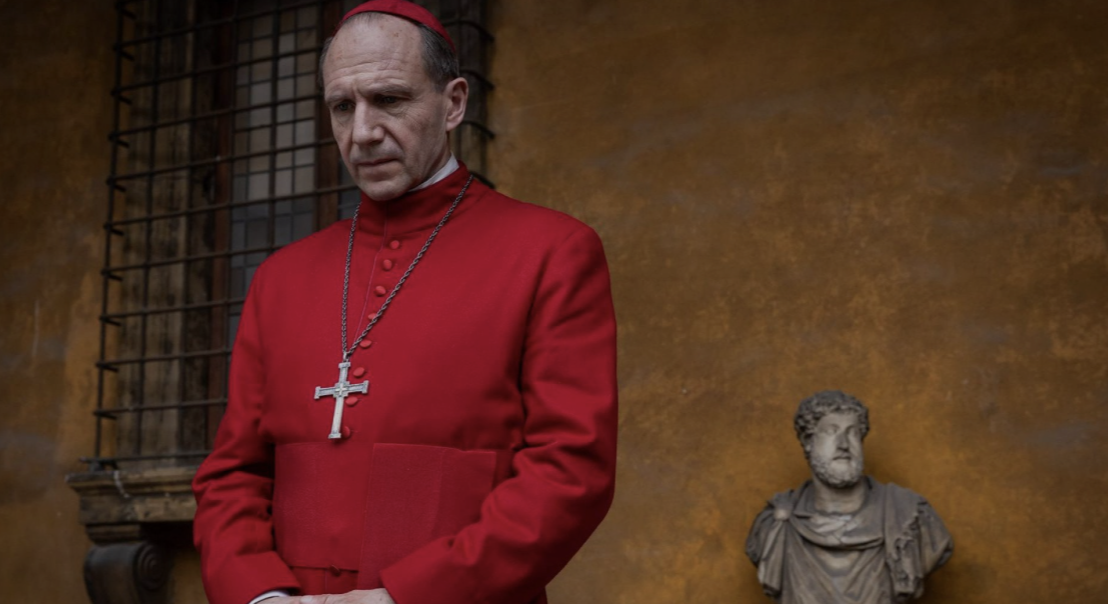
Ross is perhaps now best known as the producer of projects like Conclave, Bird, and The Zone of Interest, through her House Productions label, which she runs alongside former Working Title Television chief Juliette Howell.
Ross said she was unexpectedly forced to make the jump into indie producing with House in 2016 after her tenure as chief executive at the National Theatre in London came to an abrupt end.
“What drove me was my lack of ability to make it work at the National Theater,” Ross said. “The honest truth is, I left Film4, I went to the chief executive of the National Theater, which is a place I love, and I couldn’t find the right structure to make that work for them or me.”
Ross described her exit from the National as “devastating.”
“It wasn’t the right structure at the right time, and I didn’t want to hurt it, and they didn’t want to hurt me, so I left,” Ross said.
Ross added that despite her successes at House, progress on some of the company’s biggest hits, like Conclave, has been slow.
“It’s so important to say, Conclave took eight years and was financed twice. It’s so important to know this., Ross said, adding that she is able to shepherd projects like Conclave over several years because her company is sustainable.
“I needed to be in a place where I could hold on to Conclave because I believed it should happen. That mix of determination, mixed with the ability to stay safe and keep other ideas and people safe, is important.”
Charlotte Regan made Scrapper, which is an amazing first film, and she’s just finishing the edit on her eight-episode series for the BBC. It’s absolutely wonderful,” Ross said. “James Graham is finishing a third season of Sherwood and has also written an adaptation of Ink for Danny Boyle, which is going into production. And Alice Birch is making her first feature as a writer-director.”
LFF runs until Oct 19.
Best of Deadline
Sign up for Deadline’s Newsletter. For the latest news, follow us on Facebook, Twitter, and Instagram.
‘ The preceding article may include information circulated by third parties ’
‘ Some details of this article were extracted from the following source www.yahoo.com ’