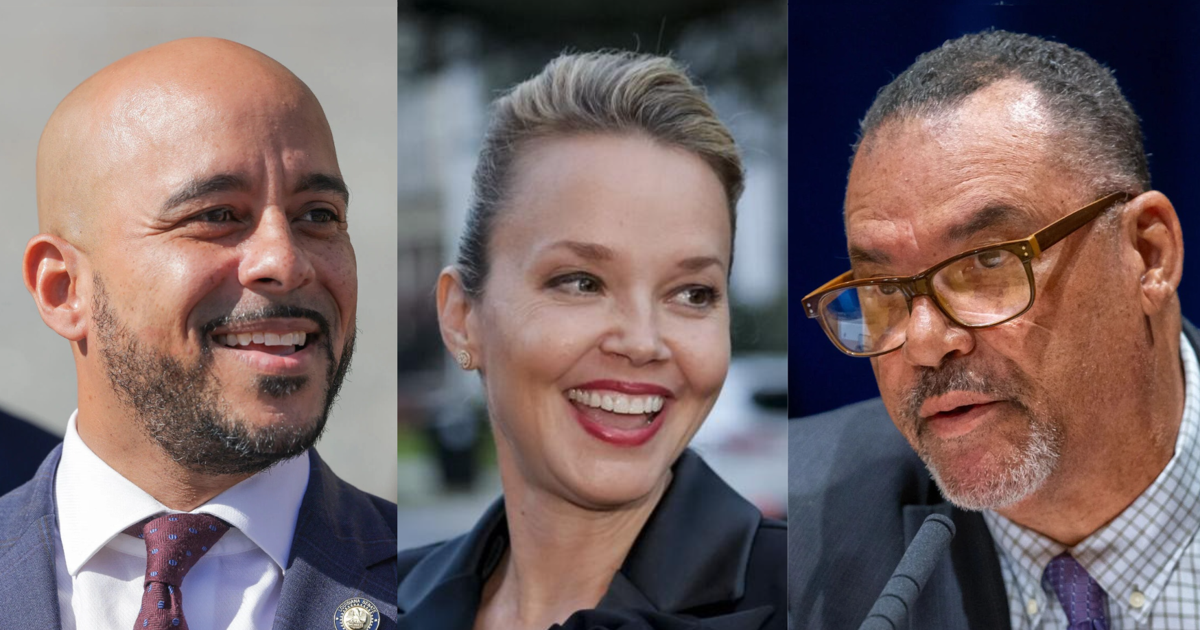
The three frontrunners for New Orleans mayor spoke about their ideas to support and grow the city’s music economy during the “Music Swings Votes” forum Oct. 8, held just three days before residents will cast their votes in the primary for mayor, city council, sheriff and a slate of other important positions.
New Orleans music is fundamental to the city’s identity and to its economy, but many of the city’s musicians and bands have been squeezed by low income, rising costs and lack of opportunities — despite being rolled out in tourism campaigns and advertising for the city. Musicians, artists and culture bearers have been calling for more from City Hall and their elected officials.
“There’s been a lot of conversations and a lot of things talked about in this race, and for one of the first times, we have [the music economy] being something that is a candidate topic,” said MaCCNO Board President Nate Cameron, one of the forum’s three moderators.
New Orleans City Council Vice President Helena Moreno, state Sen. Royce Duplessis and Council Member Oliver Thomas each took individual, 30-minute turns answering questions from the forum’s moderators: Cameron; Tim Kappel, vice president of Louisiana Music Partners, a new advocacy group; and Recording Academy National Trustee Ashley Shabankareh.
The moderators, each with deep resumes in the music community, posed a range of questions, from ways local musicians can earn better wages and access health care to fixing the permitting process and stepping in after Gov. Jeff Landry recently eliminated a sound recording tax incentive. There also were questions about housing affordability, infrastructure and other major problems residents face.
Helena Moreno during a mayoral forum on the New Orleans music industry at the George and Joyce Wein Jazz & Heritage Center
During her time on stage at the George and Joyce Wein Jazz & Heritage Center, Moreno spoke about her plan to build a team within the Office of Economic Development specifically focused on the creative economy. That team would be tasked with finding ways to create economic opportunities around music and arts, including how to grow the business aspects of the local music industry, she said.
When Kappel asked about developing an intellectual property curriculum that can be used in schools, Moreno said it would be beneficial to the city, but she also wants to work with groups like the Roots of Music and other existing organizations to connect musicians with education about protecting their work and building their brand.
Moreno also touted developments during her time on the council, including the creation of the Recreation and Culture Grant Fund, which she wants to see grow from $7 million to $10 million in funding available for cultural organizations and projects. Last year, she also helped pass a guaranteed pay minimum for musicians playing city-funded events, an initiative spearheaded by MaCCNO.
Part of the reason to pass a pay minimum, Moreno said, was to “set the tone for what we wanted to see in the city,” adding the next step would be a “strong marketing piece” from city government about what they expect musicians to be paid by the private sector.
Fixing the city’s permitting process has been a regular topic for virtually all mayoral and city council candidates this election season, and Moreno said she plans to start working to revamp the Office of Safety and Permits within her first 100 days. But, she added, while improvement may be seen quickly, it could take more than a year for the city’s efficiency to catch up to where it should be.
Housing affordability, including steep insurance rates, also has been on top of many voters’ minds this year. Both Moreno and Duplessis talked about turning unused city-owned buildings into affordable housing units, with Moreno pointing to Austin, Texas, as a model.
Moreno also said she wants to continue funding for the city program ensuring a right to counsel for people facing evictions.

Royce Duplessis during a mayoral forum on the New Orleans music industry at the George and Joyce Wein Jazz & Heritage Center
Duplessis has made housing affordability a pillar of his campaign and is aiming to build and preserve 40,000 affordable housing units within 10 years. During Wednesday’s forum, he pointed to the quick success of the city’s new Housing Trust Fund and also spoke about looking for ways to grow funding for the fortified roof program to help bring down insurance rates. There could be more opportunities, too, for housing programs for artists and culture bearers, he said.
Duplessis also noted during his time that access to housing, health care and good transportation are critical issues for working musicians.
A member of the Louisiana Legislature for the past 7 years, Duplessis said he was upset to see Gov. Landry this year veto a bipartisan tax incentive for recordings made in the state. He says New Orleans, in response, could develop its own package of incentives to support the next Cash Money Records and No Limit.
A New Orleans native, Duplessis emphasized the importance of the mayor to be “in tune” with the city’s culture. There’s an opportunity, he said, for the mayor’s office to be a leader and convenor when it comes to promoting the music ecosystem, and that comes with the responsibility of including artists and culture bearers when shaping policies that will impact them.
Shabankareh asked Duplessis how his administration would restructure city funding structures to ensure cultural community could directly benefit from their work. Duplessis said he has worked in the legislature to make sure New Orleans receives its fair share from tax revenue, and that as mayor, he would push harder for increased revenue back to the city.
“Every New Orleanian knows we deserve more as a city in terms of what we generate,” he said.
Duplessis added he also wants to work with organizations and city agencies to make sure musicians are educated on topics like intellectual property and how to earn income from their work.

Oliver Thomas during a mayoral forum on the New Orleans music industry at the George and Joyce Wein Jazz & Heritage Center
During his campaign, Thomas has often boasted that he has served as king of two social aid and pleasure clubs, and during Wednesday’s forum, the council member spoke about the importance of art and music to New Orleans life. Now, he said, it’s important to start educating people on the business aspects of musicmaking.
Thomas said he wants to work with educators and schools to build more lessons on New Orleans cultural traditions. He hopes teaching cultural lessons early will help young musicians and artists develop an understanding of the value of their craft.
Thomas said he would like to bring more outside attention to parts of the city beyond the French Quarter, particularly parts of the 9th Ward and Uptown that have always had live music venues.
Thomas also said he wants to turn to more local experts when trying to develop new policies and solve problems. He said the city should take a “21st century lens” to lessons in New Orleans’ history, particularly the mid-’90s and early-2000s, which is when he served his first stint on the council.
Kappel posed a question about developing a city office focused on music similar to Film New Orleans, which works to bring film productions to the city and liaison with crews for things like permits and city services. Thomas said there is an opportunity with a similar music-focused office, but New Orleans needs to develop the “thought leadership” around talking about music as a sustainable economic industry.
“That has never been how local people, how the tourism industry and even leaders in business — they’ve always looked at our culture and our entertainment as something extra,” Thomas said. “And now many of the people who are gifted don’t want to be ‘extra,’ they want to be part of. I think we need to revisit how to look at it and what is that relationship like from a public and policy side but also a business side.”
Both Thomas and Kappel agreed that having public conversations about how policy impacts music and culture was a step in the right direction.
“I think you’re right,” Kappel said. “I think the people in this room have the right mindset and are looking for the next leader of this city to lead in that.”
“I think this is the first time in my lifetime — as someone who’s from it, whose family’s from it — that I’ve seen more people talk about how we benefit from it,” Thomas said.
Watch a recording of the full forum here.
Polls are open 7 a.m. to 8 p.m. Saturday, Oct. 11. Find your polling location and a sample ballot at geauxvote.com.
New Orleans culture deserves more from the next mayor
Candidates for New Orleans mayor talk about their cultural policies.
‘ The preceding article may include information circulated by third parties ’
‘ Some details of this article were extracted from the following source www.nola.com ’