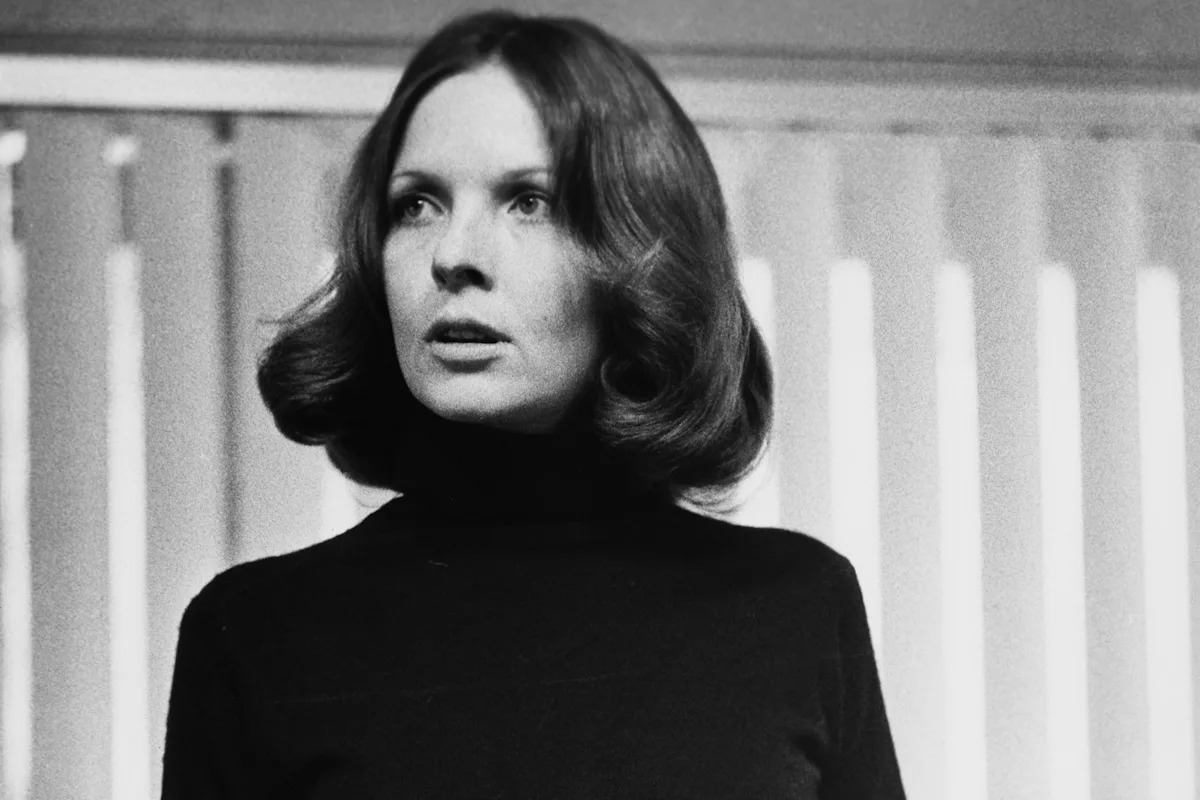
When we think of American cinema in the 1970s — that heralded period known as the New Hollywood, when studios were taking risks and adventurous young filmmakers were breaking all the rules — different actors spring to mind as emblems of the era. Jack Nicholson. Al Pacino. Gene Hackman. Warren Beatty.
One name that may be less obvious but should be on that list: Diane Keaton. Later in her career, the beloved Oscar winner, who died Saturday at the age of 79, delighted audiences in comedy hits like Baby Boom, Father of the Bride, and Something’s Gotta Give. But the essence of her greatness — and the breadth of her talent — is all there in the incredible films she made in the Seventies, even when her character wasn’t the primary focus.
More from Rolling Stone
Born in Los Angeles in 1946 and interested in acting from a young age, Keaton got her start onstage in the late 1960s before making the leap to the big screen, her confidence shaky. Nonetheless, her first major film role remains one of her most important: 1972’s The Godfather, which, outside of Citizen Kane, is arguably the most American of movie classics. History remembers it as the epic tale of the Corleone family — the aging don, Vito (Marlon Brando), and his prodigal son, Michael (Pacino) — but the depth of that film’s tragedy can be felt most acutely through Keaton’s Kay, who only slowly begins to understand how power will warp her boyfriend Micheal, the man who will become king.
“I didn’t experience The Godfather. Not once. It was too overwhelming to me,” Keaton would admit more than 30 years later about the making of that masterpiece. “I was so scared. I was just 23 and I was an unself-possessed 23.”
You can sense some of that anxiety in her performance. But it only adds to the heartbreak of Kay, an innocent who wants to believe the best in people and who is thrust into a world that will disabuse her of that sunny notion. When she and Michael reunite after his exile in Italy, she insists that, unlike his mobster clan, senators and presidents don’t have people killed. Of course, that’s a naive thing to say, but it’s also the mindset of an America that doesn’t want to confront its own heart of darkness — a mindset that was swept away by Watergate and the Vietnam War. Appropriately, it is Kay’s pained face that is The Godfather’s final image: As Michael assumes power, the door swiftly closes on the brief glimpse she’s been given of her future. She is permanently left on the outside, her fate sealed as much as his. For all the film’s deserved acclaim and operatic grandeur, Keaton gave the saga its moral conscience — she represented the decency that was being snuffed out of American life.
The deftness of her dramatic performance — its shades of righteous indignation and shattered idealism — was equally on display in the film’s even more despairing sequel, but soon audiences would embrace her as a fleet comedian. Reprising her stage role as Woody Allen’s pined-for love in the film adaptation of Play It Again, Sam, she began a series of collaborations with the writer-director that helped to define screen comedy in the 1970s. Able to portray futuristic socialites and Napoleonic-era intellectuals, Keaton radiated a joyful spirt of play that made her the ideal doubles partner for Allen — her joie de vivre a perfect balance to his characters’ world-weary quipping.
But just as Kay grows warier as she becomes more ensnared in the Corleones’ web, Keaton soon began depicting more complex characters in Allen’s work. His maturation as a filmmaker from the early comedies to richer explorations of modern love are as much a validation of her enormous ability to depict layered urbanites who weren’t simply love interests. Annie Hall, from 1977, is unthinkable without Keaton, in large part because Allen based the character around her backstory. (Keaton’s last name at birth was Hall.)
If Annie Hall is the bittersweet tale of a neurotic comic (Allen) who grows up a little, it’s also the chronicling of an unconfident aspiring singer who finally develops enough assertiveness to realize she wants more out of life than being his girlfriend. Keaton’s turn as Annie — self-effacing, effortlessly lovely, endearingly ditzy in the non-derogatory use of that adjective — remains wonderful, despite all the terrible “manic pixie dream girl” rom-coms it inspired. None of those characters that followed had a fraction of the life force that Keaton brought to Annie — none of them had her fashion sense, cutting comedic timing, or beguilingly free-spirited smile. None of them became a symbol of the female liberation that was swirling in the culture at the time. It’s easy to overlook or underrate the performance, dismissing Annie as merely “charming.” Hell, lots of people are charming. Annie Hall was the kind of person who changes your life forever, and for the better. The role changed Keaton’s life, too, winning her the Best Actress Oscar.
Remarkably, that was only the first of four indelible performances she gave in the span of about three years. Keaton may have become America’s Sweetheart thanks to Annie Hall, but just a few months later, she was pursuing the darker side of the battle of the sexes with Looking for Mr. Goodbar, about Theresa, a seemingly ordinary schoolteacher who wants to break out of her rut, finding sex, danger, and death along the way. Theresa is easy not to notice in everyday life, and Keaton tapped into that ordinariness, along with the wanderlust that gripped so many discontented antiheroes of the 1970s. But Looking for Mr. Goodbar illustrated how such youthful restlessness was far more treacherous for a woman. Keaton believably captured Theresa’s inner journey, exploding the “good girl gone bad” clichés in the process.
Her performance as the repressed, enraged eldest sister in Allen’s Bergman-esque 1978 drama Interiors is equally underappreciated, Keaton stripping away her lightness to play someone so brittle she might break if you touch her. But her next great achievement was her turn as Mary, the dissatisfied writer trapped in an unhappy affair with a married man in Allen’s Manhattan. Neither bubbly like Annie nor morose like Interiors’ Renata, Mary was a funny, sad, ambitious New Yorker whose intellect and beauty had gotten her exactly nowhere. Hitting theaters at the tail end of the 1970s, Manhattan feels like a eulogy for that decade’s thwarted promise, with Keaton capturing the dashed dreams of many women hoping to find a life beyond the stifling strictures of a white picket fence, a dull husband, and a couple fat kids.
Throughout the 1970s, as much as Nicholson’s rebels or Beatty’s hopeless romantics, Keaton’s optimistic dreamers repeatedly collided with the realities of the times, measuring the distance between what the counterculture thought was possible and what the world would actually allow. Her acting approach was always simple, direct, almost innocent — it was as if she wanted nothing separating herself from the character, and nothing separating the character from the audience. She played women who got their hearts broken a lot, and it always felt that we were watching Keaton get her heart broken up there on the screen, too. One is reminded of the somewhat condescending comment Kris Kristofferson allegedly made after Joni Mitchell played him her emotionally devastating Blue: “Oh, Joni. Save something for yourself.” Keaton was similar as a performer: She made you feel what her characters felt, without guardrails.
Every great film she made after the 1970s followed from there: Her turn as feminist author Louise Bryant in Reds, in which she and Beatty played lovers galvanized by a common cause. The shy Lenny in the 1986 dark comedy Crimes of the Heart. The career woman who becomes an unlikely mom in Baby Boom. Her team-up with Steve Martin in the remake of Father of the Bride. Her Oscar-nominated role in Something’s Gotta Give, where her aging-playwright character Erica has to face the prospect of letting Nicholson’s playboy into her life in a meaningful way. The Book Club films that allowed audiences one last chance to savor this delightful movie star kicking back and letting her charisma carry a picture.
Each of these roles — and several others — catered to the warmth and wit of an actress who helped eradicate regressive notions of what a Hollywood funnywoman could do. Quirky but nobody’s fool — lovable but made of steel — Keaton possessed such an unassuming air that she was never fully celebrated for her artistry. Starring in a lot of comedies can do that to you — so can playing women who, on paper, just seem like “the girlfriend.” Anybody who studied Keaton, or who watched how her underestimated characters regularly surprised those around them, knows better. She was a force and a revelation while making it seem like she was always just your funny buddy with the big laugh and cool style.
In 1977, Rolling Stone profiled Keaton as her star was ascendant. Those in her inner circle, including her mother, thought she was destined to be the next Katharine Hepburn. “That is exactly what’s happening to her,” Allen said in the piece. “I’ve always thought she was born to be a movie star. She’s got a real American quality.”
A compliment, for sure. Like Keaton, Hepburn oozed effervescence, supremely skilled at both comedy and drama. But now that Keaton is gone, it’s striking how inaccurate the comparison feels. Keaton adored Hepburn, but she didn’t imitate her hero. She was her own creation, the insecurity of her early career fueling a body of work that never strained for significance and was uniformly approachable, often brilliant, always lit up from within. There was never another Katharine Hepburn. And there will never be another Diane Keaton.
Best of Rolling Stone
Sign up for RollingStone’s Newsletter. For the latest news, follow us on Facebook, Twitter, and Instagram.
‘ The preceding article may include information circulated by third parties ’
‘ Some details of this article were extracted from the following source www.yahoo.com ’