BARTOW COUNTY, Ga. – “Wofford’s Blood” is a novel about the Wofford family, a Cherokee family living in north Georgia in the early 1800s.
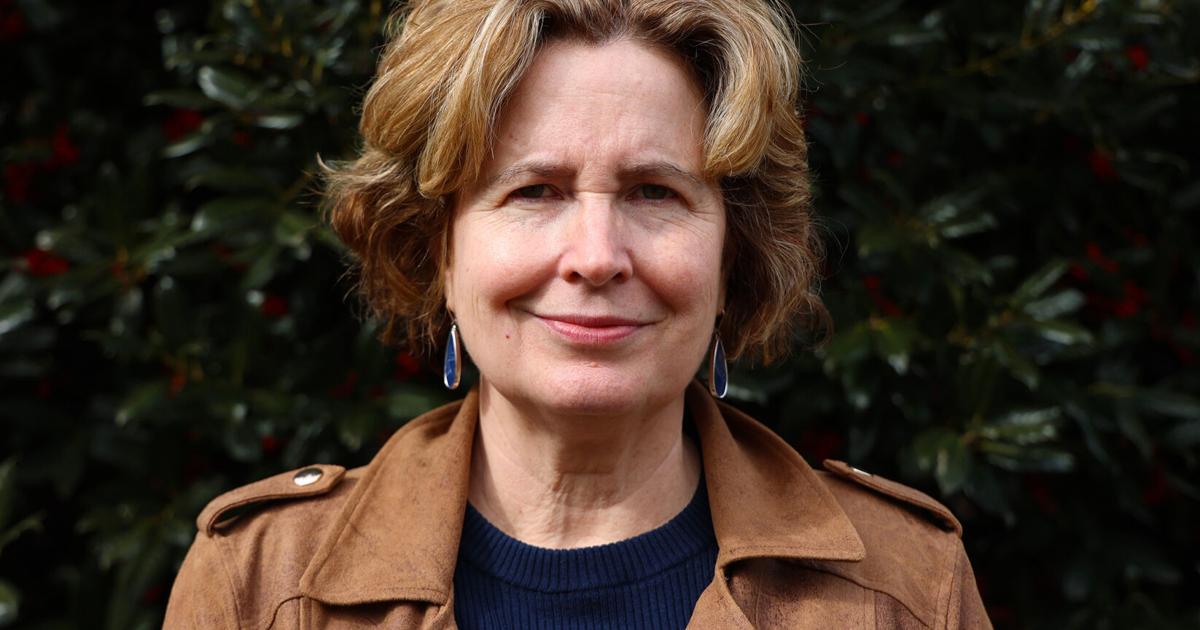
Written by Donna Coffey Little, the story focuses on James Daughtery Wofford. Also known as J.D. Wofford, who is likely most known in Cherokee history as an assistant to Tsuwaluka, a detachment leader on the Trail of Tears.
“Wofford’s Blood” is a novel by Donna Coffey Little about the Wofford family, a Cherokee family living in north Georgia in the early 1800s.
“I live in what is now Bartow County, Georgia, right down the street from a little town that used to be called Wofford’s Crossroads, Georgia,” Coffey said. “And I always wondered who these Woffords were, and when I started digging into it I realized that the Woffords were an inter-married white and Cherokee family. Some of them, including J.D. Woffard, went on the Trail (of Tears) to Oklahoma. A few of them stayed here although later a lot of their children and grandchildren also ended up going out to Oklahoma, but it is really the story of this place and the people who lived here.”
Coffey added she had a lot of surprises while putting together the book.
“One of the things that surprised me the most is that I’ve tracked down a lot of the (Wofford) descendants, some Cherokee descendants, also some African American descendants. There are actually some Cherokee Freedmen who are Woffords,” she said. “There are a lot of Cherokee Woffords, but one of the things that surprised me the most was I tracked down some descendants of a few of the family members who had stayed here and they had still been in touch with their cousins out in Oklahoma as recently as their grandparents’ generation. That surprised me because I would have thought there would have been no contact.
“And then another thing that surprised me is among the African American Woffords, Toni Morrison (noted American novelist), was actually born Chloe Wofford and her father George Wofford was an enslaved person owned by a branch of the same Wofford family.”
While researching the book, Coffey also learned J.D. Wofford was one of the main sources of information for Smithsonian ethnologist James Mooney’s book “Cherokee History, Myths and Sacred Formulas,” which is still read and used today by Cherokee people to study their culture and history.
“Yeah, J.D. Wofford was actually Mooney’s main informant. You can just look in the (book) index, but also if you go on Project Gutenberg and find the learning book, the electronic version, and search there are a couple 100 references to things that J.D. Wofford told him,” she explained. “One of my big questions, too, is how did J.D. Wofford become the sort of repository of all of this information? So, then I was just kind of like a detective trying to reconstruct his life, and there are a lot of historical clues, but he’s been kind of forgotten. So, I think that was one of my purposes, too, was to bring him back into people’s memory.”
Coffey said “Wofford’s Blood” is going to be a series.
“So, I’m actually working now on book two, and if I live long enough, there’s going to be probably four or five, because I meant to get J.D. on the Trail of Tears in book one. But at the end of book one he’s only 13 years old. I really want to understand who he was and how he became who he was,” she said. “Book two is about the 1820s and 1830s, so basically his role in building the Cherokee Nation and then resisting removal and then ultimately going on the trail.”
Coffey said she wants to visit Oklahoma to meet some of the Cherokee descendants of J.D. Wofford that she has corresponded with but hasn’t met in person.
She added another purpose for writing the book was to restore Cherokee history in Georgia, which she believes has been largely erased from the state. A majority of Cherokee removed, about 8,000-9,000 people, were moved from Georgia in 1838.
“In recent decades, there’s been a little bit of effort to restore that (history) but not enough, in my opinion. And so, part of my purpose in writing the book is to kind of restore that memory, both for the people who live here in north Georgia and what was the Cherokee Nation, and then for Cherokee folks to know more about what it was like for their ancestors who were here in north Georgia before the removal,” she said. “I mean, this really was the heart of things. Other than the New Echota (State Historic Site), and a few other places, it’s just completely erased here.
“What I’ve seen with my book is that there are a lot of people in north Georgia who are very hungry, actually, to know this history. So, I mean, hopefully we can begin to restore that a little bit.”
The book can be purchased at Amazon or directly from Mercer University in Macon, Georgia.
‘ The preceding article may include information circulated by third parties ’
‘ Some details of this article were extracted from the following source www.cherokeephoenix.org ’