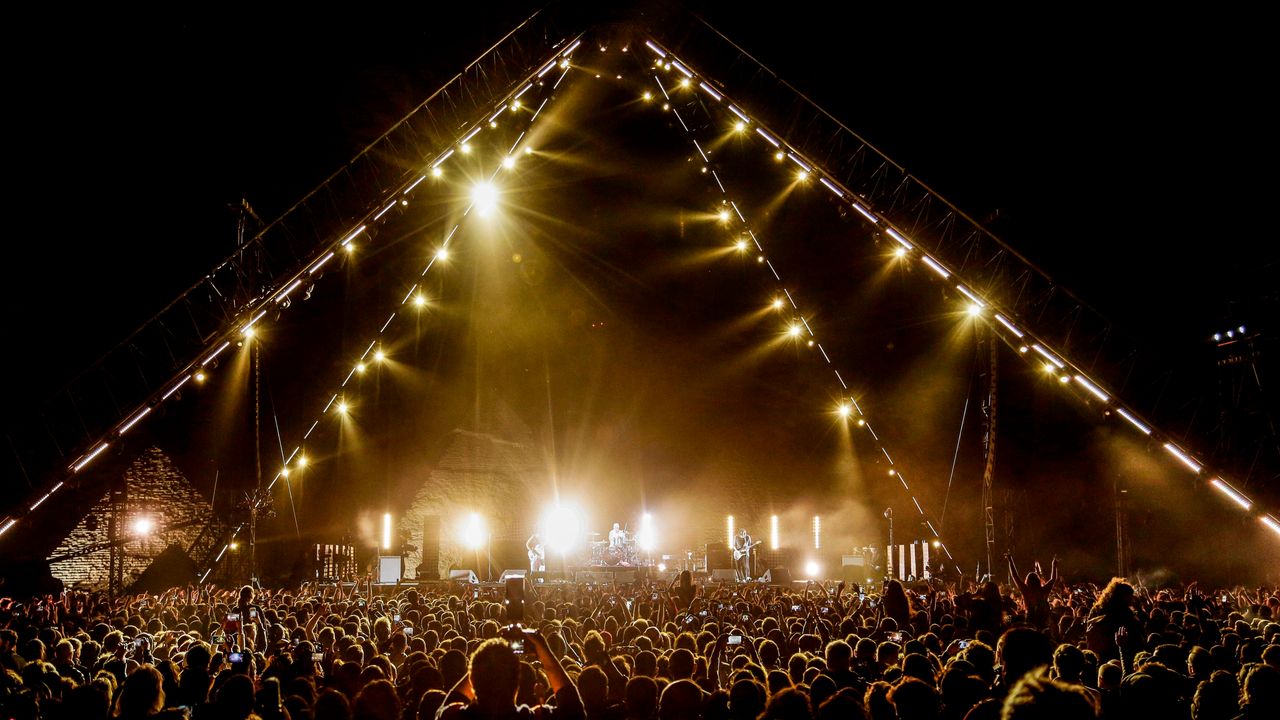
Back in 2016, Egypt’s Supreme Council of Antiquities introduced clear rules for events held at museums and archaeological sites: organisers must not alter or obscure the structure, cause any harm through installation or sound or leave traces behind once an event ends. The new lawsuit claims these measures are being ignored.
The science behind the complaint
Low-frequency bass from large sound systems can cause vibrations that travel through the ground. Over time, these can loosen stone blocks, widen cracks and weaken mortar joints (particularly in older or already weathered structures). Engineering standards such as the UK’s BS 7385-2 and Germany’s DIN 4150 set limits for vibration near heritage buildings, but these thresholds must be tailored to each site’s condition and type of stone. Studies in sandstone sites like Petra have shown that repeated human activity, including concerts, can speed up surface erosion. Without monitoring, even small vibrations can have long-term effects on fragile rock.
Lighting displays can also cause harm when they are too intense or too close to the surface. According to the International Commission on Illumination (CIE), strong beams can alter colour, heat surfaces unevenly and erode decorative features. Responsible heritage lighting keeps intensity low, limits exposure time and avoids wavelengths that can damage stone or pigments.
How much harm can sound and light really do?
The Pyramids have endured earthquakes, shifting desert sands and thousands of years of weathering, so how much damage can a few nights of amplified sound or laser light truly cause? Structurally, the limestone blocks are massive, weighing several tonnes each, which makes them far less vulnerable to immediate vibration damage than more delicate sites carved directly from rock. However, conservation engineers note that even monumental structures are not immune to cumulative stress.
Light, meanwhile, poses a subtler risk. While brief illumination during events is unlikely to harm the pyramids’ limestone surfaces, prolonged exposure to high-intensity lasers can cause thermal stress and surface microfractures, especially if the beams are concentrated on a single point.
Compared to the centuries of natural wear the pyramids have already survived, the impact of a few events may seem minimal, but experts argue that heritage protection is rarely about single incidents; it’s about accumulation.
‘ The preceding article may include information circulated by third parties ’
‘ Some details of this article were extracted from the following source www.cntravellerme.com ’