Ask ChatGPT to name the most important contemporary American film directors – that’s a great question, it enthuses – and the results probably don’t veer very far from what most casually knowledgeable filmgoers might give.
Paul Thomas Anderson. Check.
Quentin Tarantino. Check.
Ryan Coogler. Check.
Jordan Peele. Check
Greta Gerwig. Check
Christopher Nolan. Check.
‘BLUE MOON’ REVIEW: Ethan Hawke delivers his best performance in Richard Linklater’s evocation of ’40s-era Broadway.
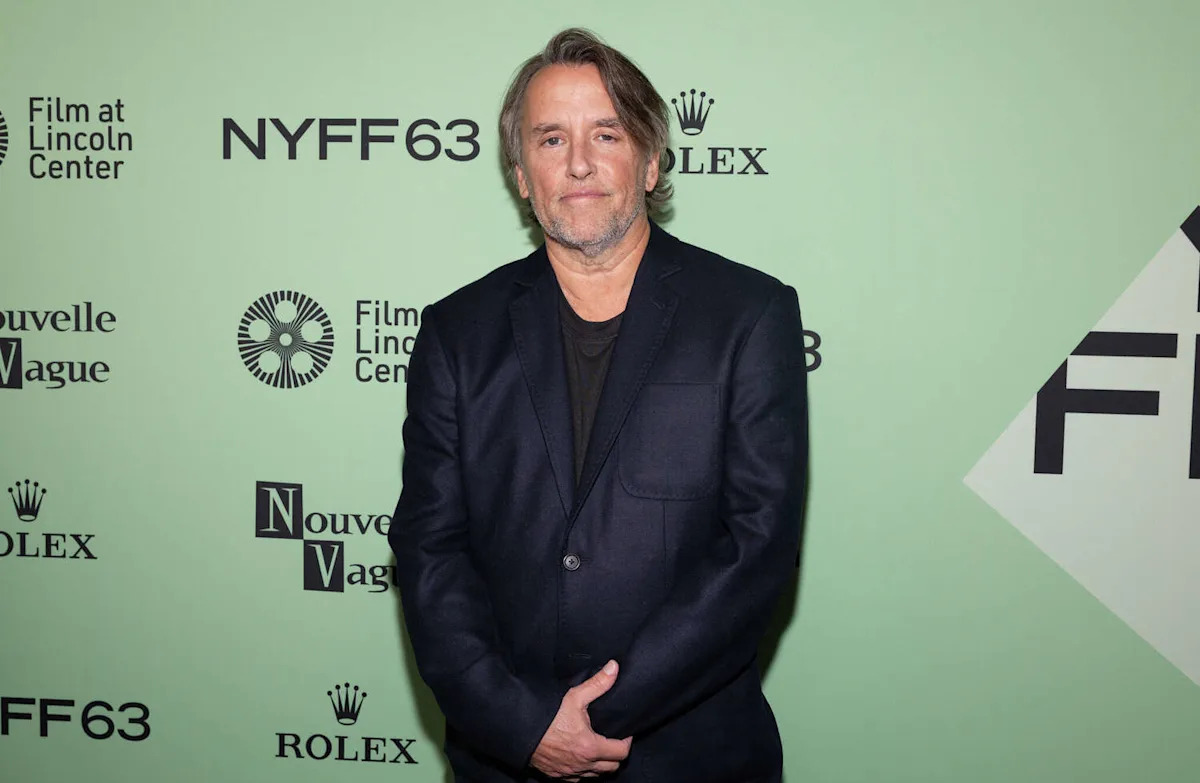
Nowhere on the list of 20 people, divided into such categories as “Critically Acclaimed & Artistically Influential,” “Innovators & Emerging Voices,” and “Honorable Mentions,” appears the name of Houston-born/Austin-based filmmaker Richard Linklater, even though two of his Texas contemporaries – Terrence Malick and fellow Houstonian Wes Anderson – make the cut.
And that’s too bad, but not totally surprising as Linklater, 65, tends to fly quietly under the pop-culture radar. He has never made a budget-busting superhero movie and you could produce several Linklater films for the cost of one Nolan project. His biggest commercial success remains the $35 million “School of Rock” from 2003.
He works diligently and always seems to have several projects in the works. Still, most moviegoers probably wouldn’t recognize him if they bumped into him over the avocados at H-E-B.
To top it off, Linklater, who has won a Golden Globe and a couple of BAFTAs, has never taken home an Oscar though he has been nominated five times in the director and screenplay categories.
Yet, over the last 35 years, he has consistently turned out some of the most warmly human and broadly relatable films of any major director, whether he’s working in drama or comedy. From the last-day-of-school, all right-all right-all right shenanigans of “Dazed and Confused” (1993) to the nostalgic glow of ’60s-era Houston pre-pubescence in the animated “Apollo 10 1/2: A Space-Age Childhood” (2022), Linklater’s films almost always are populated by recognizable, three-dimensional people who don’t feel like mere plot points or focus-grouped marketing strategies.
This is especially true of his “Before” series of films – the trilogy of “Before Sunrise” (1995), “Before Sunset” (2004), and “Before Midnight” (2013) – in which Ethan Hawke and Julie Delpy portray a couple who meet on a Vienna-bound train and end up intertwined in each other’s lives over the next two decades. Watching these films, beautifully etched masterworks of dialogue and drama that were released at nine-year intervals, evokes the same feeling as catching up with old friends.
The same is true for “Boyhood,” Linklater’s 2014 coming-of-age tale filmed with the same cast over the course of 12 years, in which a family’s daily triumphs and tragedies become as palpable as our own.
Then, of course, there are the more light-hearted but true Texas tales that he has brought to the screen, such as “Bernie” (2011), taken from the case of Bernie Tiede who was convicted of murdering an 81-year-old widow, and “Hit Man” (2023), based on the life of a Houston university professor who had a side hustle as a supposed hit man working undercover for the police department (though, unfortunately, the setting in the film was moved to New Orleans).
‘NOUVELLE VAGUE’ REVIEW: Richard Linklater takes viewers back in time to France in the ’50s.
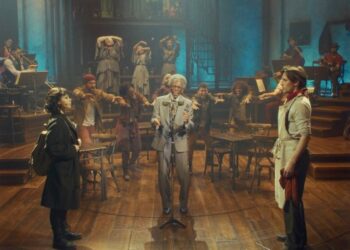
And, now, Linklater’s humanity is on full display currently in two films, both period-piece biopics of a sort. “Blue Moon” (in theaters), a night-in-the-life of troubled, 1940s-era Broadway songwriter Lorenz Hart (of Rodgers and Hart fame), stars Hawke in what turns out to be his best role as a man fearing the future while desperately trying to cling to a rapidly receding past.
Then there’s the more slyly comedic, French-language “Nouvelle Vague” (in theaters and begins streaming on Netflix Nov. 7), a black-and-white recreation of 1950s Paris as a stylish dreamworld that gave birth to director Jean-Luc Godard’s groundbreaking film, “Breathless,” and the entire French New Wave.
These films don’t come equipped with a large, built-in audience. In fact, they seem to be aimed at an adult market that, if current box-office is any guide, may be fading into history. (Just take a look at the relative failure of Paul Thomas Anderson’s heavily hyped and critically adored “One Battle After Another” as proof.)
But that’s not stopping the always busy Linklater who works on a smaller scale and, according to IMDB.com, has three movies in the works, including a film about the late, controversial Houston comedian Bill Hicks and his take on “Merrily We Roll Along,” the 1981 Stephen Sondheim musical. This will just add to the catalog of one of America’s most distinctive and original filmmakers.
Maybe, one day, ChatGTP will get the memo.
This article originally published at Why Texan Richard Linklater may be America’s most underrated major filmmaker.
‘ The preceding article may include information circulated by third parties ’
‘ Some details of this article were extracted from the following source www.yahoo.com ’