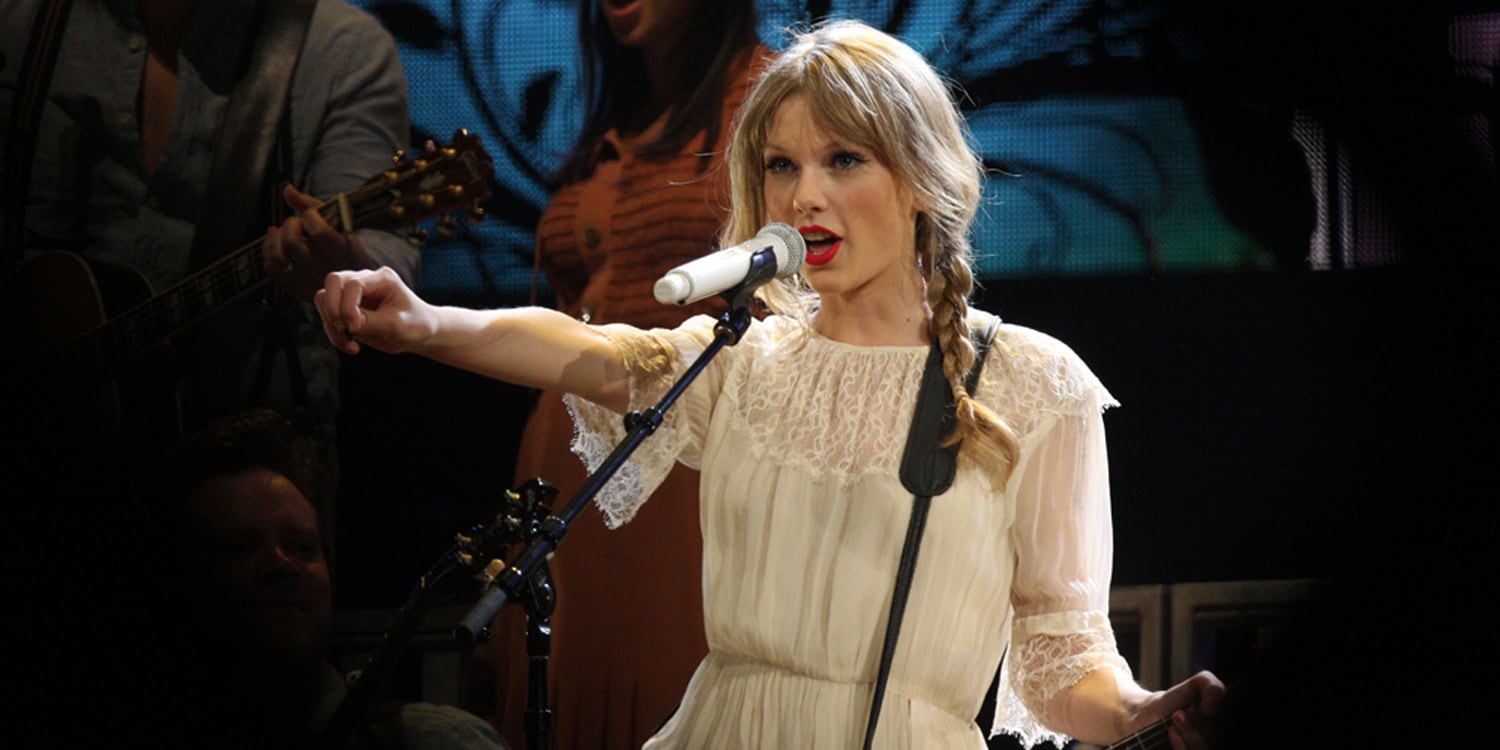
A scientific analysis of Taylor Swift’s musical catalog reveals that the romantic messages embedded in her lyrics vary dramatically depending on whether a song describes a current relationship or a past breakup. While tracks focusing on active relationships tend to model secure and healthy behaviors, songs centering on relationship dissolution often display anxiety and hostility. These findings regarding the pop star’s influence on listeners appeared in the journal Psychology of Popular Media.
Pop culture acts as a powerful force in shaping how people understand the world around them. This is particularly true for adolescents and young adults who are just beginning to navigate the complexities of romance.
Psychologists refer to the internal blueprints that guide our expectations for love as relationship schemas. These mental frameworks help individuals predict how a partner will behave and determine what constitutes a “good” or “normal” relationship. While family models and personal experiences shape these schemas, media consumption plays a substantial role as well. Music is a particularly potent medium for this type of social learning because it often focuses intensely on emotional and romantic themes.
McKell A. Jorgensen-Wells, a researcher at the Department of Psychology at Western University, led the investigation. She worked alongside Jane Shawcroft, Laramie D. Taylor, and Erin Spencer to decode the specific messages Taylor Swift transmits to her massive audience. The researchers selected Swift because of her unique status in the music industry. She is not merely a popular singer but functions as a “super peer” for her fans.
Swift cultivates a sense of personal connection with her audience through social media interaction and confessional songwriting. This phenomenon, known as a parasocial relationship, creates a dynamic where fans may view her as a trusted friend or mentor. Consequently, the advice and examples found in her lyrics may carry more weight than those of other artists.
The research team conducted a content analysis of Swift’s entire discography through the end of 2023. This included all songs from her ten major studio albums as well as non-album singles. The researchers excluded tracks that did not discuss romance, leaving a final sample of 185 songs.
Trained coders analyzed the lyrics of each song to identify specific attitudes and processes. They examined how the songs portrayed attachment styles, which are psychological categories describing how people relate to intimacy. They also looked for themes of idealism, realism, anger, sexual intimacy, betrayal, secrecy, and conflict resolution.
The researchers first looked at the overall trends across the artist’s career. They found that anxious attachment was the most common orientation depicted. This style appeared in approximately 55 percent of the songs. Anxious attachment is characterized by a fear of abandonment and a need for constant reassurance. In contrast, secure attachment appeared in about 19 percent of the tracks. This style reflects a belief that partners are trustworthy and that the relationship is stable. Avoidant attachment, marked by a desire to keep emotional distance, appeared in roughly 11 percent of the lyrics.
The study also categorized the songs by the phase of the relationship they described. The categories included pre-relationship, during the relationship, breakup, post-relationship, or covering multiple phases. This distinction proved essential to understanding the results. The researchers found that the messages in Swift’s music were not uniform. Instead, the advice changed based on the narrative timeline of the song.
Songs that were set “during” a relationship presented the most positive psychological models. These tracks were statistically more likely to depict secure attachment. They also contained higher levels of romantic realism. Realism in this context involves acknowledging that healthy relationships require work and may include mundane moments or minor disagreements. These songs were also more likely to show prosocial behaviors, such as empathy and support between partners.
In contrast, the researchers found that songs focused on breakups offered a very different set of behavioral models. Breakup tracks were strongly associated with anxious attachment styles. They frequently featured themes of anger and a desire for revenge. These songs were also much more likely to depict betrayal. The data showed that breakup songs rarely contained messages of realism or prosocial behavior.
The authors noted that this pattern aligns with how people often experience real-life relationships. Individuals may feel secure while a relationship is ongoing but become anxious and distressed when it ends. However, the researchers expressed concern about the lack of positive coping mechanisms in the breakup lyrics. The heavy focus on revenge and hostility suggests that the music validates negative reactions to heartbreak rather than modeling healthy grief or resilience.
The study also examined how these themes evolved across Swift’s different albums. The analysis showed that the prevalence of sexual content varied by era. Songs from the album Fearless were likely to have no sexual content at all. Conversely, the album reputation contained the highest frequency of clear sexual references. The album Lover tended to use vague sexual allusions.
Attachment styles also shifted depending on the album. The albums evermore and Midnights contained more depictions of avoidant attachment than others. The album 1989 featured higher levels of fearful attachment, which is a mix of high anxiety and high avoidance. The album Lover stood out as having more representations of secure attachment.
In addition to analyzing the lyrics, the researchers investigated whether specific themes correlated with a song’s popularity. They used Spotify streaming numbers as a proxy for popularity. The analysis controlled for factors such as the song’s genre and whether it was included on the setlist for the Eras Tour.
The strongest predictors of a song’s popularity were the album it appeared on and its inclusion in the Eras Tour concert. This suggests that marketing and live performance exposure drive listening habits more than specific lyrical themes. However, when the researchers removed these control variables, they found a connection between sexual content and streams. Songs with clear sexual references had higher streaming numbers than those with no sexual content.
The authors provided several caveats regarding their work. They acknowledged that quantifying art is inherently difficult. A song is a narrative arc, and coding it for specific variables might miss the nuance of the storytelling.
For example, a song might mention secrecy as a negative element that the couple eventually overcomes. A content analysis might simply flag the presence of secrecy without capturing the resolution.
Additionally, using Spotify streams to measure popularity has limitations. Older albums were released before streaming was dominant, so their play counts might not fully reflect their cultural impact at the time of release.
Despite these limitations, the study offers practical implications for listeners and parents. The findings suggest that consuming Swift’s music requires a level of media literacy. The researchers recommend that listeners engage with the lyrics critically rather than passively absorbing them. This is especially relevant for adolescents. Parents can help by discussing the messages in the songs with their children.
It is useful to point out the distinction between the “during” and “breakup” songs. Parents might encourage young fans to emulate the support and realism found in the songs about active relationships. Simultaneously, they could frame the breakup songs as outlets for venting emotion rather than roadmaps for how to act.
The researchers emphasize that mindful listening can allow fans to enjoy the music without unintentionally adopting unhelpful attitudes toward romance. The goal is not to stop listening but to understand that the “Taylor Swift universe” presents a complex mix of healthy and unhealthy relationship dynamics.
The study, “Romantic Ideas and Ideals in Popular Music: A Content Analysis of the Taylor Swift Musical Catalog,” was authored by McKell A. Jorgensen-Wells, Jane Shawcroft, Laramie D. Taylor, and Erin Spencer.
‘ The preceding article may include information circulated by third parties ’
‘ Some details of this article were extracted from the following source www.psypost.org ’