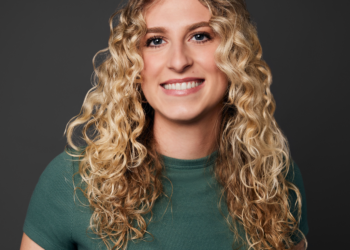
SPRINGFIELD — Meet The String Queens, three classically trained musicians who put their own twist on timeless classics in an attempt to bridge the gap between classical, hip hop, pop and everything in-between.
The trio — Kendall Isadore, Dawn Johnson and Élise Sharp — will bring their string music to the Hope Center for the Arts on Friday. Showtime is 7 p.m. at the performance arts center on 150 Bridge St. in Springfield where Stage West was once located.
Based in Washington, D.C., The String Queens have been featured in performances at renowned concert halls and venues across America, including Carnegie Hall in New York City and the John F. Kennedy Center for the Performing Arts in the nation’s capital. Notable appearances include a special performance dedicated to Vice President Kamala Harris at the “We Are One” presidential inauguration concert in January 2021, and an electrifying arrangement of Harry Styles’ “Golden” for the world’s most prestigious tennis tournament in Wimbledon in June 2021.
Recognized by D.C.’s leading news network WUSA9 as “school teachers by day and concert performers by night”, the Queens’ dedication, service, and innovative work in the field of music education have been acknowledged by the DC Jazz Festival, Carnegie Hall, Atlanta Symphony Orchestra, Save The Music Foundation and many others.
Their three albums, “Rise,” “Our Favorite Things,” and the self-titled “The String Queens,” are available on their website, at thestringqueens.com, and on all major digital music platforms.
Tickets to their Springfield show, ranging in price from $40 to $60, are available at hopecenterforthearts.org.
Before packing up their string instruments for their trip to Springfield, violinist Kendall Isadore took time to answer a few questions for The Republican.
Q: How would you describe your unique sound?
A: It’s freeing, it’s soulful, it’s unashamed, and unapologetic. The three of us speak the same musical language. It’s the power of three. We are three string players playing music that traditionally has drums, guitars, synthesizers and more. And we are still tasked to bring those tunes to life without them, especially when we play covers. It often sounds like more than three people are playing because most of the time we’re each playing two notes at a time. We’re almost always playing double stops to give people that full orchestral sound. And where traditional classical music string trios might have space and breath in their playing, we’re covering and filling up the space the entire time because of the style and the genres of music that we’re playing. So, we’re covering the melody. We’re covering the harmony. We are trying to figure out rhythms, so a lot of times you’ll see us using pizzicato. We’re plucking the strings for whole passages. But while it is freeing for us as classically trained musicians, it’s also very technically sound. We cannot run from the technique just because you’re playing a song by Prince or you’re playing a Negro Spiritual, neither one of those are classical nor from that foundation, but they still should get the technique. It’s not like the technique goes away.
Q: What songs are part of your repertoire?
A: It’s like, get ready because it is going to be everything from classical to soul like “Earth, Wind and Fire.” We play a lot of Stevie Wonder and play “Eleanor Rigby” by The Beatles, which we arranged. We arrange all our music. We also have a beautiful arrangement of Michael Jackson’s “Human Nature.” Then, you like Gershwin, right? We have a new arrangement that is going to be on our upcoming album this summer. It’s called ‘“Summertime Maria” [and] that has a Latin, jazzy vibe to it combining Gershwin’s “Summertime” and Carlos Santana’s “Maria Maria.”
Sometimes we play a tune called “Crazy Rolling,” which is a combination of Gnarls Barkley’s “Crazy” and Adele’s “Rolling in the Deep.” We also have an arrangement that we wrote called “’Til Victory is Won” which is a combination of “Lift Every Voice and Sing,” “Battle Hymn of the Republic” and “America the Beautiful.” It is a beautiful arrangement that we play all year long, when you usually hear “Lift Every Voice and Sing” during Black History Month and “America the Beautiful” during the Fourth of July. The messages of those three tunes are aligned and all talk about freedom, liberty and justice. We are not afraid to make a statement through our music, Every show is different. We may play all of those. We may switch some of those out. But we try to craft a set list that is a story that takes the audience on a journey.
Q: Do you find it difficult to attract an audience because they might not like string music and its association with the classical genre?
A: The data would say no because almost every show, thank God, is sold out. So, attracting people, there doesn’t seem to be an issue or a barrier to getting them through the door. But, with that said, we know that there are conversations that happen before people buy their tickets. They ae talking to their spouse or their loved one and saying “We must see this concert,“ while the other may respond saying, ”I don’t know about these strings. I don’t like string music.“ We hear about those conversations all of the time, but somehow people take a chance on us. I think it is important to us for people to see themselves in us somehow, no matter if we are the same gender or have the same or different religious beliefs. It doesn’t matter. Music is just music and is the universal language that unites all of us. And we are just so grateful that folks don’t let those thoughts and their preconceived notions keep them out of the door.
‘ The preceding article may include information circulated by third parties ’
‘ Some details of this article were extracted from the following source www.masslive.com ’