Most people already have a version of John F. Kennedy Jr. and Carolyn Bessette Kennedy firmly planted in their heads.
It’s built from magazine covers and paparazzi photos. From that image of a young boy saluting his father’s casket. From the quiet elegance of a woman who never gave an interview but became a style icon. Portraying these beloved figures on screen comes with a lot of expectations — from the public, from history and from family and friends who feel protective of them.
For Paul Anthony Kelly and Sarah Pidgeon, stars of the new TV series Love Story: John F. Kennedy Jr. & Carolyn Bessette, that meant walking into roles in which the audience’s emotional investment wasn’t just high — it was already deeply personal.
“I think there’s always pressure when you play any character, wanting to do it right,” Pidgeon tells Yahoo ahead of the Feb. 12 premiere on FX and Hulu. “But of course, there’s added pressure when you’re playing a real person and wanting to do their legacy justice.”
That pressure is tied to the way the public feels it grew up alongside them.
“Carolyn and John have such cultural importance, and people feel very protective of them,” Pidgeon explains. “I think that’s partly because people watched John grow up and felt like they really witnessed this young boy become a man. There’s also such intense interest in their marriage.”
If John’s life unfolded publicly, Carolyn’s was far more elusive — which, paradoxically, may be why she remains so mythologized. She never sat for a profile interview. She never wrote a memoir. Much of what the public believes it knows about her comes from photographs and secondhand accounts. The couple wed in 1996 in a private ceremony in Georgia and died, along with Carolyn’s sister, Lauren, just three years later in a 1999 plane crash off the coast of Massachusetts — a tragedy that sealed their story in public memory.
Carolyn and John have such cultural importance, and people feel very protective of them,
Sarah Pidgeon
For Pidgeon, that meant constructing a person from fragments.
“At times, it was a challenge trying to thread the needle and figure out who Carolyn was,” she says. “This was an oral history I had to piece together from books and from people who knew her, trying to figure out what rang true and what overlapped — the common threads in how people described her.”
When asked whether either actor had the opportunity to speak with close friends or family members, the answer came quickly: No. The project, Pidgeon, explains “was pretty insular to the set and the creatives.”
“We were just in our own little group doing this thing,” Kelly adds. “It made it easier not to feel the outside pressure and just live in it.”
That insulation wasn’t avoidance; it was focus. Without direct access to those closest to John and Carolyn, the actors relied on research, scripts and the creative team — building performances from documented history rather than private endorsement.
Kelly’s preparation reflected that same rigor with more resources. Unlike Carolyn, John left behind interviews, recordings and public appearances that captured his voice and presence.
“When I was cast in this role, I just had to hit the books and consume everything I could get my hands on,” he says. “I’m in the lucky seat where John was a very well-documented individual.”
One unexpected tool proved especially helpful: John narrating his father’s book, Profiles in Courage. “I listened to that religiously to slip into his vocal rhythms, the way he carried himself through his voice and the way he talked.”
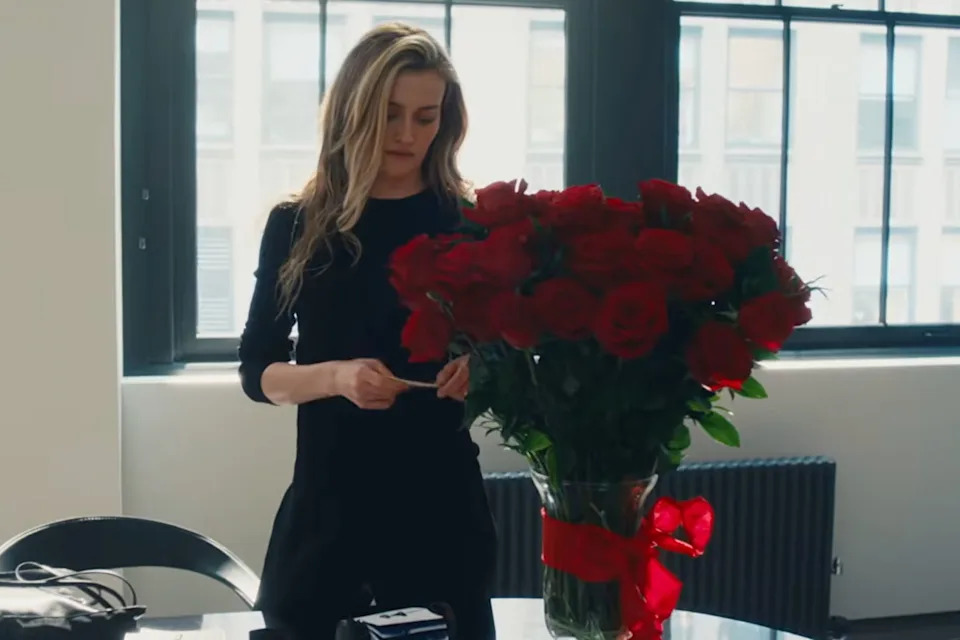
Producers say they took pains to get the couple’s romance right. (FX/YouTube)
(FX/Youtube)
Still, preparation doesn’t eliminate expectation.
“They’re both such beloved individuals,” Kelly says. “John is America’s own crown prince, so there’s definitely a lot of pressure that goes into that.”
That word — pressure — extends well beyond the actors. Viewers will inevitably ask how much of Love Story is historical record and how much is dramatization. Creator Connor Hines tells Yahoo the approach was deliberate.
“We did extensive research — read everything imaginable: books, articles,” he explains. “Everything sort of had to be corroborated by multiple narratives.”
But even the most publicized relationships have gaps, which leads to some creative liberties. The debut episode, for example, takes place entirely in the couple’s apartment with incredibly personal dialogue.
“There are obviously moments behind closed doors where you have to consider the couple that we understood really well and extrapolate where they would be emotionally,” Hines says. “We knew that she struggled with the fame. We knew his approach to handling it. We knew hers. We had a very good understanding of who they were, first and foremost.”
You’re adjusting and figuring it out as you go along. People weren’t looking at the finished product.
Brad Simpson
That foundation, he says, allowed the team to navigate the inevitable gray areas. “The emotional components — obviously, you have to take a leap of faith — but we feel very much that the show is true to the essence of who they were.”
Executive producer Nina Jacobson describes the line between fact and fiction as refinement rather than invention.
“You have to compress time,” she says. “That’s where people might find, ‘Wait a second, that didn’t happen the same year or month that that happened.’ But we wouldn’t be making up a thing that never happened.”
Videos and photos exist of the couple arguing in 1996, for example. The spat was seen and documented — but never heard.
“Nobody heard all the words,” Jacobson notes. “So of course we have to put in the words based on the emotional reality of what we know about the characters to date.”
The guiding principle, Hines says, was simple: “Everything had to be supported in terms of what we felt would be true to who we knew them to be.”
That scrutiny didn’t remain theoretical for long. Early in production, paparazzi captured images from set, and the outrage was swift. Social media lit up with commentary — particularly around Carolyn’s appearance — before a single finished scene had aired. Executive producer Brad Simpson is quick to clarify that what circulated weren’t final frames from the series.
Sarah Pidgeon, center, as Carolyn Bessette Kennedy.
(FX/Youtube)
“There were some early test photos — that were just test photos — that got released and caused a real online backlash,” he says. (A new costume designer was reportedly hired.) “You make a show over nine months. You’re adjusting and figuring it out as you go along. People weren’t looking at the finished product.”
The intensity of the reaction underscored what the cast already understood: This wasn’t simply another period drama. It was a story people felt ownership over.
“There was so much to learn through this process — not only about Carolyn and John, but … how to navigate this world as an actor and the internet,” Pidgeon says.
Yet neither actor describes the pressure as something to defeat. Instead, it’s something they approached with care.
Portraying figures who remain so present in cultural memory isn’t just about resemblance. It’s about trust. It’s about recognizing that for many viewers, these aren’t simply characters on a screen — they’re part of a shared history.
All eyes may be on Love Story. Now it’s up to audiences to decide whether the series earns that trust.
‘ The preceding article may include information circulated by third parties ’
‘ Some details of this article were extracted from the following source www.yahoo.com ’