In 2007, “There Will Be Blood” arrived in theaters like a thunderclap: stark, ambitious and utterly uncompromising.
Now, nearly two decades later, Rolling Stone has ranked it the “Best Movie of the Century,” placing Paul Thomas Anderson’s sprawling drama at the very top of its list of 21st-century films.
From its wordless opening sequence in the deserts of New Mexico, the film signals its grand ambitions. Rolling Stone described Anderson’s tale of American greed as towering “like a derrick over our new millennium,” casting a shadow as imposing as that of Daniel Plainview, the ruthless oilman played by Daniel Day-Lewis.
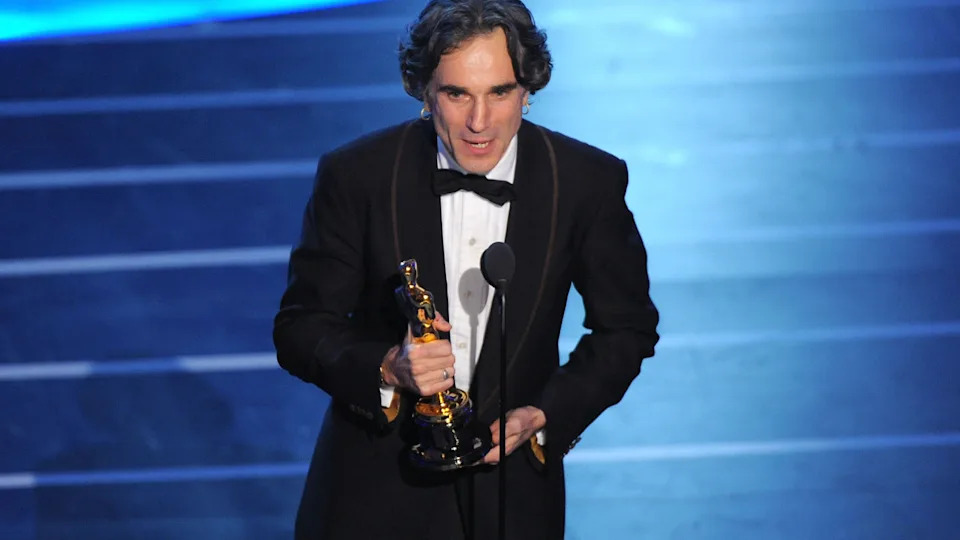
Day-Lewis’ portrayal of Plainview is central to the film’s enduring power. His explosive performance, at times contemptuous, at times darkly comic, ultimately earned him the Academy Award for Best Actor.
Daniel Day-Lewis won an Academy Award for his performance in “There Will Be Blood” in 2008. (Photo by Michael Caulfield/WireImage)
“Everything Daniel does makes me giggle with pleasure and joy,” Anderson told The Guardian in 2019. His inventiveness, his devilishness, the joy he has in making such a maniacal portrait of a man unhinged.”
Loosely inspired by Upton Sinclair’s novel Oil!, the film tracks Plainview’s relentless rise in the early California oil boom. What begins as a portrait of entrepreneurial grit slowly mutates into something far darker: a study of greed, ambition and spiritual corrosion. The movie’s final confrontation, set in an echoing manor house, has often drawn comparisons to cinematic giants like “Citizen Kane,” a parallel Rolling Stone embraced in its assessment.
Anderson’s filmmaking blends classical scale with modern unease. The film straddles the lien the of old and new Hollywood, as does its unsettling, dissonant score, written by Jonny Greenwood. The music‘s clicking, atonal textures heighten the sense that something deeply ominous lurks beneath Plainview’s success.
But perhaps what cements the film’s status is its relevance. Plainview’s story perfectly encapsulates the full capitalist cycle, starting as a force of creation that ultimately leads to destruction. More than a period piece, it feels like a prophecy. In an era grappling with wealth inequality and unchecked corporate power, Plainview’s story resonates with uncomfortable clarity.
“Unfortunately, this story doesn’t seem to be going out of style any time soon,” said Anderson. “It would be nice to see it as science fiction one day. Or an account of how truly insane we all once were.”
Nearly 20 years after its release, “There Will Be Blood” remains a towering achievement, a film as imposing and unforgettable as the oil derricks that define its horizon.
It’s the best of the century so far.
Related: 1972 Hit Ranked ‘Best Movie of All Time’
This story was originally published by Parade on Mar 2, 2026, where it first appeared in the News section. Add Parade as a Preferred Source by clicking here.
‘ The preceding article may include information circulated by third parties ’
‘ Some details of this article were extracted from the following source www.yahoo.com ’