Politicians planning rallies, launches and campaign events will now face significantly higher costs for using music after the government introduced a revised tariff structure that raises licensing fees across all elective positions and political activities.
Paying for music licences at political events is not new, but the newly approved Consolidated Music and Audio-Visual Works Tariff for the period running from January 1, 2026, to December 31, 2028, is set to make it more expensive.
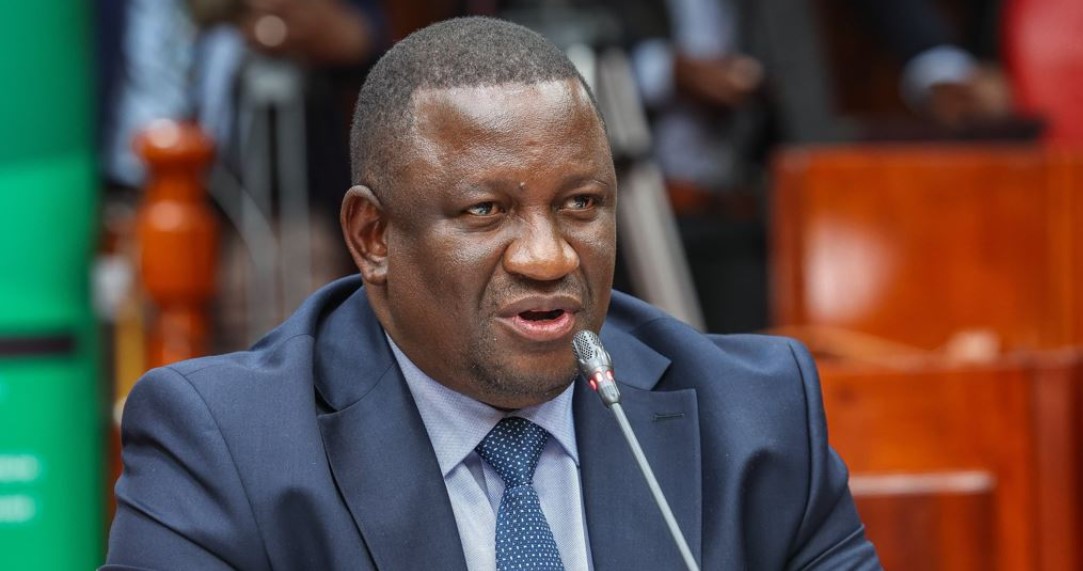
According to the document in our possession, the tariff, gazetted by Youth Affairs, Creative Economy and Sports Cabinet Secretary Salim Mvurya, specifies the fees required from each candidate for using music at political events.
Under the new structure, presidential candidates will pay Sh500,000 each, up from Sh400,000 in the previous 2023 tariff framework (Legal Notice No. 84 of 2023).
Gubernatorial candidates will pay Sh200,000, an increase of Sh50,000, while senatorial candidates will pay Sh150,000, up from Sh100,000.
Candidates for Member of Parliament and Woman Representative positions will each pay Sh100,000, marking a doubling of the previous fee. Member of County Assembly aspirants will now pay Sh15,000, up from Sh12,500.
Meanwhile, the flat annual fee for political parties to use music at rallies, launches and campaign activities will remain at Sh600,000, in line with the previous 2023 consolidated music tariffs.
The revised tariffs are contained in Kenya Gazette Supplement No. 6, Special Issue dated January 29, 2026, under Legal Notice No. 4 issued pursuant to the Copyright Act (Cap. 130).
“In exercise of the powers conferred by section 46A of the Copyright Act, the Cabinet Secretary for Youth Affairs, Creative Economy and Sports approves the consolidated music and audiovisual tariffs set out in the schedule and revokes the consolidated music tariffs issued under Legal Notice No. 84 of 2023,” reads the notice.
With the revised charges, music collection societies that collect royalties on behalf of musicians are expected to record a major increase in revenue as the country approaches the 2027 General Election.
Based on the 337 National Assembly seats alone, music collection societies could collect at least Sh33.7 million from MP and Woman Representative candidates’ licence fees, assuming only one candidate per constituency, though in practice multiple aspirants typically contest each seat.
For the 47 gubernatorial and 47 senatorial positions, the minimum potential revenue is about Sh16.5 million.
Globally, politics and music are closely linked, with music serving as an effective mobilisation tool during campaigns and political events. While music enhances the atmosphere and impact of such events, there has been a longstanding perception that its use in political settings should be free.
However, under the Copyright Act, the use of copyrighted music by politicians or political campaigns does not automatically qualify as fair use. Whether or not permission is required depends on how the work is used, and the political context does not make it more or less likely to qualify as fair use. Politicians often adopt songs that reflect their campaign themes, further reinforcing the link between music and political messaging.
The new schedule also outlines updated charges across multiple sectors beyond politics. Public transport termini, with international airports in Nairobi, will pay tariffs set at Sh500,000 and other airports at Sh400,000, while airstrips will pay Sh200,000 and railway stations Sh100,000.
For new media services, including digital and internet-based platforms such as caller ring back tones, ringtones, downloads, content service providers and telecommunications companies, the tariff sets a rate of nine per cent of gross revenues, subject to a minimum of Sh300,000.
Additional sectors covered include aircraft, amusement parks, training institutions, cinemas, private clubs, nightclubs, medical facilities, hospitality establishments, mobile DJs, motor vehicles and passenger trains, each with specified flat rates or percentage-based fees depending on category, capacity or location.
For instance, aircraft will pay Sh900 per passenger seat annually, subject to a minimum of Sh25,000 per aircraft, while amusement parks in cities will pay Sh40,000 annually and Sh25,000 in other areas. Professional training institutions such as dance schools, DJ academies, universities and colleges will pay Sh20,000 annually.
Cinema theatres will pay Sh60,000 annually, with daily rates set at Sh5,000 in urban areas and Sh2,000 in other regions. Discotheques, nightclubs and casinos will pay Sh100,000 annually in cities and Sh75,000 elsewhere, while medical facilities are charged based on level, ranging from Sh10,000 for Level 2 hospitals to Sh200,000 for Level 5 facilities.
Hotels, restaurants, bars and similar establishments will pay 60 per cent of their single business permit fees, while mobile DJs will be charged Sh30,000 annually or Sh1,000 per event. Public service vehicles will pay between Sh4,000 and Sh15,000, depending on seating capacity.
Concerts and live shows will attract a fee of Sh50,000 per event for local shows and Sh100,000 for international concerts, while roadshows will be charged Sh50,000 per truck per event for corporate entities and Sh22,000 for other vehicles.
Promotional activities will cost Sh1.1 million annually per corporate entity, while small and medium enterprises will pay Sh5,000 per event. Banking halls, gyms and showrooms will be charged Sh25,000 per branch in cities and Sh15,000 elsewhere, while salons, barbershops and retail shops will pay between Sh3,000 and Sh5,000 depending on location.
Supermarkets and large establishments will pay up to Sh200,000 annually, depending on size, while broadcasters will be charged four per cent of net revenue, subject to minimum thresholds ranging from Sh100,000 for community television stations to Sh500,000 for national radio stations. Pay TV services will pay a flat rate of Sh750,000, while digital online broadcasting platforms will pay Sh250,000.
Shopping malls will be charged between Sh150,000 and Sh300,000 annually, depending on size.
The notice further states that the tariff is consolidated to cover “all rights in music, including authors, composers or arrangers and publishers; all rights for producers and performers of sound recordings and actors’ tariff.”
It adds that, “the rates are exclusive of taxes,” and that “invoices shall be payable within 30 days save for daily activities including roadshows, promotional activities and events that are payable immediately.”
Mvurya warned that failure to pay an invoice upon the lapse of the 30 days shall attract a penalty of five per cent per month compounded for the period the invoice remains unpaid.
He, however, clarified that a license shall be valid for one year from the date of issue.
The tariff also defines broadcasting categories, stating that a “National Broadcaster” has listenership or viewership beyond five counties, a “Regional Broadcaster” operates within five counties, and a “Community Broadcaster” serves a specific community and is registered as such by the Communications Authority of Kenya.
‘ The preceding article may include information circulated by third parties ’
‘ Some details of this article were extracted from the following source eastleighvoice.co.ke ’