Detroit’s Motown is one of USA TODAY’S Iconic Brands


Facts about iconic American brand Motown Records
From 1959 to present, here are five suprising facts about iconic American brand Motown Records.
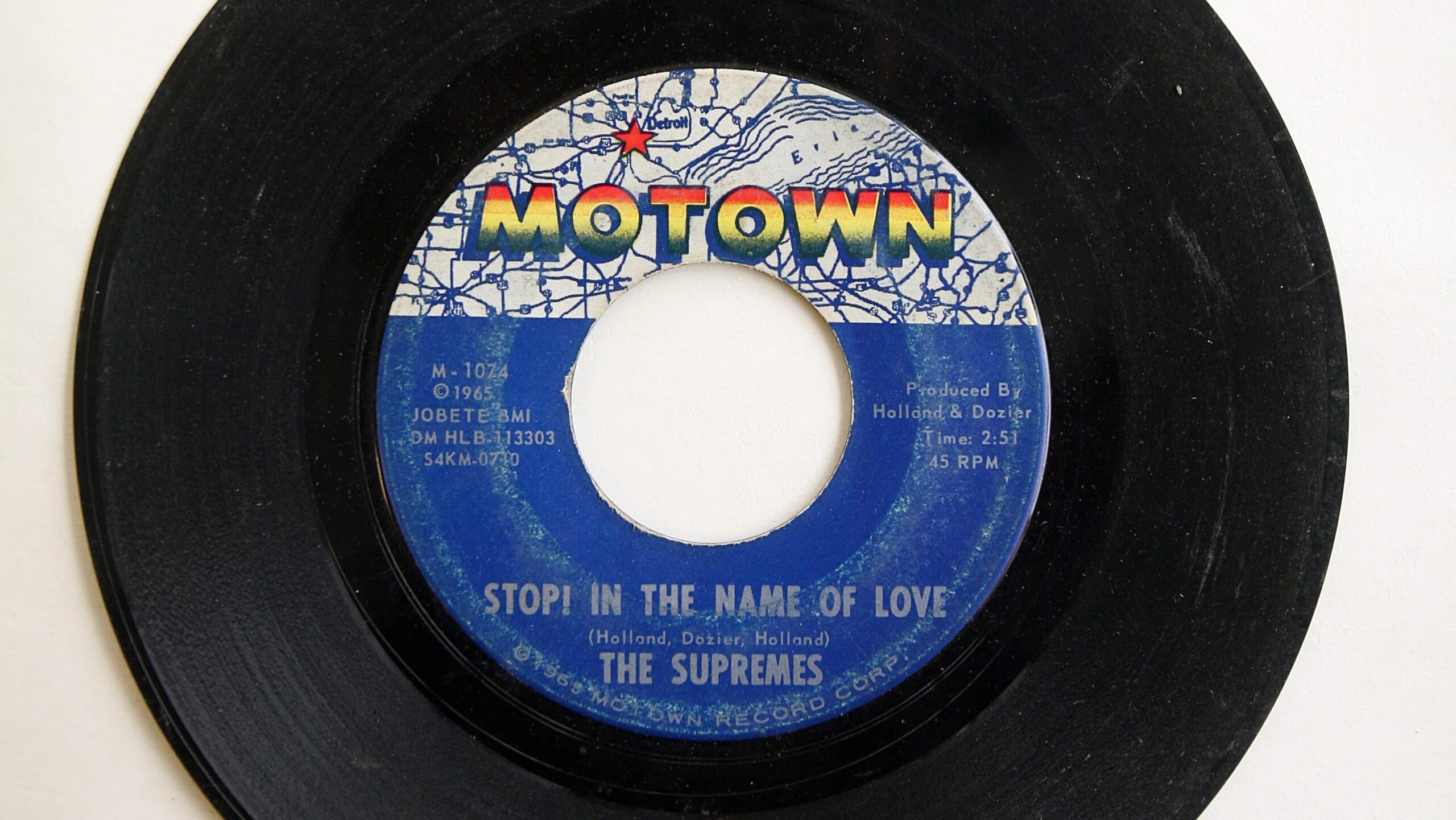
- Founded in 1959 by Berry Gordy, Motown ultimately became the world’s biggest independent producer of 45-rpm records and one of the most successful Black-owned businesses in American history.
- A quick list of Motown stars includes Diana Ross and the Supremes, Stevie Wonder, Michael Jackson and the Jackson 5, Marvin Gaye. Smokey Robinson, the Temptations and Four Tops.
This story is part of the Iconic Brands series, a USA TODAY network project showcasing the companies and brands that helped shape the nation’s identity, economy and culture. The series celebrates American ingenuity with a deeply reported examination of how brands intersect with history, community and everyday life in celebration of the nation’s 250th anniversary. Find more at https://usatoday.com/usa250/iconic-brands
Like so many kids growing up in the 1970s and ’80s, Robin Terry was a fan of Motown’s music and its cavalcade of stars.
But for Terry, born and raised in Detroit, names such as Smokey, Marvin and Diana weren’t mere words on album covers. They were family — “just other grown-ups” hanging out at the house as Terry and her cousins scampered around.
“In my 7- or 8-year-old mind, there was no distinction between there being a guest in the home, or family,” Terry said. “That was just the dynamic of the space at the time. There was no sense that these people were celebrities.”
Terry is a grandniece of Berry Gordy Jr., who founded Motown Records in modest surroundings before developing it into one of the world’s most prominent, star-studded entertainment operations.
It’s a uniquely American story, a melting-pot triumph with pop music craft at its heart and capitalist hustle in its gut.
It was also a distinctly Detroit phenomenon, boasting an assembly-line music system built by ambitious Black Americans whose families had migrated to the Motor City striving for better lives.
These days, Terry is the longstanding chairwoman and CEO of the Motown Museum, where she shepherds the homegrown legacy that reshaped culture in the ’60s and beyond. The institution is one of Detroit’s top tourist attractions, drawing visitors from across the globe.
“Some people cry. Some get strangely quiet because they’re just processing,” Terry said of guests at the site. “I’ve seen people kiss the ground. I’ve even seen them try to find dust to rub on their clothes. It’s just a magical, magical space.”
The museum — founded in 1985 by Esther Gordy Edwards, a sister of Gordy and grandmother of Terry — is built around the original Hitsville, U.S.A., house where Motown blossomed. In a testament to the brand’s indelible power, Terry is leading a $75 million expansion scheduled for completion within the year.
For Terry, coming from the Gordy lineage, it’s an inherited duty she came to appreciate as she grew up.
“Everything was always centered around family. There were a lot of family philosophies tossed around,” she said. “It really wasn’t until I was a teenager being raised by my grandmother that I started to understand something significant had happened and that my family was part of it.”
Of all the major U.S. music companies through the decades, perhaps none is more closely identified with a distinct sound — and cultural transformation — than Motown. The very name, a streetwise twist on “Motor City,” has come to define a musical genre while being adopted as an enduring nickname for its birthplace.
“Motown is the only independent record label in our time that is as well known as the artists who recorded on it,” said Terry.
From a humble home office and studio on Detroit’s west side, Gordy built what ultimately became the world’s biggest independent producer of 45-rpm records and one of the most successful Black-owned businesses in American history.
While its work was written, produced and performed largely by young Blacks from Detroit’s inner city, Gordy and Motown were intent on creating music for everyone, taking the earthy sounds of post-doo-wop R&B, giving them a melodic, commercial-friendly sheen and marketing them to the masses.
The formula proved potent. Decades later, rattling off a quick list of Motown stars only scratches the surface: Diana Ross and the Supremes. Stevie Wonder. Michael Jackson and the Jackson 5. Marvin Gaye. Smokey Robinson. The Temptations. Four Tops. Martha Reeves and the Vandellas. Mary Wells. Lionel Richie. Rick James. Boyz II Men.
Motown’s slogan, “The Sound of Young America,” wasn’t just a catchy PR line. It amounted to a mission statement, setting the course for a flowering of artistry that would enchant the world.
As it grew during the 1960s in a divided nation, Motown was a unifying force, helping to fuel the Civil Rights Movement while being empowered by it.
“It was such a racially divided time, a time of a lot of violence. And yet Motown music, in what it represented, really was the bridge. It brought people together,” said former U.S. Sen. Debbie Stabenow, a Michigan native and lifelong Motown fan. “And even though Motown was a major Black-owned corporation, they were multiracial in their hiring. They showed everyone what it was like to come together.”
An humble start in 1959
In early 1959, Berry Gordy Jr. was a little-known, 29-year-old songwriter who had scored success with fellow Detroiter Jackie Wilson, including hits such as “Lonely Teardrops.” Now Gordy was working with a local teen group, the Miracles, fronted by his close friend Smokey Robinson.
After years of assorted pursuits — boxing, running a jazz shop, working in a Lincoln-Mercury plant — Gordy had found his calling.
“I was a failure in everything I ever did until I was 29,” he told an audience of college graduates decades later. “I didn’t know it because I was having so much fun trying new stuff.”
Still, amid his newfound songwriting success, Gordy felt hamstrung by the realities of the record biz. When the Miracles’ first Top 10 R&B hit, 1958’s “Got a Job,” resulted in a $3.19 royalty check, Gordy had his epiphany: If he wanted a say in his destiny, he needed his own operation.
The second-youngest of eight children, Gordy hailed from an enterprising Detroit family with Georgia plantation roots, including several sisters who had carved successful business paths. Like their entrepreneurial parents, Bertha and Berry Sr., the Gordy kids operated with a Booker T. Washington-inspired ethic of economic independence.
At a family meeting in January 1959, the younger Gordy convinced his parents and siblings to lend him $800 from a family fund. It was seed money that would change all of their lives.
That summer, Gordy purchased a two-story West Grand Boulevard house to serve as a home for his young family while doubling as an office and recording studio for his nascent company. Confident in his vision, he plastered a sign out front: “Hitsville, U.S.A.”
The little house quickly lived up to that audacious billing. Barrett Strong’s “Money (That’s What I Want),” released weeks later, was the first in what became an eventual flood of hit records for Gordy and his growing team.
By the mid-1960s, Motown and its stable of labels were a music industry powerhouse. Rarely a week went by when one or more of the company’s singles weren’t parked in the Top 10 in America and, increasingly, around the world.
That pop-chart domination was unprecedented for an independent label, let alone one that was Black-owned. Motown became a regular presence in the cars, living rooms and bedrooms of mainstream America, its stars gracing magazine covers and prime-time television. When the Supremes made their Copacabana debut in summer ’65, headlining one of North America’s most elite nightclubs, the crossover triumph was sealed.
Inside Hitsville and his growing collection of houses along the boulevard, Gordy had structured a system inspired by the assembly-line process he’d witnessed at Lincoln-Mercury, complete with a quality control division. At the foundation was artist development: Young performers were meticulously trained in choreography, etiquette and style, cultivating the refinement crucial to Motown’s cross-cultural ambitions.
Guiding it all were the same Gordy family philosophies Terry later heard as a young girl at the dinner table: Logic is boss. Competition breeds champions. Don’t let the competition get in the way of the love.
Today, in her role as museum chief, Terry is part of a Motown heritage steeped in family from the beginning. Gordy’s parents and siblings didn’t just cough up $800 to get him started; they became part of Motown, some leaving their day jobs to help advance his vision at Hitsville.
“All of the siblings contributed in some way to advance the vision Berry Gordy had of songwriter-becomes-entrepreneur,” Terry said. “My great-grandparents, Berry (Sr.) and Bertha Gordy, were the patriarch and matriarch not only of the family but of the company. That support really undergirded the dream and allowed it to move to its next levels.”
As artists such as the Supremes, the Temptations, Stevie Wonder and Marvin Gaye became household names, Motown also teemed with studio personnel who were creative heavyweights of their own, including Holland-Dozier-Holland, Norman Whitfield, Ashford & Simpson, Barrett Strong, Mickey Stevenson, Harvey Fuqua and Hank Cosby.
That concept — the producer as star — persists today across hip-hop, R&B and pop.
“The business model was groundbreaking in its time, and for that reason, folks have attempted to mimic it,” Terry said. “Barriers were broken across the industry, which really made Motown one of the most influential entertainment-media institutions of our time.”
An enduring legacy
By the time Terry was a toddler in the early ’70s, Motown had begun its migration from Detroit to Los Angeles, aiming to strike Hollywood gold. It quickly did, landing box office success and critical acclaim with the Diana Ross-led film “Lady Sings the Blues.”
Still, Gordy’s mansion in Detroit’s Boston-Edison district remained a home base, the spot for family gatherings and — in the lower-level ballroom — the site of impromptu artist performances witnessed by Terry and her cousins.
For the young Detroiter, the magnitude of Motown and her family legacy was coming into focus — a “sense there was something bigger going on here.”
“There were moments like that where I was like, ‘Maybe every family doesn’t do this,’” Terry recounted. “’Maybe every kid doesn’t have this experience.’”
As she came of age, Terry was discreet about her family and celebrity links. Following the prime-time TV special “Motown 25” in May 1983, when millions of American kids headed to school the next day gushing about Michael Jackson’s iconic moonwalk moment, she kept quiet.
But some classmates at Detroit’s Waldorf School connected the dots. Each afternoon, the school bus dropped Terry off at the massive home in Boston-Edison — and that association was hard to hide.
Following her mother’s death, the teenage Terry had moved into the Gordy mansion, which was then occupied by her grandmother Esther Gordy Edwards.
Edwards was a longtime community force, and Terry got to soak it in firsthand. Her grandmother’s wide-ranging, politically involved career included the founding of the African American Heritage Association, work with Big Brothers Big Sisters and the establishment of the Gordy Foundation. In her time with the Bank of Commonwealth, Edwards was the first woman to serve on a national bank board.
“Mama Esther,” as she was known to many in the family, was also one of the Gordy siblings in the trenches of early Motown, overseeing the label’s Motortown Revue tours and serving as a vice president.
1985 brought Edwards’ next and most enduring career chapter. Having seen that the abandoned Hitsville house drew a regular stream of visitors to the front lawn, she turned the site into the Motown Museum, drawing from her own carefully curated archive of historical artifacts.
“Her purpose was always to empower the next generation,” Terry said. “So telling her brother’s story, the Motown story, the story of all of these talented young people, mostly from Detroit, who created this musical legacy that literally changed the world — that was important to her. Because it not only made sure those stories were memorialized forever, but that the next generation could be inspired by them.”
Terry, who began working at the museum in 2002 and became chairwoman in 2014, embraced her grandmother’s mission as her own.
And then she amplified it: In 2016, Terry and her team launched what is now a $75 million museum expansion, which includes a 40,000-square-foot complex rising behind the Hitsville house where her family’s Motown legacy took root. It’s scheduled to open to the public in the spring of 2027.
Stabenow, the former U.S. senator, helped secure $10 million in federal funding for the project.
“Robin is a real powerhouse, and she’s committed,” said Stabenow. “This means so much to her personally in terms of the family. I think she feels that this is a real mission, a calling, to lift up and celebrate what happened. Berry Gordy and those artists are such an important part of our history.”
For Terry, there’s a deep pride in the endowment that’s been entrusted to her care. In 2026, Motown’s music is still ubiquitous, its influence is ongoing, and it continues to define the city where it was born.
“It created a culture. Not just for Black folks and white folks, but for the way it broke barriers, the way it united people, the way Motown spoke a language that resonated with people all over the world, no matter what their story was,” Terry said.
“That becomes this intangible thing that suggests a brand has the power and influence to create change, to move people and to make life better. And that’s what Motown did.”
How the list was chosen
The Iconic Brands 50 identifies American companies that most profoundly shaped the nation’s identity, economy and culture. Selection emphasized historical significance, industry-building innovation, measurable economic influence and lasting cultural impact. Brands were chosen for transforming daily life or becoming enduring symbols of American values. Long-term relevance and sustained national influence carried greater weight than short-term financial performance or recent popularity.
Contact Detroit Free Press music writer Brian McCollum: 313-223-4450 or [email protected].
‘ The preceding article may include information circulated by third parties ’
‘ Some details of this article were extracted from the following source www.usatoday.com ’