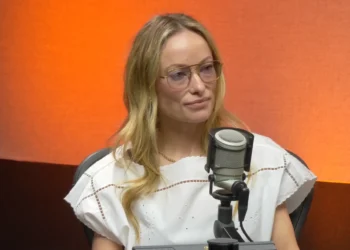
“You can’t just show up after all this time and think everything’s gonna be the same.”
That’s what Hunter Schafer’s character Jules tells Zendaya’s Rue early on in the long-awaited third season of “Euphoria.” The line feels like an obvious nod to the fact that the HBO drama, created by Sam Levinson, has had to reinvent itself now that it no longer has the safety net of its high school setting following a five-year time jump.
It also feels like a meta commentary on the current state of the still-provocative, yet former teen-centric drama that once tried to push the envelope in its depiction of high school life through a lens of sex, drugs, addiction, trauma and social media. But now, after a grueling four-year absence, the HBO show returns noticeably different.
Sure, some familiar elements remain. Like the series’ hyperfixation on sex, drugs, and more sex, as seen in the much-anticipated Season 3 premiere that finally aired on Sunday. The cinematic visuals and sensationalism that turned the breakout series into a cultural lightning rod in its first two seasons are still alive and well, too.
However, the sharp, zeitgeisty edge that once distinguished “Euphoria” from other racy Gen-Z shows seems to have faded after too much time away from our screens.

The last time “Euphoria” was on the air, it was still Sunday night appointment television, igniting a week’s worth of discourse online and prompting full editorial war rooms for episode deep dives. It was also operating at peak cultural influence, still minting new stars and propelling its buzzy cast toward pop-culture ubiquity.
However, much has changed since the coming-of-age series had audiences in a tight chokehold.
Over the past four years, “Euphoria” has endured a number of setbacks: the loss of a producer; two cast members, Angus Cloud in 2023 and Eric Dane in February; as well as another exit and a surprising split from its Emmy-winning composer, Labrinth. A string of delays, behind-the-scenes turmoil, scheduling conflicts and back-to-back Hollywood strikes nearly derailed Season 3 entirely. At the same time, much of the show’s in-demand cast — recent Oscar nominee Jacob Elordi, Zendaya, Schafer, Sydney Sweeney, Alexa Demie and Maude Apatow — have risen as a new generation of A-list movie stars, gradually outgrowing the TV juggernaut that helped launch them.
As if that weren’t enough, “Euphoria” itself returns in its third — and possibly final — season almost entirely transformed. Of course, after such a long hiatus, the shift isn’t exactly shocking. Still, it speaks to a broader issue that television has long struggled with when too much time passes between seasons.
And the latest season of “Euphoria” makes that painfully obvious.
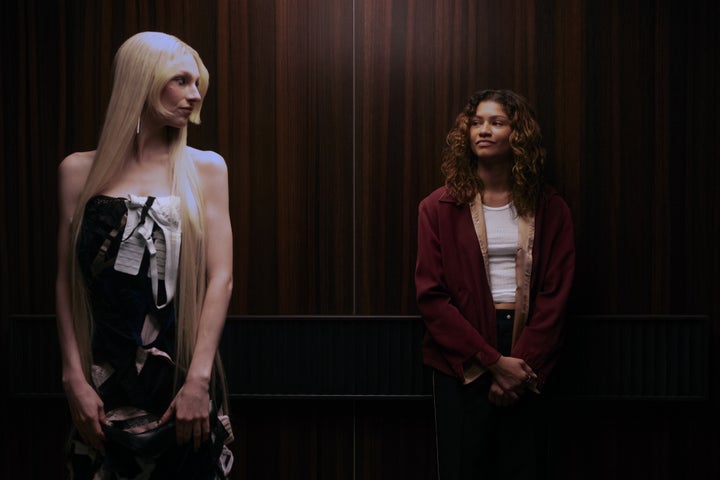
No longer rooted in petty teen drama (now something more like a neo-Western), “Euphoria” jumps five years ahead in Season 3. Its teenage characters are all grown up now and in their 20s, facing the realities of adulthood and somehow even more troubled versions of themselves.
The worst among them is Rue, who, still in debt to stateside dealer Laurie (Martha Kelly), has been working as her drug mule to repay the $10,000 worth of drugs her mother flushed down the toilet last season. For years, she’s been smuggling fentanyl across the Mexican border for the queenpin, with help from Faye (Chloe Cherry).
Eventually, Rue grows tired of that life and pivots to working for strip club magnate Alamo Brown (Adewale Akinnuoye-Agbaje), who, after a fatal accident involving one of his girls, recruits Rue to manage one of his clubs.
Meanwhile, somewhere in a gaudy suburban mansion, engaged high school sweethearts Nate (Elordi) and Cassie (Sweeney) are deep into extravagant wedding planning. Nate has taken over his father’s real estate business, leaving his bored, soon-to-be housewife with idle time at home to post kink videos online for her growing social following.
The rest of the characters lead comparatively subdued post-grad lives, and receive far less attention than you’d expect from what once felt like a true ensemble series. Lexi (Apatow) and Maddy (Demie) both work in Hollywood, the latter carving out a niche managing influencers, actors and even OnlyFans creators — a development that eventually reconnects her with Cassie. Jules, on the other hand, has traded her art school ambitions for a sugar-baby lifestyle, in what feels like a total step back for her character.
Now, “Euphoria” has never been one to stick to single-track storylines, nor has it always excelled at good character development. But something about this latest season feels especially random, disjointed and tonally out of sync with the show than ever before, and viewers have taken notice, too.
The one thing “Euphoria” had going for it in earlier seasons was the unifying backdrop of East Highland High School, which gave its sprawling Southern California characters a natural place to connect between all the personal chaos they juggled. But without that common anchor, their adult lives feel almost entirely detached from one another — far more than you’d expect in the few years since graduation. That distance is even more noticeable in the way Levinson devotes more screen time to some characters than to others.
Like Rue — the longtime narrator and emotional center of “Euphoria” — who, in Season 3, is doing even more heavy lifting in steering the story, and not always to the show’s benefit. At times, it feels like she’s starring in a totally different series from her former schoolmates, even when she shares scenes with them.
One minute, we’re following Nate and Cassie in their sunny “right-wing suburban bubble,” and the next, we’re plunged into Rue’s dark, criminal underworld of arms and drug dealing like she’s in an episode of “Breaking Bad.”
It’s all a sharp departure from the moody teenage melodrama that once defined “Euphoria” and made it must-see TV in real time.
The quickest way for a TV show to lose its audience is to abandon what made it compelling in the first place. While “Euphoria” hasn’t completely lost its ability to shock and provoke viewers (not that that makes for quality TV), it does feel rather directionless now, with little sense of where it’s headed at the outset of Season 3 — at least based on the first three episodes provided to critics.
You could easily point to Levinson — who wrote the entire third season and directed nearly all of it, too — and his choice to pull the characters out of high school to explore what he described as “the Wild West of adulthood” as the reason “Euphoria” may have lost some of its original essence. But the long stretches of time between seasons — four years, in this case — also factor into what has left audiences understandably frustrated.
And the HBO hit isn’t the only show that’s dealt with this.
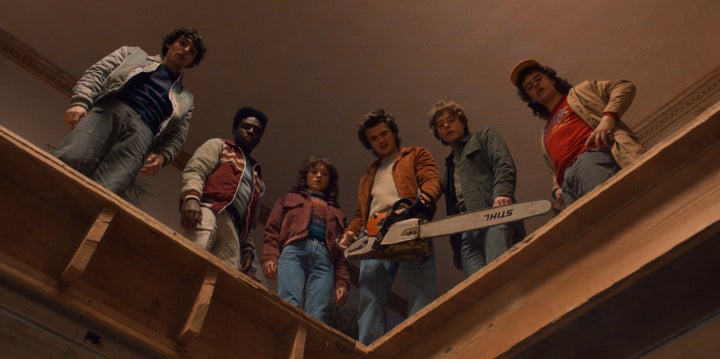
Fans of Netflix’s “Stranger Things” know just how stretched the sci-fi series’ release schedule became in its nearly decade-long run, as the streamer took its time rolling out five relatively short seasons, including a three-and-a-half-year gap between Seasons 4 and 5.
In that span, much of the cast, many of whom began the series as kids, grew into adulthood (even marrying and starting families). It’s no wonder viewers felt the young actors had, in a sense, aged out of the teen roles they were playing by the time the show concluded in December.
Those frustrations are understandable, especially in the streaming era, where bingeable shows that require more expensive productions often take far longer to return than the dependable fall and winter lineups of traditional network television.
“Shows like ‘Stranger Things’ … have huge amounts of VFX and other postproduction work that goes on for months after filming ends. That builds in more time between seasons,” Rick Porter, television business editor at The Hollywood Reporter, noted to The Ringer last year.
But the creators of “Stranger Things,” The Duffer Brothers, don’t seem to have a problem with that approach.
“If TV shows come out every year, it’s diminishing return,” Matt Duffer said in a 2025 interview with Variety, noting his preference for the “buildup.”
Fans of “Paradise” and “The Pitt” would likely disagree. These shows returned for second seasons just a year after their first season debut.
On the other hand, Starz’s “P-Valley,” another slow-to-return series, makes it clear why viewers find it refreshing when some shows can still resemble the steady network TV cycle we once took for granted. Because waiting two years or more for a new season of our favorite shows wasn’t always the norm.
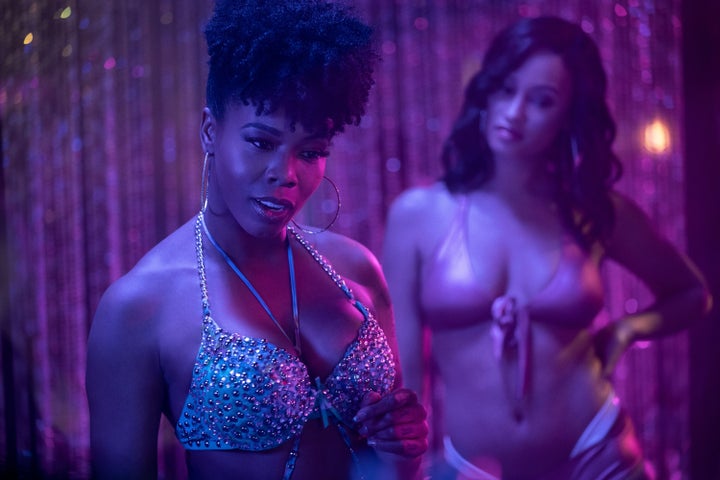
©Starz! Movie Channel/Courtesy Everett Collection
In 2020, Starz’s blistering strip club drama debuted at the height of the pandemic, captivating audiences with a searing portrait of dancers in Mississippi’s Dirty Delta, drawn from creator Katori Hall’s 2015 stage play “Pussy Valley.” While the critically acclaimed series initially flew under the radar, it gradually built a cult following that quickly began clamoring for a second season.
That follow-up finally arrived two years later, in the summer of 2022, delivering another batch of gritty stories set in and outside of the infamous club Pynk. But since its Season 3 renewal later that year, the Starz series has largely gone quiet, outside of a few announcements about new recurring cast members and series regular updates.
A January post on the official “P-Valley” Instagram page indicated a return sometime this year. Still, as the wait stretches on, with no premiere date in sight, it’s hard to say whether the show will be able to draw in its fanbase with the same force once again.
It’s funny, that’s the same question I asked as “Euphoria” made its grand return this week. Is it possible for the HBO series to capture lightning in a bottle for a third straight season, even after all of these years?
Even with viewing habits shifting in today’s streaming-dominated landscape, a show as big, bold and once-successful as “Euphoria” can’t simply fall flat this far into its run. Not while some loyal fans are still warming up to its new direction, holding out to see whether the series they’ve invested so much time in ultimately becomes something worth sticking with over the coming weeks.
It’s still too early to tell, but Season 3 of “Euphoria” will be the ultimate test of whether a show can bounce back from such a long, disruptive hiatus in an era when attention spans are already stretched thin by algorithms and a relentless stream of new shows dropping week after week.
But if audiences can still embrace it after all that, surely anything is possible.
‘ The preceding article may include information circulated by third parties ’
‘ Some details of this article were extracted from the following source www.celebrity.land ’