On April 21 1926, the papers had an early start. Breaking news
in the early hours of the morning meant the front pages had to be
held. When they appeared, they heralded a moment of history. A baby
girl had been born and she would change the Monarchy forever.
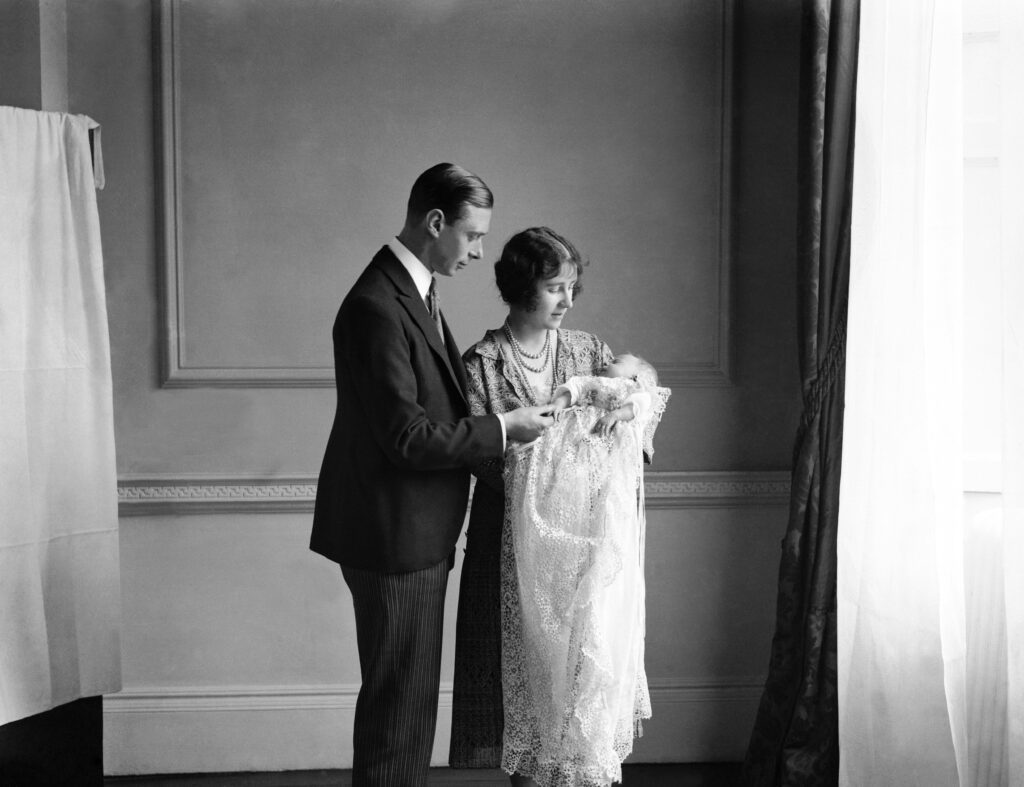
To the duchess, a daughter
‘Daughter for Duchess of York’ was a typical headline on the
morning of April 21 1926. The Derby Daily Telegraph reported that
”Her Royal Highness The Duchess of York was safely delivered of
a Princess at 2.40 this morning. Both mother and daughter are doing
well.”
In the spirit of the age, the details of the ”accouchement” as
the paper so delicately labelled it, were discreet but said so much
while saying very little. The Derby Daily Telegraph continued
”previous to the confinement (says the official bulletin), a
medical consultation took place and a certain line of treatment was
successfully adopted.” The Duchess of York had had a
Caesearean section but those actual words weren’t used.
The Leeds Mercury had to find space on its front page for the
late breaking news. It spread it out with a headline saying ”The
Duchess of York” followed by ”Happy Event This Morning” and finally
”A Daughter”.
It didn’t even get as far as reporting the baby had been born at
17 Bruton Street, London, the home her parents had moved at the
start of April 1926.
Meanwhile, the Birmingham Daily Gazette got the story to print
but only just. It ran the story as ”The Duchess of York delivered
of a Princess at 2.40 this morning. Both mother and daughter are
doing well.” It then reported, in far greater detail, another story
of the day, headlined ”Terrier’s attack on a tortoise, both under
treatment at animals’ hospital. Not everyone was a royalist, even
in 1926.
Congratulations all round
As the day went on, fresh editions brought fresh updates. The
Coventry Evening Telegraph, using Press Association reporting,
noted that ”many messages of congratulations continue to arrive
at 17 Bruton Street. It is probably that The King and Queen will
motor up from Windsor today. This is Their Majesties first
granddaughter, Princess Mary having two sons.”
The Press Association also said that the proud new father, then
Duke of York ”was at home for the important occasion and was
the recipient of many early congratulations from the various
members of the two families.”
Tradition must be upheld
As was customary then, a senior government official had to be
present at the birth of a baby so close to the throne. And so the
Lincolnshire Echo reported that ”The Home Secretary, Sir William
Joynson-Hicks, was summoned to Bruton Street in accordance with the
custom where births in the Royal Family are concerned, and was
present in the house at the time of the birth.
A title for a baby girl
The Dundee Evening Telegraph tackled the issue of the baby’s
title. It reported that ”the child will be called Princess and
is entitled to be styled Her Royal Highness. This is in accordance
with the King’s proclamation of 1917, adopting the family name of
Windsor. His Majesty then stated his intention of restricting the
style and title of ”Royal Highness” and to confine it in future to
all children of the Sovereign and to grandchildren of the Sovereign
in the male line only.”
There was no announcement of the royal baby’s name just yet.
Instead, on April 21 1926, she was the much loved daughter of a
duke and duchess with a life on the periphery of the Royal Family
stretching out ahead of her. And then history happened.
‘ The preceding article may include information circulated by third parties ’
‘ Some details of this article were extracted from the following source royalcentral.co.uk ’