Lucia Thomas | Staff Illustrator
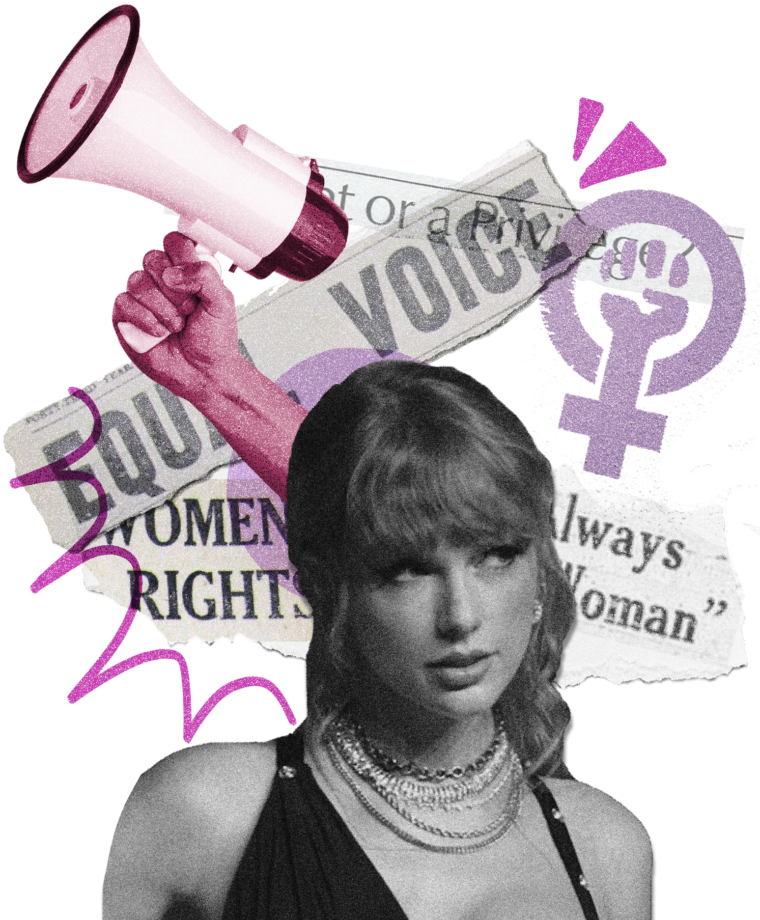
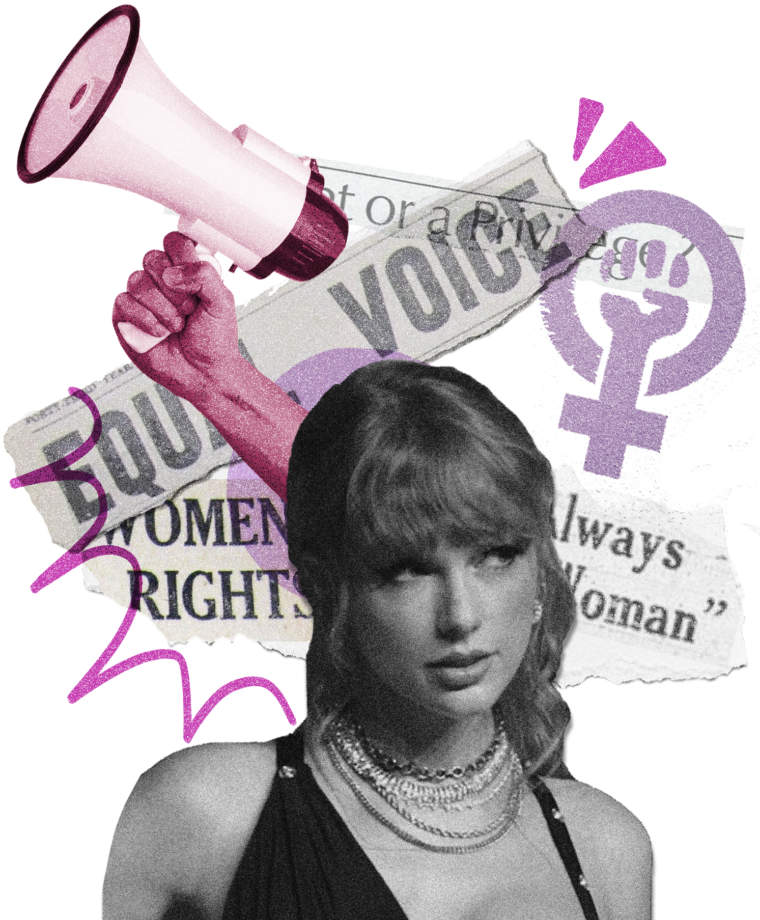
There is no feminist debate more exhausting than the one about Taylor Swift. People dissect her dating life, her activism (or lack thereof), her whiteness, her wealth, and her brand and write full dissertations about a woman whose political engagement, while not insignificant, operates within the carefully managed limits of PR-approved activism.
If you are one to criticize Taylor, I am right there with you. Her activism is the highly produced, corporate-pride version of feminism, be it her pastel-colored allyship of the LGBTQ+ community through her song “You Need to Calm Down” or her periodic voter-registration pushes. She does not challenge the systems that she benefits from. She uses feminism when it flatters her image, not when it costs her anything. She is a billionaire artist with global influence and should be doing more.
While there are valid critiques of Taylor Swift’s feminism, what is most alarming and absurd to me is that she has become the site of our feminist projections in the first place. We treat her like the definitive case study of 21st-century feminism, as if the entire movement could be measured by one pop star. We see it in headlines that treat each of her album eras like a new feminist milestone, in the thousands of opinion articles that support or criticize her, making the same cyclical arguments every time, and in social media comment sections where people argue about structural inequality through a single lyric from one of her songs.
We have let celebrity feminism — the public, branded feminist advocacy by famous figures — encompass the entire feminist movement. In celebrity feminism, we end up centering the people least affected by inequality because it’s easier to critique and worship them than to talk about actual feminist issues — ones that aren’t as glossy or clean. We outsource feminist politics to celebrities, then act shocked when the results are shallow. Of course they are. Most celebrities care more about their image, money, and fame than actual issues of substance.
Celebrity feminism tells a story of empowerment that’s individually appealing but structurally useless. It creates the illusion of progress in the feminist movement by attaching politics to a famous face while making sure the “progress” does not threaten the systems that produce those faces in the first place. The corporations, studios, and platforms that promote celebrities understand that a soft, palatable feminism draws in their audience without challenging their own practices. It makes feminism “aesthetic” while keeping it politically harmless.
Mainstream feminism has always had a celebrity problem. What’s new is the degree to which celebrities have become the primary focus of feminist arguments. We’ve reached a point where celebrity feminism is not another conversation; it is the entire conversation. If every feminist debate centers on someone famous, then we never have to be accountable for our own contradictions, cowardices, or complacency. The celebrity becomes the stand-in for our political fantasies and failures. Yet, we cling to celebrity feminism because it lets us be politically expressive without being politically involved.
Instead of introducing people to feminism, celebrity-centric debates create the false sense that having an opinion about a famous woman is activism. These views flatten decades of feminist work into branding opportunities for people with less incentive to challenge the structures that benefit them. The movement then becomes shallower, not more accessible.
I am not defending celebrities, nor am I saying we shouldn’t critique or analyze celebrities and how they impact the world. Wealth and influence come with responsibility, and celebrities should be held accountable for their silences and lack of advocacy. But their contributions, however significant or shallow, cannot be the measure of a movement. Feminism is supposed to live beyond the latest entertainment cycles. When we obsessively monitor celebrities’ choices, we shrink feminism into something so fragile and unserious that a pop star’s silence becomes a symbol of existential crisis.`
The real feminist work, the kind that changes institutions, policies, and relationships, happens in places with no cameras and PR. It is slow, thankless, and collective. It takes shape in union meetings, community clinics, student groups, courtrooms, classrooms, and living rooms. It looks like supporting survivors of domestic abuse, sexual assault, and harassment in our community, advocating for fair policies in our workplace or university, and holding the institutions we are a part of accountable to the values they claim to uphold. It can be paying attention to who gets interrupted in meetings, whose labor disappears into the background, and who is always expected to “compromise” — and choosing not to let that slide.
Feminism cannot be outsourced to the wealthy, because a real feminist movement is built by people who do not have the luxury of believing feminism is optional.
So the next time you’re pulled into another endless debate about Taylor Swift’s supposed political obligations, especially on social media, pause and reflect inward. What small action, within your own reach, would matter more than micro-analyzing the ideology of someone who doesn’t care about what you think?
‘ The preceding article may include information circulated by third parties ’
‘ Some details of this article were extracted from the following source www.studlife.com ’