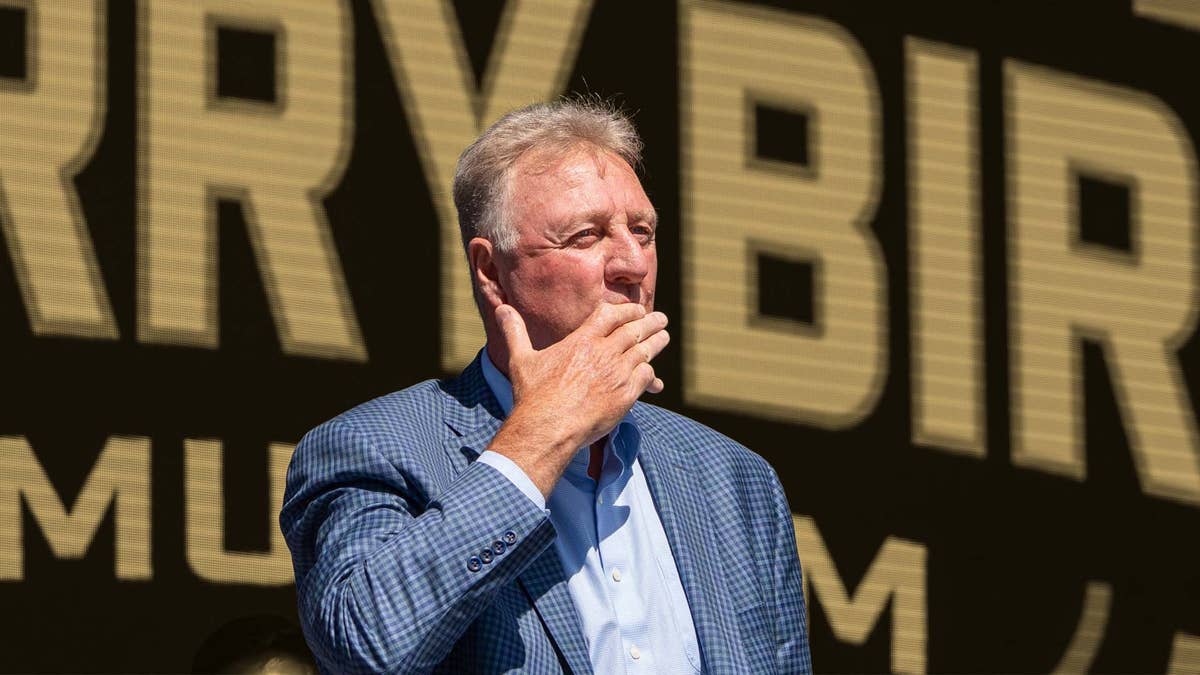
Larry Bird played in the golden era of the NBA in the 1980s, when the NBA was reaching unprecedented levels of popularity. Still, he was never the one to indulge old school nostalgia, but he did express his disapproval of the revolutionary shift in the league’s culture.
During Bird’s playing years, the spectacle was mostly contained within the four boundaries of the hardwood. The drama was forged in real-time through grit, ruthless competitiveness and unscripted rivalries.
Advertisement
Over time, Larry realized that the actual game eventually served as a mere backdrop for a massive, multi-billion-dollar entertainment ecosystem driven by media narratives, brand building and other unnecessary off-the-court stuff.
Ultimately, Bird wasn’t in favor of the NBA’s pivot from a sport-first league to a show-focused organization.
“There’s more hype than there is game and the sport can’t possibly live up to that,” Bird wrote in his book, “Bird Watching: On Playing and Coaching The Game I Love.”
Advertisement
“It’s not if you win, or how you play, but how you look when you play, or where you play. Then there’s all the loud music in the middle of the game and the bands and the acts and the cheerleaders. It’s almost like theater.”
Bird noticed the change early on
Long before the NBA transformed into a global entertainment powerhouse defined by high-flying highlights, viral social media clips and deep 3-point shootouts, Bird had already sensed where the league was headed.
Advertisement
As far as Larry Legend could remember, this evolution started exactly during the 1986 NBA All-Star Weekend in Dallas. From Bird’s standpoint, that event served as the tipping point as the NBA introduced flashier and louder sideshow presentations that felt entirely different from the game he grew up playing.
According to Bird, the introduction of the 3-point shootout and the meteoric rise of the dunk contest that year perfectly encapsulated the NBA’s new direction. While Larry himself dominated the inaugural 3-point contest, he admittedly harbored a deep-seated skepticism toward the shot itself, viewing it as a gimmick that distorted the game’s traditional rhythm.
Moreover, Bird candidly spoke about his thoughts on the evolution of the annual dunk contest, describing it as “some kind of a rap contest.”
Advertisement
As early as the ’80s, Bird already realized why there was a sudden emphasis on individual showmanship and theatrical flair. The NBA was no longer selling high-level basketball. It was catering to a younger, entertainment-hungry demographic and corporate sponsors who prioritized extravaganza over sports.
“I can understand all the marketing,” Bird added. “That’s how we all make money. I always felt they did a fantastic job of promoting the league, but somewhere along the way it got bigger and bigger and then the NBA went corporate.”
Bird became a fan of today’s game
Delving into Bird’s observations, he wasn’t necessarily saying the NBA has gone soft and the players have become less talented. In fact, the Hick from French Lick himself believes that today’s NBA players are more skilled than ever.
Advertisement
Rather, Bird is just pointing out that the very soul of the fan experience has changed.
Reading Bird’s words at present, it becomes clear that he foresaw the exact blueprint that the current NBA followed – a league where entertainment value often shares equal billing with the game itself.
This story was originally published by Basketball Network on May 24, 2026, where it first appeared in the Off The Court section. Add Basketball Network as a Preferred Source by clicking here.
‘ The preceding article may include information circulated by third parties ’
‘ Some details of this article were extracted from the following source sports.yahoo.com ’