Selling books in 2026 is a tough business — almost as tough as lugging a 140-pound safe to 2135 S. Michigan Avenue at 5 in the morning in Chicago. But that is what I found myself doing on April 21 — taking a squat hunk of steel out of the back of my SUV and carrying it to the sidewalk where I was to open it on the fortieth anniversary of Geraldo Rivera’s famous debacle forty years before.
My book — “Capones Vault: The Biggest Disaster in Television” — had just come out the week before. Chicago Media had been generous with a WGN television appearance and two WGN interviews on the radio, a full page in the Chicago Tribune, several interviews on talk radio and a Chicago Magazine interview.
In this second quarter of the twenty-first century this is incredible for an author. Writing has been eclipsed by movies, documentaries, sports … the list goes on and on. So, with all this media, why do I feel the need to wake up at four in the morning to open a safe on a cold street in Chicago, to simulate a broadcast deemed the biggest disaster in television?
Because selling books is tough, and you have to do everything you can. That includes renting a safe from a movie prop company that neglected to tell me it weighed almost 150 pounds.
My strategy was to open my safe and lure in roving television crews looking for footage to commemorate the great Capone debacle of broadcast television.
Forty years earlier, a fledgling entertainment company had taken a risk and put on a two hour live “infotainment” program. The bet was that people would watch Geraldo Rivera narrate an excavation of the basement of the Lexington Hotel, from which Capone had run Chicago for years. Legend had it that he might have hidden millions behind a five-thousand-pound slab of cement.
The premise was simple: Knock down the slab, blow up the wall and see what was there. My premise was also simple. Position my safe in front of the high-rise apartment building that had replaced the Lexington and open it, just as Geraldo had done. In my safe were bottles, money and a cellphone. In my interview with WGN, I had teased the opening, and at the last minute the station had committed to covering it.
So now I was set up with my safe and two banks of lights. The WGN truck had pulled up, and the crew has gone into a coffee shop to keep warm. This would be during the morning news cycle, where I would be featured in the cutaway segments. We tried to keep warm. I had hired my own videographer as well. When I originally thought of this stunt, I thought I would just stream it live. But now, with real coverage, that plan fell away.
As with Geraldo, my opening had a great possibility of failure. The kicker of my event was that I had arranged to interview Geraldo live on zoom. Things went off the rails immediately. The crew came out and did a quick segment where I could not reveal the contents of my safe before they cut back to the studio. Then I was informed that my interview with Geraldo had been hijacked by the station and they would not be cutting back to my safe.
The WGN crew beat it back to their van and disappeared. I loaded my safe back into my SUV and started driving home.
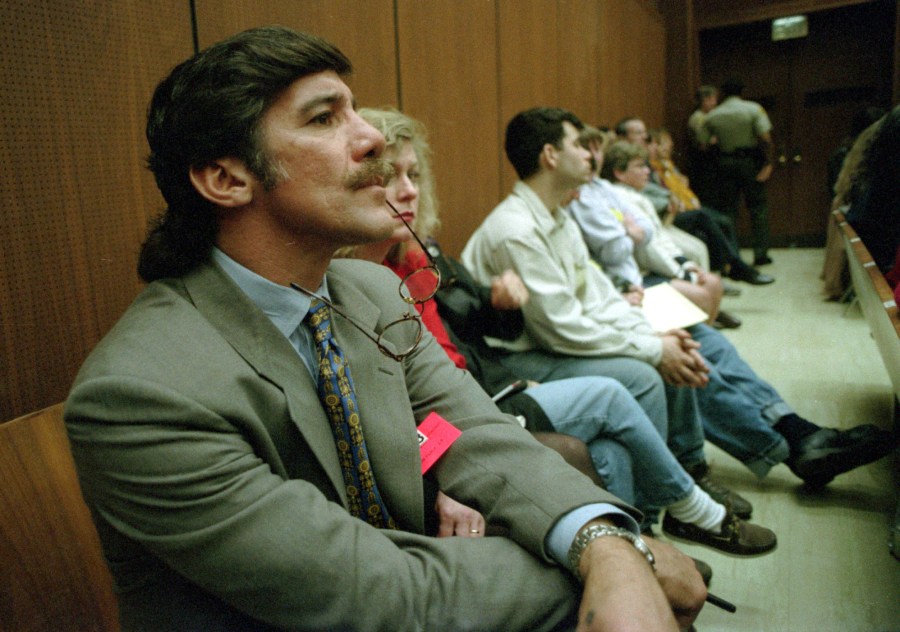
In the original broadcast Geraldo, after finding nothing in the vault, was sure his career was over. That was until the ratings came in: Thirty million people had tuned in to watch the Mystery of Al Capones Vault. It became the subject of a nationwide joke — yet Geraldo’s career reached the stratosphere as a result.
The lesson was that people did not care that there was nothing in the vault. They were just there for the ride. The empty vault was mocked as a failure, but forty years later it looks less like a disaster than a prophecy: Reality television had arrived. Livestreamed suspense and viral disappointment made its appeal to the American appetite for watching something happen in real time.
When I interviewed Geraldo for my book, I asked him what the legacy of the broadcast might be. He said he feared that on his tombstone they would write, “There was nothing there.” But then he paused and said, “You know, you can never fake the spontaneity of surprise.”
Driving home in the dawn with my empty safe, I knew exactly what he meant.
William Hazelgrove is the author of “Capone’s Vault: The Biggest Disaster in Television” and of the forthcoming book “The Camp Mystic Disaster: Tragedy and A One Hundred Year Flood.”
Copyright 2026 Nexstar Media, Inc. All rights reserved. This material may not be published, broadcast, rewritten, or redistributed.
For the latest news, weather, sports, and streaming video, head to The Hill.
‘ The preceding article may include information circulated by third parties ’
‘ Some details of this article were extracted from the following source www.yahoo.com ’