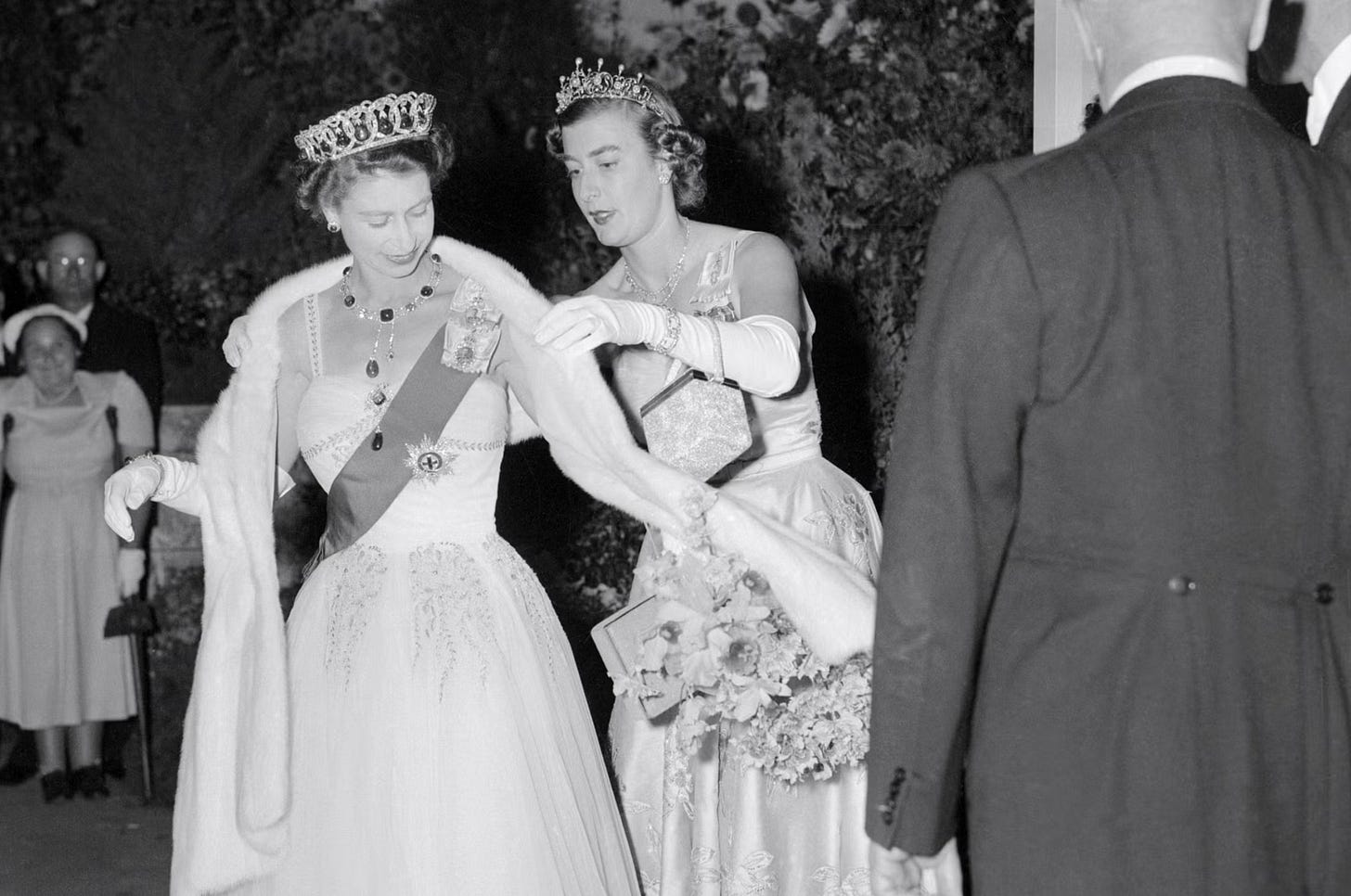
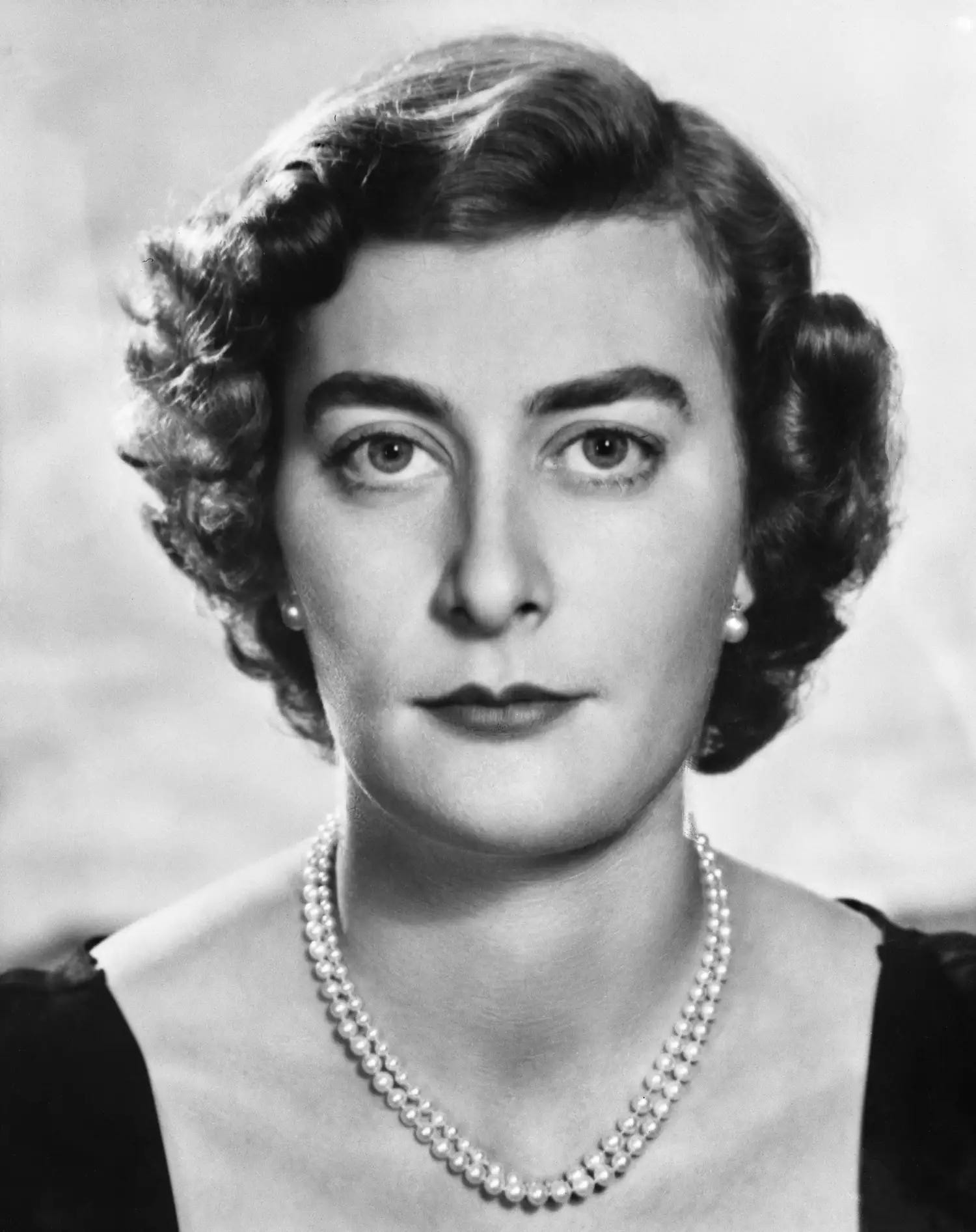
Lady Pamela Hicks died on June 5th, 2026, at the age of ninety-seven. The headlines have reached for the obvious framing: cousin of Prince Philip, bridesmaid and lady-in-waiting to Elizabeth II, and all of that is true. Sally Bedell Smith, who interviewed her across multiple years, called her “royal several times over.”
Pamela Carmen Louise Mountbatten was born on April 19th, 1929, the younger daughter of Lord Louis Mountbatten, the last Viceroy of India, and the heiress Edwina Ashley.
Through her father’s side, she was a first cousin of Prince Philip, a third cousin of Elizabeth II, and a great-great-granddaughter of Queen Victoria. As of this year, she was the oldest living descendant of Victoria and Albert. She was also a great-niece of the last Empress of Russia, Alexandra Feodorovna… all of which is to say that Lady Pamela’s family tree ran straight through both the survival of one dynasty and the slaughter of another.
Victoria’s grandchildren and great-grandchildren were hard-wired into every throne on the continent, for better or (very often) for worse. Lady Pamela Hicks was one of the last people walking around who was a living node on that switchboard. With her death, another direct human link to the nineteenth-century court has been closed off.
But I want to make a slightly different case for why Lady Pamela’s death is worth pausing on, because it isn’t only the loss of a person who saw extraordinary things. It’s the closing of a particular kind of royal life that the modern monarchy has, very deliberately, stopped cultivating.
Lady Pamela belonged to a generation whose proximity to the sovereign was a function of blood and breeding rather than a job application or an election. She didn’t marry into the family, and she wasn’t hired in any sense we’d recognize. She was simply born into the bloodstream of European royalty and grew up within the inner circle. There are very few people left who can say that, and there will be fewer still by design if King Charles’s vision of a “slimmed down” monarchy comes to pass.
She grew close to the future Elizabeth II and Princess Margaret in the 1930s; Elizabeth was three years older, Margaret a year younger.
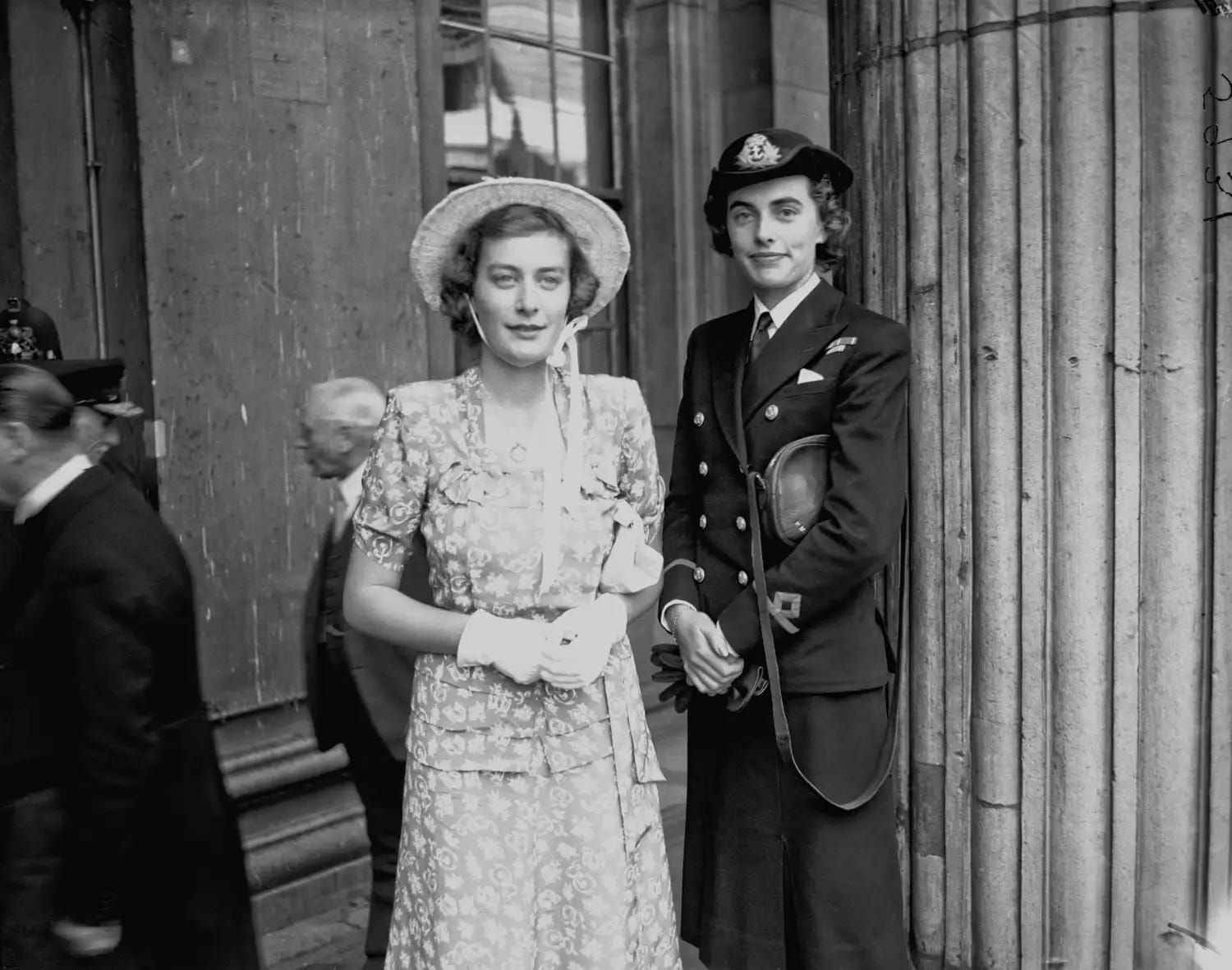
Her initial education was overseen by nannies while her father was stationed in Malta with the Royal Navy. During the war, Pamela was sent across the Atlantic to the Hewitt School in New York, which is its own small reminder that even the grandest families spent those years improvising for safety like everyone else.
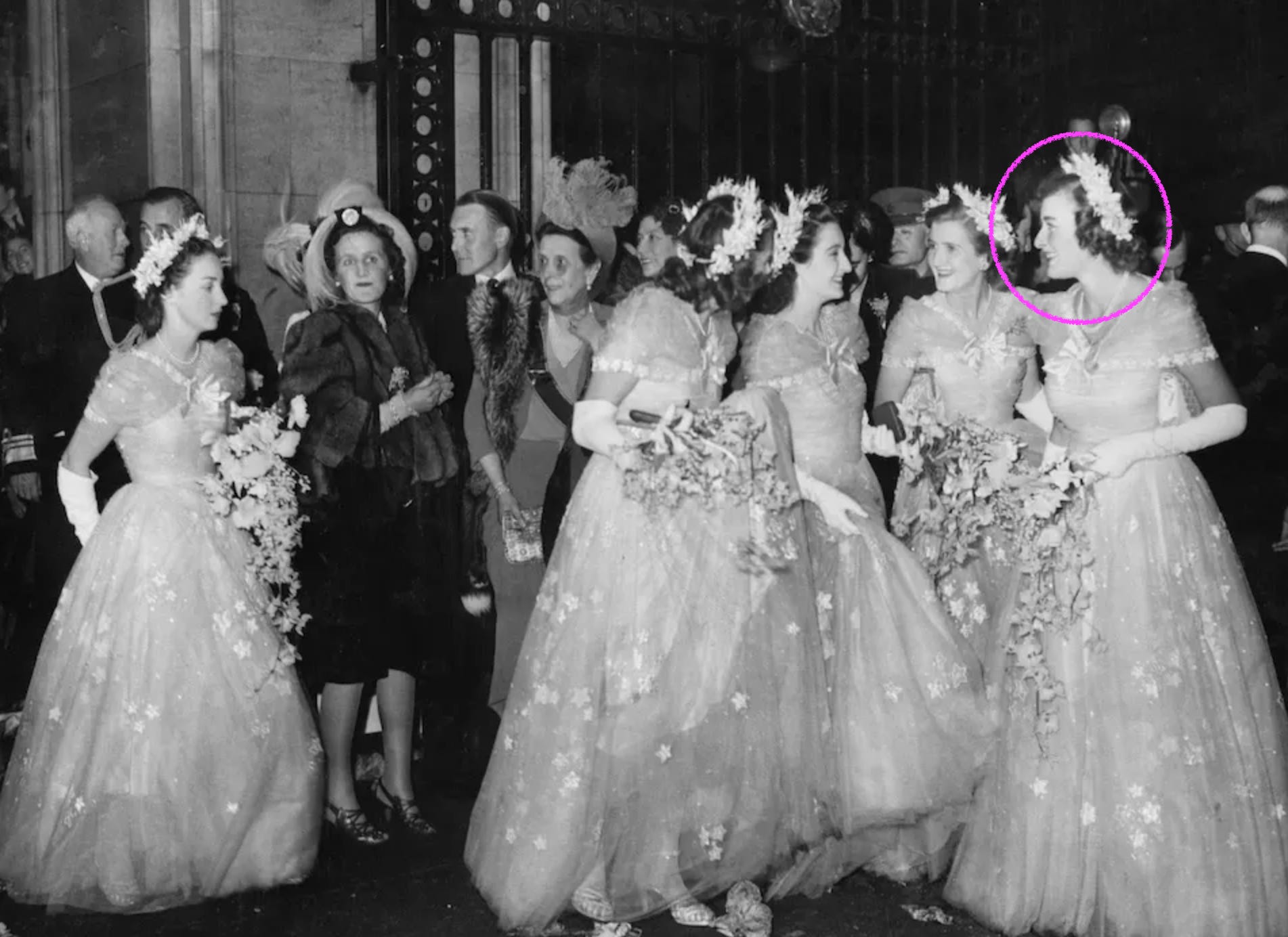
By November 1947, she was a bridesmaid at the wedding of Princess Elizabeth and Prince Philip. By then, her father had been appointed Viceroy of India, and Pamela accompanied him to South Asia. There, her family became central to the independence and partition of India into India and Pakistan. And Pamela herself wasn’t ornamental; she served as Lord Mountbatten’s co-secretary, and later as secretary to her parents’ friend and associate V. K. Krishna Menon, then acting High Commissioner of India to the United Kingdom.
In February 1952, she was a lady-in-waiting to Princess Elizabeth, in Kenya, during the fateful trip when King George VI died and a princess walked down from the treetops as a Queen. After the Coronation, Pamela then accompanied the new Queen and Prince Philip on their six-month post-coronation tour of thirteen Commonwealth countries in 1953. It was the longest, most ambitious royal progress of the century.
This is where the historian in me wants to slow down, because “lady-in-waiting” sounds decorative, and was anything but. The role is a holdover from a much older court: the gentlewomen of the Georgian and Victorian households who were the human infrastructure of monarchy. These were companions, secretaries, fixers, shock absorbers, and were drawn almost entirely from the aristocracy. They served as much out of dynastic obligation as aptitude. They were also the connective tissue that made a court a court.
Lady Pamela was one of the last of that line to serve at the very top, on the most demanding tour the modern monarchy ever attempted. The job barely exists in that form anymore. Elizabeth II’s last ladies-in-waiting were reclassified, after her death, into something more like part-time volunteers. Under Queen Camilla, they have been officially rebranded to “queen’s companions.”
The institution thinned out while Lady Pamela was still alive.
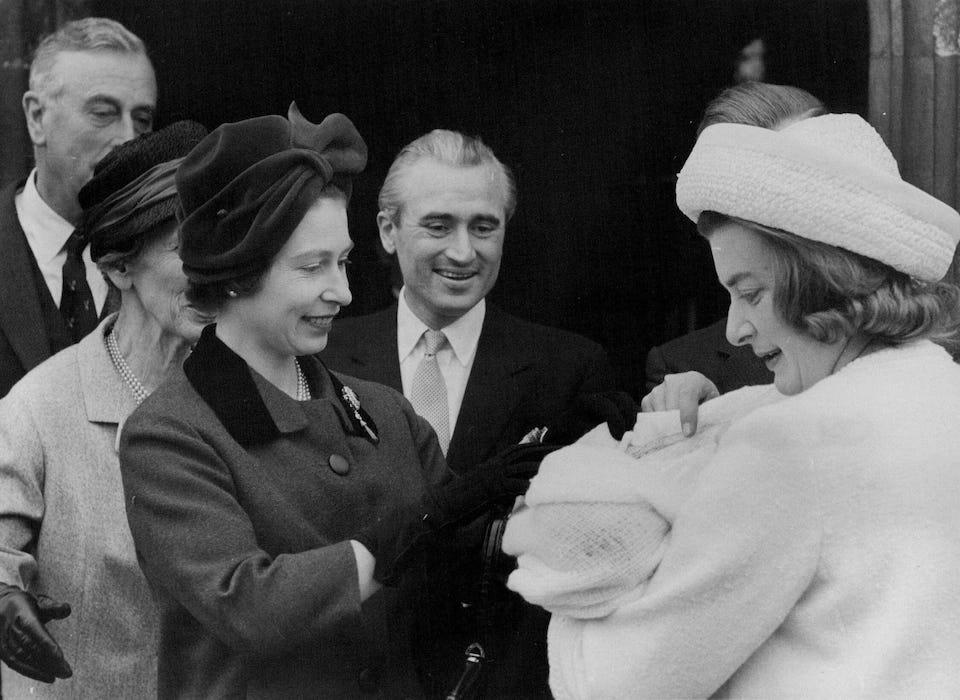
In 1960, she married the interior designer David Hicks and stepped back from formal royal duty. The family threads stayed knotted, though: her first child, Edwina, was born on Christmas Eve 1961 with the Queen as a godmother; her son Ashley became a designer in his own right; and her younger daughter India is a goddaughter of King Charles.
Then there is the biographical note that no account of Pamela can reasonably omit: on August 27, 1979, an IRA bomb destroyed her father’s fishing boat off Mullaghmore. It killed Lord Mountbatten as well as Pamela’s fourteen-year-old nephew Nicholas Knatchbull; a fifteen-year-old local boy, Paul Maxwell; and the eighty-three-year-old Dowager Lady Brabourne. Her sister Patricia, Patricia’s husband John, and Nicholas’s twin Timothy were gravely injured.
Lady Pamela had stayed behind at Classiebawn Castle, Mountbatten’s seat, that morning, and it fell to her to break the news to her sister and then carry her through it. She said years later that she had forgiven the IRA.
In 2002, she sold the family’s Mountbatten Tiara—a striking, diamond-encrusted Chaumet piece her mother had worn in the upper rooms of royal life—at auction. It went for £149,650, comfortably over estimate, which likely brought a sigh of relief to Pamela’s household.
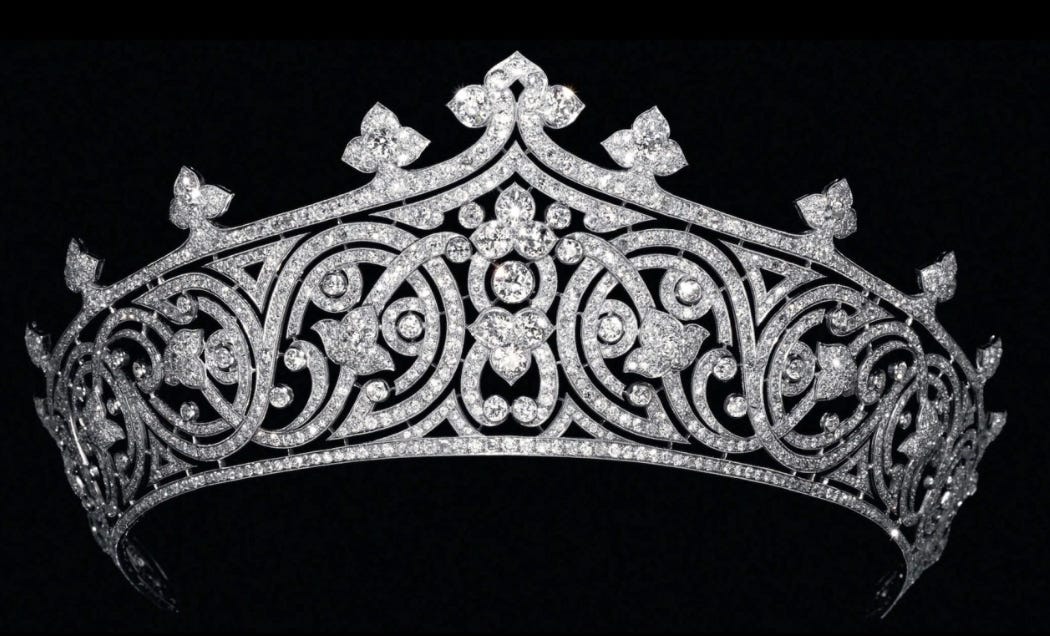
Her explanation for selling the treasured piece was pure, if bleak: “We’re not pop stars, so we need the money.” She added that she was sad to part with it, but had reached the point where she had to sell something.
There is a whole social history in that sentence. The old aristocracy has frequently found itself asset-rich and cash-poor, sitting on heirlooms and houses while the actual liquid funds thinned with each roof repair and each passing generation. The unsentimental willingness to put a precious thing under the hammer and say so plainly is, in its way, the most aristocratic move of all.
Bedell Smith describes Pamela’s trademark as being “bracingly outspoken,” and now that more of her remarks are being collated in tribute, we can see what she meant. The flavor of her observations isn’t tabloid cruelty, but rather the dry frankness of someone who had operated on the periphery of an elite social sphere for her entire life, and was possessed of the self-fortitude to actually speak her mind.
She was, by the accounts now emerging, no admirer of Diana and a quiet fan of Camilla as a sensible, useful presence. She traded in the kind of detail that can bring monarchy to a human scale: the small complaints, the unflattering glimpses, the affectionate eye-rolls and knowing smirks of family.
My favorite example came years earlier and turned the candor on herself. Attending the 2011 Cambridge wedding, she remarked that in a family as large as the Queen’s, “there comes a moment… when you just have to have a cull and cut out all the people over 80.” It was a joke. It was also, it turned out, a prophecy.
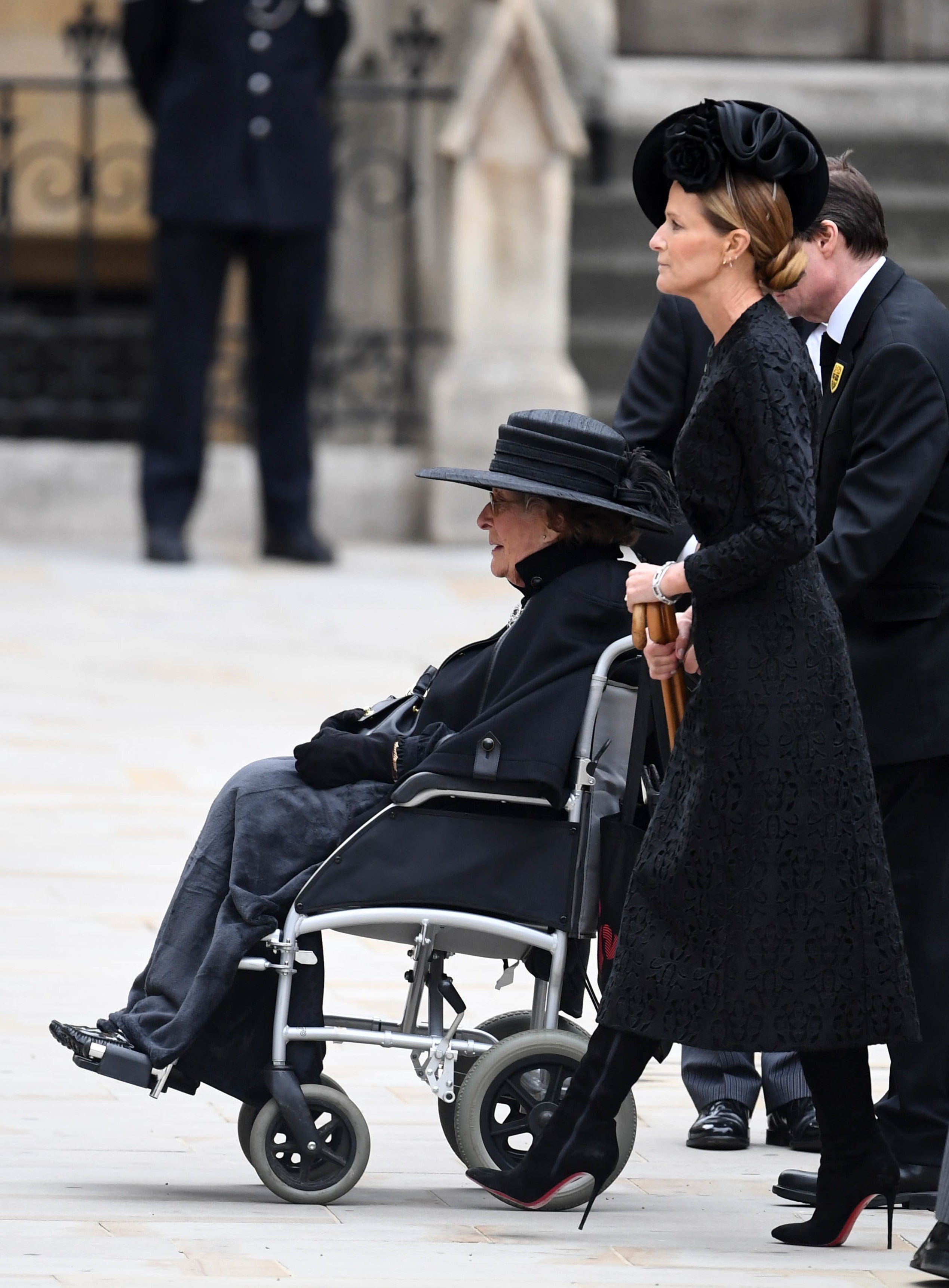
Twelve years later, Lady Pamela herself wasn’t invited to the coronation of King Charles III. Daughter India explained publicly that the Palace had called to say this coronation would be different: the eight thousand who packed the Abbey for Elizabeth II was now to be whittled to a thousand, the King “offending many family and friends with the reduced list” to ease the burden on the state. Lady Pamela, then ninety-four, was reportedly not remotely wounded.
She called it sensible. Invitations, she reportedly said, based on meritocracy, not aristocracy.
I find that genuinely remarkable, because Lady Pamela was naming the exact transformation she was being phased out by… and endorsing it. The slimmed-down, professionalized, value-for-money monarchy Charles is building has very little room for the aristocratic intimate, the cousin-by-blood, even the gentlewoman companion. Queen Victoria had up to 32 at any one time; Queen Camilla has six.
Lady Pamela understood that she was a fixture of the older model, and rather than resent the new one, she evidently gave it her blessing. That is a remarkable kind of clear sight found in someone who had watched the institution acclimate across her entire life. Clearly, she had recognized one more adaptation as necessary.
A footnote that completes the portrait: in 2018, at eighty-nine, she spent twenty hours on a trolley in a hospital corridor before being treated. Her verdict on the NHS afterward? Brilliant. For a woman who had dined with half the crowned heads of Europe, that absence of entitlement perhaps tells you more about her character than any tiara ever could.
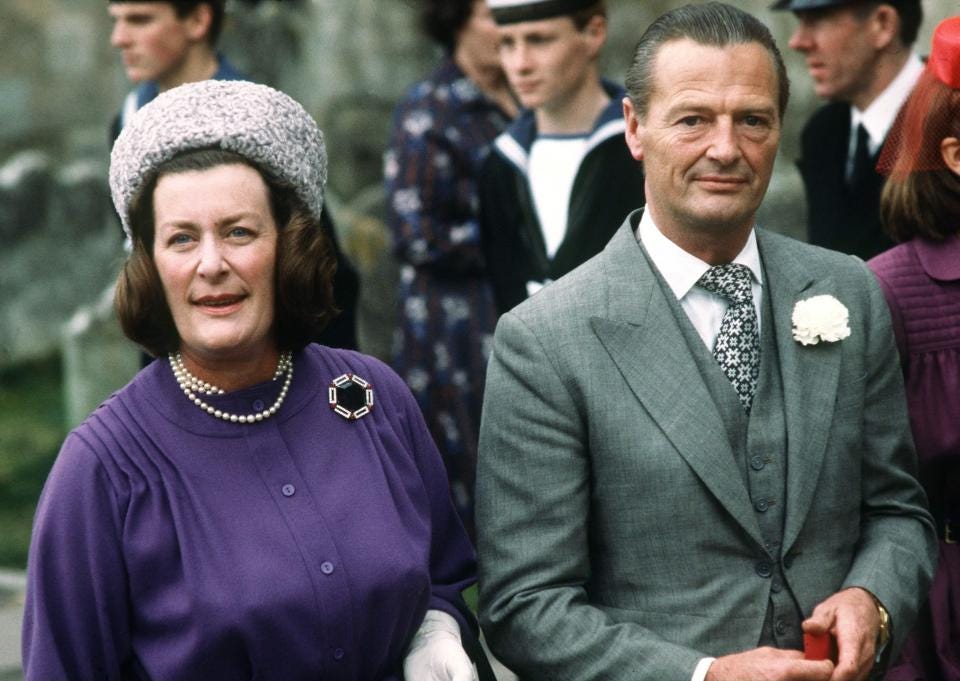
We’ve lost most of the people who knew Elizabeth II as Lilibet rather than as a global icon, and that brings its own grief. But Lady Pamela’s death marks something structural, too. The model of royal proximity she represented was earned by birth, sustained by blood, and lived out in unpaid loyal service at the heart of the household. It is also, effectively, extinct.
The modern court is staffed, salaried, vetted, and slimmed. King Charles has reassembled it that way on purpose. What might be the most surprising twist was someone like Lady Pamela Hicks, with characteristic dryness, telling us it was the right call.
‘ The preceding article may include information circulated by third parties ’
‘ Some details of this article were extracted from the following source mattaoffact.substack.com ’