Neighbors across the U.S. are reviving free live music, and they’re taking over streets to do it.
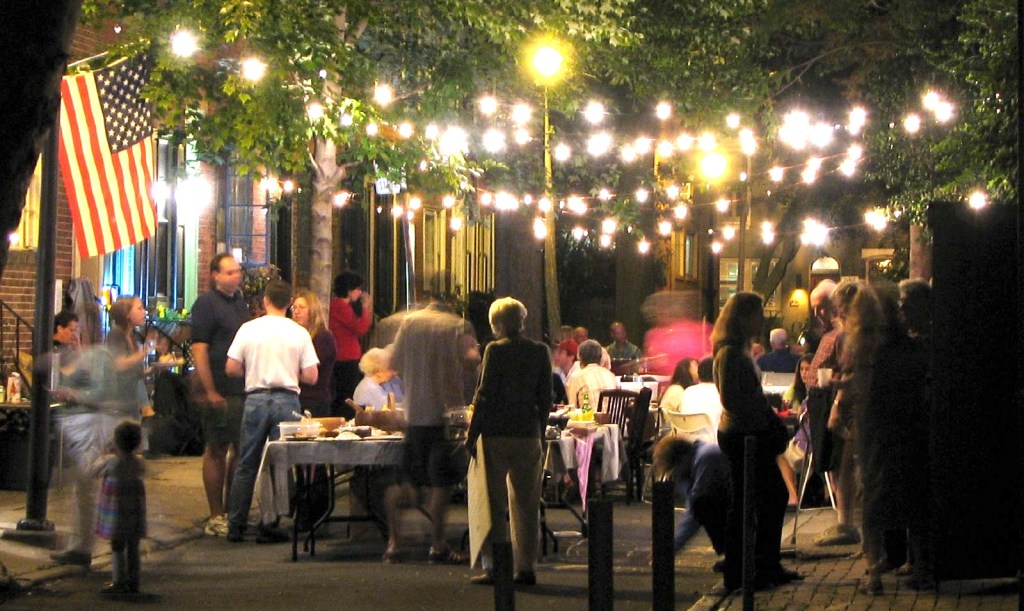
For a few hours every year, Porchfest transforms driveways, yards, and, you guessed it, porches, into concert stages. Neighbors from every age, instrument, and genre become concert performers. Streets become festival grounds, inviting neighbors to listen, dance, and celebrate community on otherwise car-crammed asphalt.
Neighbors Gretchen Hildreth and Lesley Greene of upstate New York came up with the idea to host a block party-like concert in 2007 in the small city of Ithaca. At the time, 20 performances proved an incredible feat for the duo to assemble. Now backed by two decades of lessons learned, city collaboration, and a committed volunteer base, more than 150 acts are expected to perform this September.
“It’s such an obvious concept that it’s surprising no one had done it before,” said Andy Adelewitz, one of the head organizers of Ithaca’s Porchfest. Adelewitz had just moved to the city with his wife one month prior to the inaugural festival. One year later, he played an acoustic set on his own porch. In 2013, he joined the planning team, and has co-led the event ever since.
Now entering its 20th year, more than 250 Porchfests across the US, Canada, and Australia reimagine how streets are used – and who they’re for.
The show could not go on without people in the street. “We had hundreds, and then … thousands of people coming,” Adelewitz recalled of the event’s first years. He and his volunteers scrambled to keep visitors on the sidewalk with minimal to no success. “People are going to bleed into the streets.”
Since then, Porchfest Ithaca has maintained open streets as an integral part of the event. Concertgoers move freely, bouncing from house to house to enjoy the lineup.
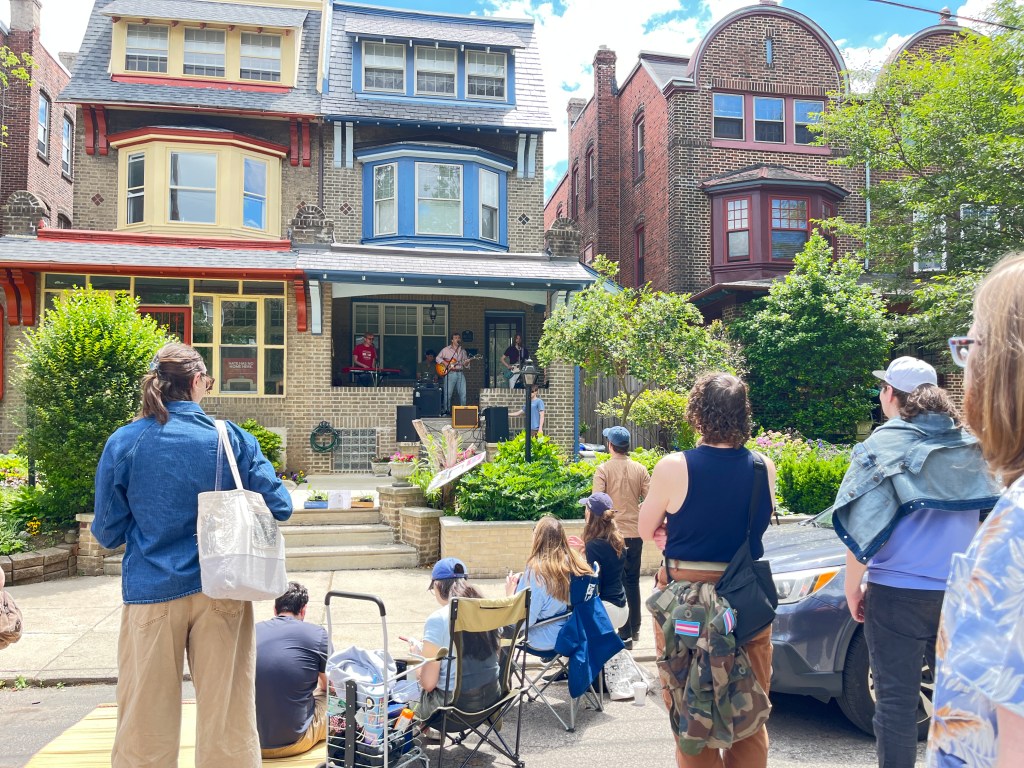
In Philadelphia, Porchfest organizers follow the same mantra.
“My block was blocked off as if it was a block party,” said Andy Niedermeier, a musician and porch host at West Philly Porchfest. “It felt a lot more peaceful or something.”
Celebrating its 10th year, West Philly Porchfest hosted over 200 acts last month. Like in Ithaca, and in hundreds of cities, its crowds danced and sang their way into the pedestrianized street.
During the festival, closing off traffic is more than an assurance of safety – it’s a democratization of live music.
Amidst surging ticket prices, it’s no surprise that Porchfest attracts growing crowds every year. No-cost concerts respond directly to an affordability crisis hitting live music enthusiasts particularly hard.
Since the beginning, Adelewitz says, the event has been “about money as little as possible.”
Porchfests attract a wide variety of performers, from newly-formed bands, to father-daughter duos, to elementary school students. Often, these acts are taking the stage for the first time in their lives, and usually without any financial backing.
Traditional music festivals require costly coordination, and nightclubs heavily filter their acts, but “Porchfest gets to be free of all of that,” Adelewitz says. “Anyone who wants to play, just sign up, and we’ll put you on the schedule.”
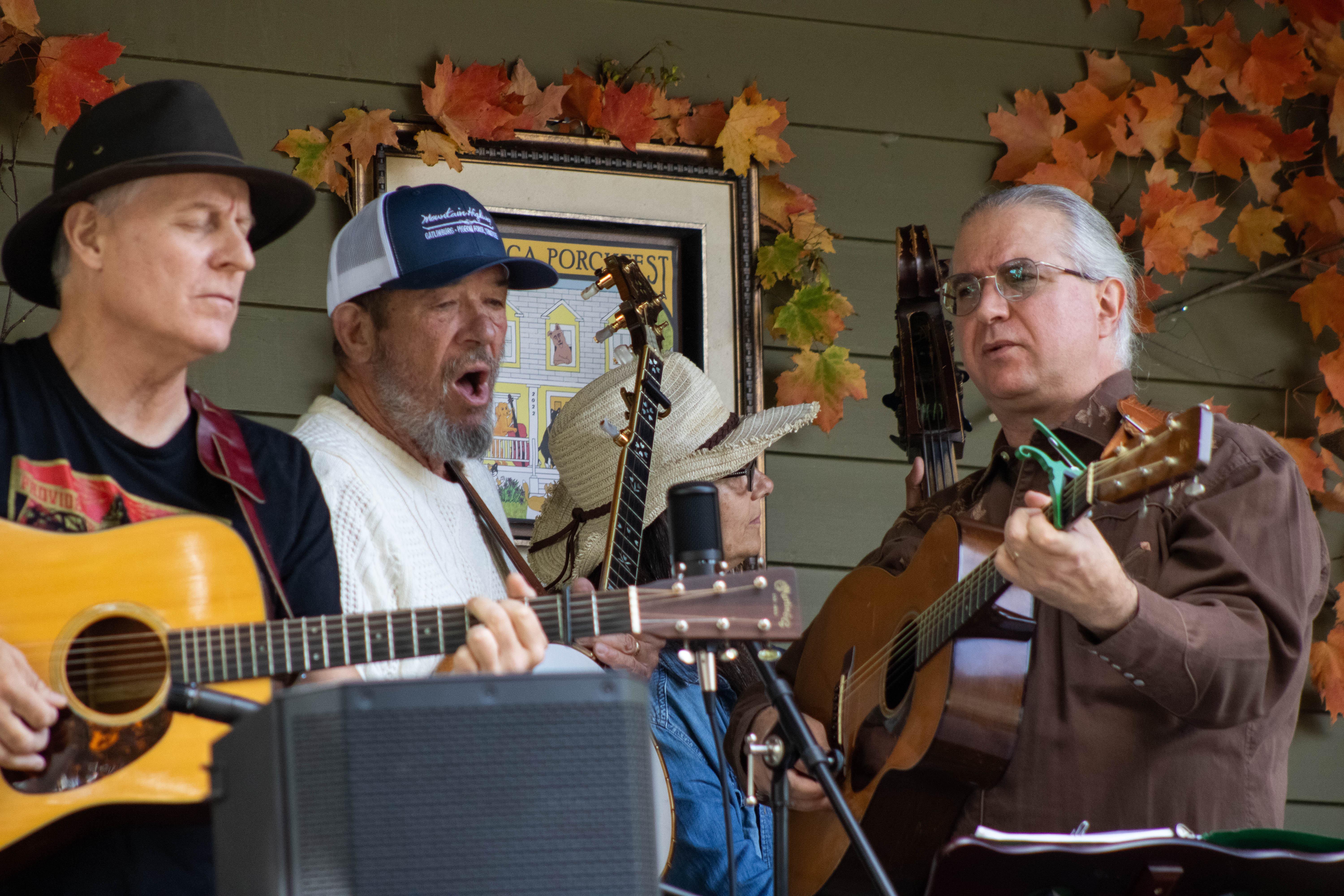
The variability of a Porchfest show sets the festival apart from larger, high-cost events. Audiences don’t see the unfamiliar lineups as the cost of free music, but a perk of being in community. “You’re going to be surrounded by people that are interested in hearing music they haven’t heard before,” Niedermeier said.
Free admission, open sign-ups, and exposure to art are all byproducts of equitable street design. Cities designed for cars are destined to produce traffic, pollution, and conflict. Cities designed for people create infinite opportunities.
Porchfest isn’t centralized — any neighborhood can host its own, without prior approval. Ithaca organizers publish a guide on how to host, and encourage anyone involved to join their Facebook group and add their event to the growing event map (it’s a real big Northeast thing).
City bureaucrats and emergency response have a reputation of axing pedestrianization projects, but many have come around to, and even supported, local Porchfest events.
“We had a fire chief for many years who thought that every public gathering was inherently dangerous,” Adelewitz recalled. “But then you’d have the rest of the committee who were like, yeah, you’ve got to work with it, but we’ve all got your back.”
Porchfest exposes neighbors to car-free streets, a sight they may otherwise never see on their block. Not only does it push back on soaring entertainment costs, but invites them into the movement for people-first design.
For a full list of Porchfest events, or to start your own, visit www.porchfest.org.
‘ The preceding article may include information circulated by third parties ’
‘ Some details of this article were extracted from the following source usa.streetsblog.org ’