I landed in Tokyo on June 10 and checked into my hotel in Ariake. The initial moments were all the usual first-timer chaos – getting a bit lost in the subway maze, eating more convenience store egg sandwiches than I’d like to admit, and making that obligatory trip to Odaiba to stand under the Unicorn Gundam and watch as it transformed with a mechanical groan at dusk and lit up the skyline.
But what stuck with me on the first night wasn’t the sights and spectacle. It was how surprising the silence felt.
The second I boarded the airport limousine bus, the noise in my head switched off. People expect Tokyo to be a wild blur, but at night, the city of 37 million people might as well be a different world, as if it’s holding its breath. Convenience stores glow every 200 meters, yet the city feels muted. Ariake makes that feel even more pronounced. This pocket of the city is pretty hushed, clean, orderly, and built in perfect blocks. From my room, I could see Ariake Garden across the street — this massive, layered mall complex sitting within a pristine concrete cityscape. There was no clutter or visual noise, just pure geometry and space.
Coming from India, that silence felt foreign to me. A lot of sound drives our daily life as much as it drives our music scene. We thrive on that energy—crowds that sing and argue all at once and heavy bass that hits your chest before the music even starts. So, in all that stillness, I kept looking for a pulse. And I found it, right where I had been waiting for it: at the Music Awards Japan (MAJ) Week 2026.
MAJ is only in its second year, but with a massive academy of 5,000 global voters, the industry is already calling it “Japan’s answer to the Grammys.” Organized by the Culture and Entertainment Industry Promotion Association (CEIPA), it’s Japan’s biggest international music awards show. Last year, it debuted in Kyoto, surrounded by temples and history, as if the city itself were part of the stage design. This year, it moved across the water to the grand Toyota Arena Tokyo on the Odaiba waterfront. The whole area around it is sleek, futuristic, built for scale – Zepp Diver City is a few blocks away, there are shopping malls that double as concert venues, and the waterfront walkway where you could hear the bay against the concrete at night.

Over the two nights I personally attended, I watched an industry hand out red glass Rubies while considering its place beyond Japan. As a music journalist from India — where music crosses borders fluidly through digital momentum and diaspora reach — it was interesting to watch a cultural superpower deliberately decide, in real-time, just how much of its heavily protected market it wanted to share with the rest of the world. For me, it felt less like a standard industry celebration and more like watching a country balance its deep-rooted domestic traditions with the pull of the global stage.
For a long time, Japan kept its massive music market — the second-largest in the world— strictly to itself. MAJ 2026 broke that tradition. Instead of celebrating only its own talents, the festival felt like a warm, open invitation, proving what can happen when you stop hoarding your music and start building a platform where different music scenes can connect on the same stage.
Enka, Kayokyoku, and the Japan That Doesn’t Chase Trends
My MAJ journey began on June 11 at Zepp Diver City with the Enka/Kayokyoku Live ceremony. Enka is widely considered Japan’s version of country or blues, and is full of melodrama, sweeping kobushi vibrato, songs about tears, hometowns, and lonely oceans. But the actual experience was much simpler than it sounds. No flashy special effects, no dance breaks. It was just raw vocals, music built around the shamisen (a traditional Japanese instrument known for its twangy, percussive sound) and stories older than the city outside. The audience knew every lyric by heart and sang along. I didn’t know the words myself, but I loved every bit of it.
That crowd told you what kind of night it would be. Older, dressed up, and quiet in the focused way you rarely see at festivals, it matched MAJ’s stated goal of being “a gathering where the full history of Japanese music — past, present, and future — gets time to shine.” And on June 11, the room delivered that. For all the talk about J-pop going global, Japan’s industry still runs on a domestic audience that loves its own music first. That’s rare. Most countries don’t have a market big enough to let artists experiment before they think about exporting. So, when the lights dropped on the show, it leaned into that freedom.
The evening was full of distinct moments, like enka powerhouse Keisuke Yamauchi sharing the stage with rock guitarist Marty Friedman, followed by Takashi Hosokawa mixing traditional singing with modern beatboxing. It was all about music breaking boundaries and blending the past with the present, culminating in the next big moment: when the 12-member twin collective Show-wa & Matsuri received the award for their track “Bokura no Kuchibue.” Accepting the award, a visibly overwhelmed Shinjiro Terada said, “We are deeply humbled to have been chosen for the Best Enka/Kayokyoku Song Award among such wonderful artists.”
The most memorable moment was when the room erupted into applause as enka pioneer Saburo Kitajima came to receive the first-ever Special Achievement Award. Having led the traditional music scene for over sixty years and performed a record-breaking 50 times on Kohaku Uta Gassen —Japan’s legendary New Year’s Eve television special—his presence alone carried decades of Japanese musical history. His soulful anthems about the working class, fishermen, and regional festivals have long served as the comforting soundtrack to modern Japan’s resilience. Sharing his emotions, he noted, “It has been nearly 90 years since I began this journey. Yet, it has been a single, unwavering path. I have been supported by so many people, and to receive an award like this—thank you all very much.” Then the entire lineup joined him to close with his anthem “Matsuri.”
It was a unique experience, and a reminder that Japan’s musical future isn’t being shaped by streaming algorithms or the pressure to appeal globally. It’s being shaped by loyalty and audiences that continue to champion music made for them first.
Built on Local Loyalty, Scaled by Global Reach
The enka night left me with a lingering question: if the whole point of MAJ was that Japanese music thrived on a fierce loyalty to its own audience, what happens when that audience gets bigger? Forty-eight hours later, at the premiere ceremony at SGC Hall Ariake, I got my answer.
The Premiere Ceremony opened with popular alternative pop-rock band Cup of Joe from the Philippines and the illustrious Hindia from Indonesia, who shared the stage with acclaimed Japanese innovators Hiromi Uehara, STUTS, and Hana Hope. There was no hierarchy up there. OPM (Original Pilipino Music) and Indonesian pop weren’t treated as token “foreign guests”—they were woven into the fabric of the show, proving how the event was becoming more open.
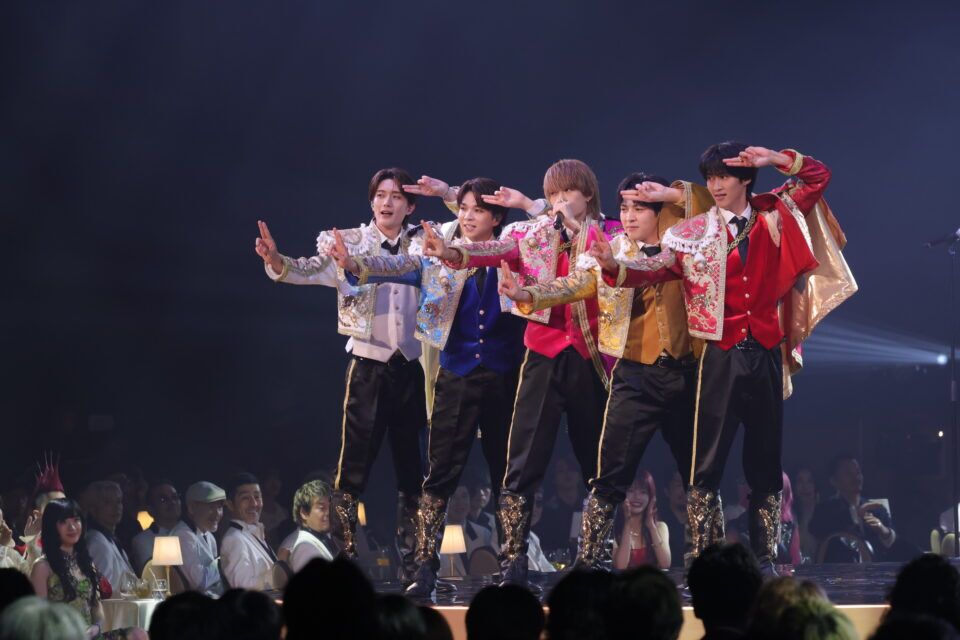
That inclusive energy expanded into something bigger by evening at the Toyota Arena Tokyo. The Grand Ceremony kicked off with a stunning cinematic video about a girl who discovers an old cassette tape labeled “Play Me.” As the film followed her through the city, she kept bumping into artists like Fujii Kaze and Creepy Nuts, right up until the reel’s narrative spilt directly into the real world and she transitioned onto the arena floor. Next, the curtains dropped to reveal the iconic rock band Sakanaction on stage, launching into a live performance of “Kaiju.” Watching that seamless leap from reel to real made the message clear: Japanese music thrives in the playground where animation, live-action, and high-tech production meet.
Even as the awards began rolling out, the lineup featured a diverse snapshot of what I had been hearing all week. Mrs. Green Apple won Artist of the Year, while Fujii Kaze earned Album of the Year for Prema. When Sakanaction took Song of the Year for “Kaiju,” frontman Ichiro Yamaguchi gave a moving speech, sharing how he had written the track while fighting through severe depression. Hearing that, I understood the lonely “monster” he was singing about in the lyrics was actually an image of his own fight to survive.
Next up, the newer generation stole the spotlight — girl group Hana took New Artist, XG landed Best Global Hit for “Hypnotize,” and the animated collective Huntrix from K-pop Demon Hunters bagged Best Song Asia for their hit “Golden.” The special appearance of JYP Entertainment founder J.Y. Park, who accepted the trophy on behalf of the film’s team and called the moment a “meaningful honor,” was one of the night’s best moments, with Twice’s Japanese sub-unit MISAMO cheering from the crowd for their longtime mentor.
The live sets added to the ambience. Whether it was Kenshi Yonezu or Hitsujibungaku, every performance felt different. I personally loved Tokyo Ska Paradise Orchestra’s tribute to Japanese jazz legend Yuji Ohno, with a plethora of artists joining the stage. British singer-songwriter Sam Smith’s rendition of “My Guy” became a major draw. This was the first-ever Western act to take the MAJ stage, bringing the entire international thread full circle.
For me, though, the biggest highlight of the night was the Best Cross-Border Collaboration Song category. Japan’s Hoshino Gen and South Korea’s Lee Youngji won the trophy for their track “2,” standing out in a lineup that included Zico with Lilas Ikuta and Balming Tiger with Atarashii Gakko!. Beyond the music itself, I loved how naturally different styles blended together — J-pop, K-hip-hop, rock, and folk all sharing the same stage.
The Future Is Here — It Just Needs More Seats
Prior to the festival, Masahiro Kumabe from the MAJ Committee had touched upon his vision for the festival in a press statement. His dream, he said, was to see international talent get standing ovations in Japan while Japanese creators were simultaneously embraced across the seas, adding that he hoped the festival could help spark a steady wave of global collaborations.
Kumabe’s idea of a “steady wave” is, in fact, visible in how J-pop is being made. MAJ showed that the writing rooms were opening up, with Hoshino Gen co-creating with Lee Youngji, Balming Tiger and Atarashii Gakko! swapping bars, and Zico producing with Lilas Ikuta. And this isn’t a one-off festival moment either. YOASOBI’s “Idol,” which topped Billboard Global Excl. U.S. charts for weeks, was a hit born from Oshi no Ko, a Japanese anime backed by global streaming and cross-border marketing. JO1 and INI are K-pop-trained J-pop acts selling out arenas. Labels like BMSG and HYBE Japan are intentionally signing bilingual talent. So, when Kumabe talks about collaborations shaping the future, I think he’s right — J-pop is gradually shifting from being less “from Japan for Japan” to more “from Japan, with everyone.”
However, I also think that this shift is missing something without India in the room, because the India-Japan cultural current is something you can’t ignore. Anime is a huge thing here: Demon Slayer and Jujutsu Kaisen, two of Japan’s biggest exports, both stream in Hindi dubs on Crunchyroll after sustained demand from Indian audiences. J-pop has surged across South Asia since 2022, with acts like YOASOBI, Fujii Kaze, and RADWIMPS driving the trend among Indian audiences. During his debut at Lollapalooza India in Mumbai, Fujii Kaze told Rolling Stone India that India is his “spiritual hometown,” and spoke about wanting to fold that philosophy into modern pop — something you can see in “Grace,” the music video he filmed in Uttarakhand. In essence, the mutual love is already there.
That’s what made standing in the Tokyo arena feel slightly bittersweet. Watching Music Awards Japan celebrate pan-Asian unity, it was impossible not to picture what the stage would sound like with Indian artists on it: A.R. Rahman adding orchestral layers to a J-pop set; Divine trading verses over a J-rock breakdown; the country’s deep well of folk and independent music widening the whole room. India wasn’t there this year — no nominees, no collaborators — still, it didn’t register as an exclusion so much as an open seat. The fan base is ready, the respect is mutual, and the market is huge. It’s just a matter of who builds the bridge first.
It’s also why the ongoing Grammy debate about adding an “Asian Music” category doesn’t quite sit right. Putting everyone from Fujii Kaze to BTS in one box would flatten exactly what Kumabe’s dream opposes — borders. MAJ didn’t celebrate “Asian music” per se, but celebrated music, with artists who happen to be Asian, collaborating because the song needed it. If the Grammys want to catch up, maybe the answer isn’t a new category but more stages like MAJ.
As the ceremony came to an end, I kept thinking about how music feels when it isn’t being measured against the West, sorted by region, or streamed for stats. I was thinking about Hoshino Gen and Lee Youngji laughing after their win, about a Japanese crowd screaming Korean lyrics, about Kumabe’s idea that ovations can travel both ways. Music Awards Japan 2026 may have been an industry event, but it also showed that the future of music is already here — it’s just not evenly distributed yet. And after seeing it up close, I’m convinced the next time I’m in that room, there will be more seats filled, more languages in the setlist, and maybe, finally, an Indian artist grabbing the mic.
‘ The preceding article may include information circulated by third parties ’
‘ Some details of this article were extracted from the following source rollingstoneindia.com ’