The Royals have traditionally coveted speedy outfielders, to cover the spacious grounds at Kauffman Stadium. But as the game has evolved and the stadium dimensions have shrunk, will the team still pay a premium for speed?
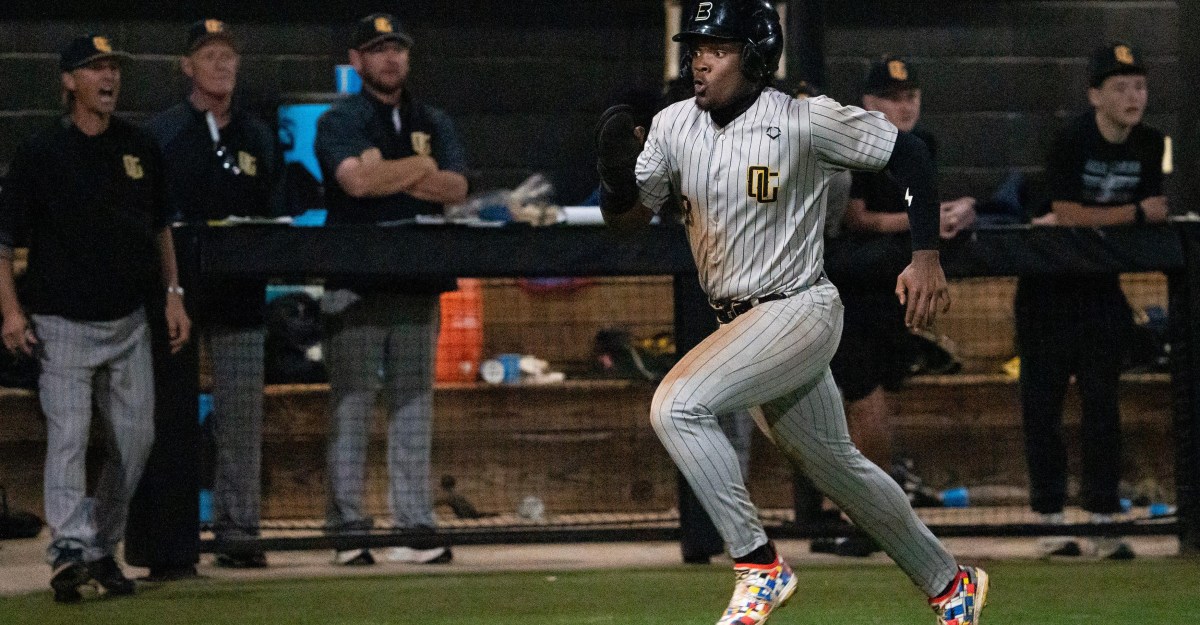
If they still want to wreak havoc on the basepaths, Mississippi prep star Eric Booth Jr. is one of the most explosive athletes in the 2026 draft class. He inherits elite speed and athleticism from his father, Eric Booth Sr., a record-setting kick returner at Southern Mississippi who was also drafted by the Blue Jays out of high school in 1993. Built more like a running back than a traditional center fielder at 6’0”, 205 pounds, Booth combines rare physicality with 80-grade speed, giving him one of the highest ceilings among prep position players. His strong spring helped cement his status as the top high school outfielder in the class and a likely top ten pick.
Eric Booth Jr., OF, Oak Grove High School (MS)
Booth is the kind of toolsy athlete that makes many scouts drool. Baseball America calls him the top outfielder in the draft class thanks to his “dynamic combination of athleticism, high-level tools and physicality.” MLB Pipeline notes he was one of the fastest runners in the class, posting a blazing 6.33-second 60-yard dash at the East Coast Pro showcase. Baseball America grades him with an 80-grade run tool, and MLB Pipeline reports he can get from home to first in just over four seconds. That speed makes him a natural fit in center field, where evaluators believe he has the range to become an impact defender as his instincts continue to improve.
At the plate, Booth has an unconventional left-handed swing that has worked so far, but may need refinement. Baseball America describes a unique setup with a significant hand press and a choppy bat path, though scouts were encouraged by mechanical improvements during his senior season. MLB Pipeline similarly notes that his hand movement creates an unusual-looking swing, but praises his ability to consistently barrel baseballs, control the strike zone, and produce impressive exit velocities, highlighted by his victory in the Perfect Game All-American Classic Home Run Derby.
Keith Law of The Athletic writes that Booth is “very upright at the plate and doesn’t bend his knees or rotate his hips that well, spinning off his front heel through contact so that his lead foot is pointing towards the pitcher (or further), so while he looks like he should have above-average power, it’s not showing up in games.” But he also praises Booth as a “disciplined hitter” with excellent bat-to-ball skills that could unlock more power.
The consensus is that Booth’s ultimate ceiling will depend on how much power he develops. A team with good hitting development could tweak his swing to unleash his raw talent. Even if that power never fully materializes, Booth’s elite speed, advanced feel for hitting, improving defense in center field, and exceptional athleticism will give him value. If everything clicks offensively, scouts believe he has the tools to develop into an All-Star caliber everyday center fielder who can hit 20+ homers and steal 40+ bases a year.
Kiley McDaniel at ESPN and Carlos Collazo at Baseball America each report that while the Royals have Booth high on their board, they prefer infielder Jacob Lombard. The Royals have a proud tradition of speedsters in the outfield, from Amos Otis to Willie Wilson to Carlos Beltran to Jarrod Dyson. But you can’t steal first base, and Booth will need to develop a swing that can make him a threat at the plate.
‘ The preceding article may include information circulated by third parties ’
‘ Some details of this article were extracted from the following source www.royalsreview.com ’