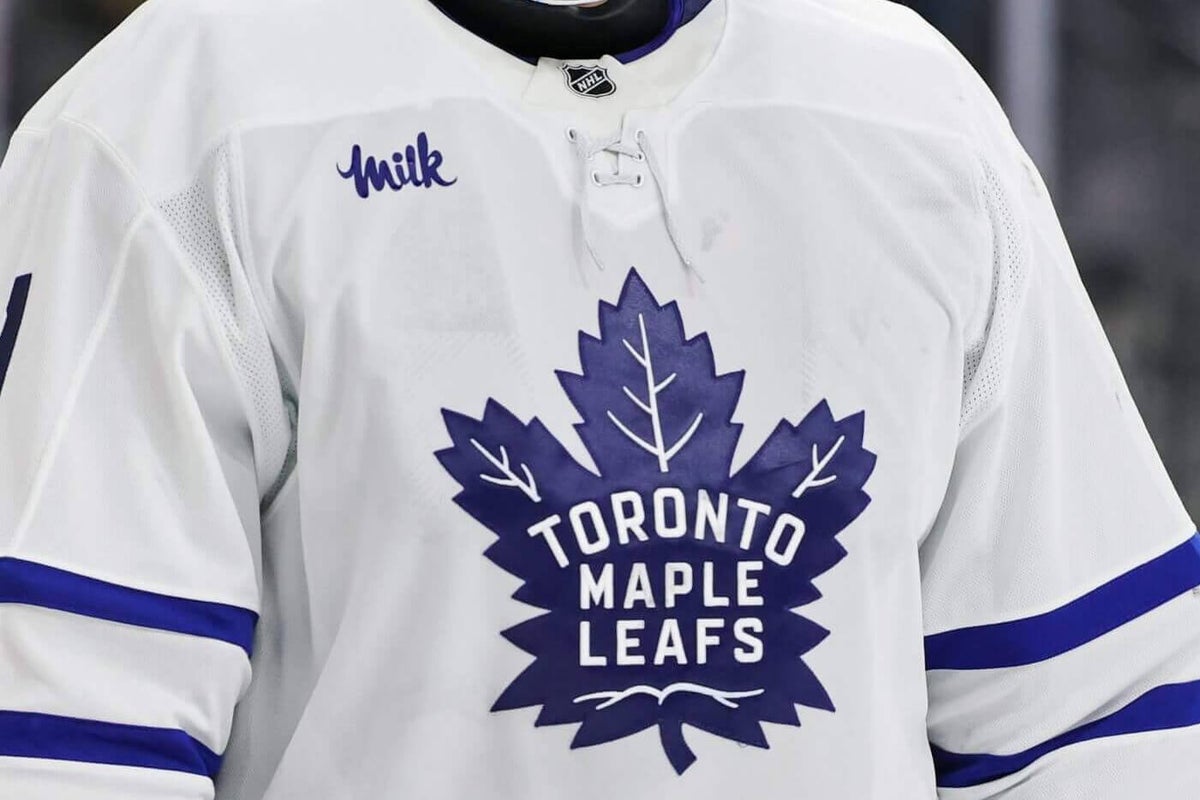
Rogers Communications Inc. signed a $4.35 billion agreement to become the 100 percent owner of Maple Leaf Sports and Entertainment, which owns the Toronto Maple Leafs and Toronto Raptors, buying the last 25 percent ownership stake from Kilmer Sports Inc., the company announced Monday.
The deal is subject to league approvals, and Rogers said it expects it to close at the end of 2026.
“This is a defining moment for Rogers. Our full ownership of MLSE brings together Canada’s premier communications company with Canada’s premier sports and entertainment organization,” Rogers president Tony Staffieri said in a statement. “It gives us even more opportunity to invest in championship-calibre teams, create unique experiences for customers and fans, and unlock long-term value for shareholders.”
MLSE also owns Toronto FC of the MLS and the CFL’s Toronto Argonauts. In addition to MLSE, Rogers also owns the Toronto Blue Jays. The company said it plans to sell a minority stake in its sports, media and entertainment assets in the next year.
Rogers became majority stakeholder when it bought out fellow telecommunications giant Bell’s 37.5 percent share in 2024, giving Rogers 75 percent.
What it means for the Maple Leafs
Rogers takes full control at a time at which the Leafs are in the midst of major organizational change.
Under Keith Pelley’s leadership as the president and CEO of MLSE, John Chayka and Mats Sundin were hired to run the front office in early May. They fired Craig Berube as head coach soon after and eventually replaced him with Jim Hiller.
A day after Chayka and Sundin were introduced as the unlikely new front-office combo, the Leafs scored an unlikely win at the draft lottery, gaining the No. 1 pick for just the third time in franchise history. They used that selection late last month on winger Gavin McKenna, viewed as a potential franchise player.
As predicted, Gavin McKenna goes No. 1
The Athletic Hockey Show
Chayka has engineered a major roster makeover in his first offseason as GM. The Leafs have turned over nearly half of the roster, adding a new No. 1 goaltender in Sergei Bobrovsky, a new No. 1 defenceman in Darren Raddysh, and a host of new forwards, including Nick Paul and Colton Sissons. The team is attempting to make the playoffs again after missing out for the first time in a decade last season. — Jonas Siegel, staff writer
What it means for the Raptors
Rogers has already made significant changes to the Raptors since gaining majority control of MLSE, firing team president Masai Ujiri shortly after the 2025 NBA Draft. They kept Ujiri’s second-in-command, Bobby Webster, as the top basketball decision-maker. After the Raptors finished fifth in the Eastern Conference, MLSE gave Webster a new long-term contract, also adding executive vice president to his title.
While Larry Tanenbaum, who has been the chair of the NBA’s board of governors for two terms, has championed basketball within the company, Rogers has continued to support the Raptors. Most notably, the Raptors agreed to trade for Kawhi Leonard this offseason, a deal expected to become official at some point following the end of the league’s moratorium on player movement on Monday at noon ET, and will likely reach an extension with the 35-year-old forward that will take the Raptors past the luxury-tax threshold. The Raptors haven’t paid the tax since 2018-19, when they won the NBA championship.
Basketball was at the centre of several disagreements within the old MLSE structure, however. Tanenbaum wanted to bring a WNBA team to Toronto, but could not reach a consensus within the group. He eventually won a bid for an expansion team, which became the Toronto Tempo, who started play this season.
There were also disagreements about Ujiri’s last contract extension with the Raptors, in 2021. Just two years removed from leading the Raptors to a title, Ujiri’s contract expired. Tanenbaum, who had called Ujiri “like a son” and made him a vice chairman of the Raptors, fought for an expensive extension for Ujiri, which was unpopular among the company’s board of directors. Ujiri nonetheless received a five-year extension, serving four of those years. Ujiri now is the president of the Dallas Mavericks, but he did join the Tempo ownership group in March 2026. — Eric Koreen, senior writer
‘ The preceding article may include information circulated by third parties ’
‘ Some details of this article were extracted from the following source www.nytimes.com ’