Several years ago, I spent months immersed in the world of America’s Next Top Model as the executive producer of a documentary examining the show’s legacy. For Dirty Rotten Scandals: America’s Next Top Model, which aired earlier this year, I reviewed countless hours of footage, revisited controversial moments that have been endlessly debated online, and spoke with people who experienced the phenomenon from the inside. What I discovered was something both simple and uncomfortable: There is no single version of the truth.
That’s why I found Tyra Banks’ recent lawsuit against Netflix so fascinating.
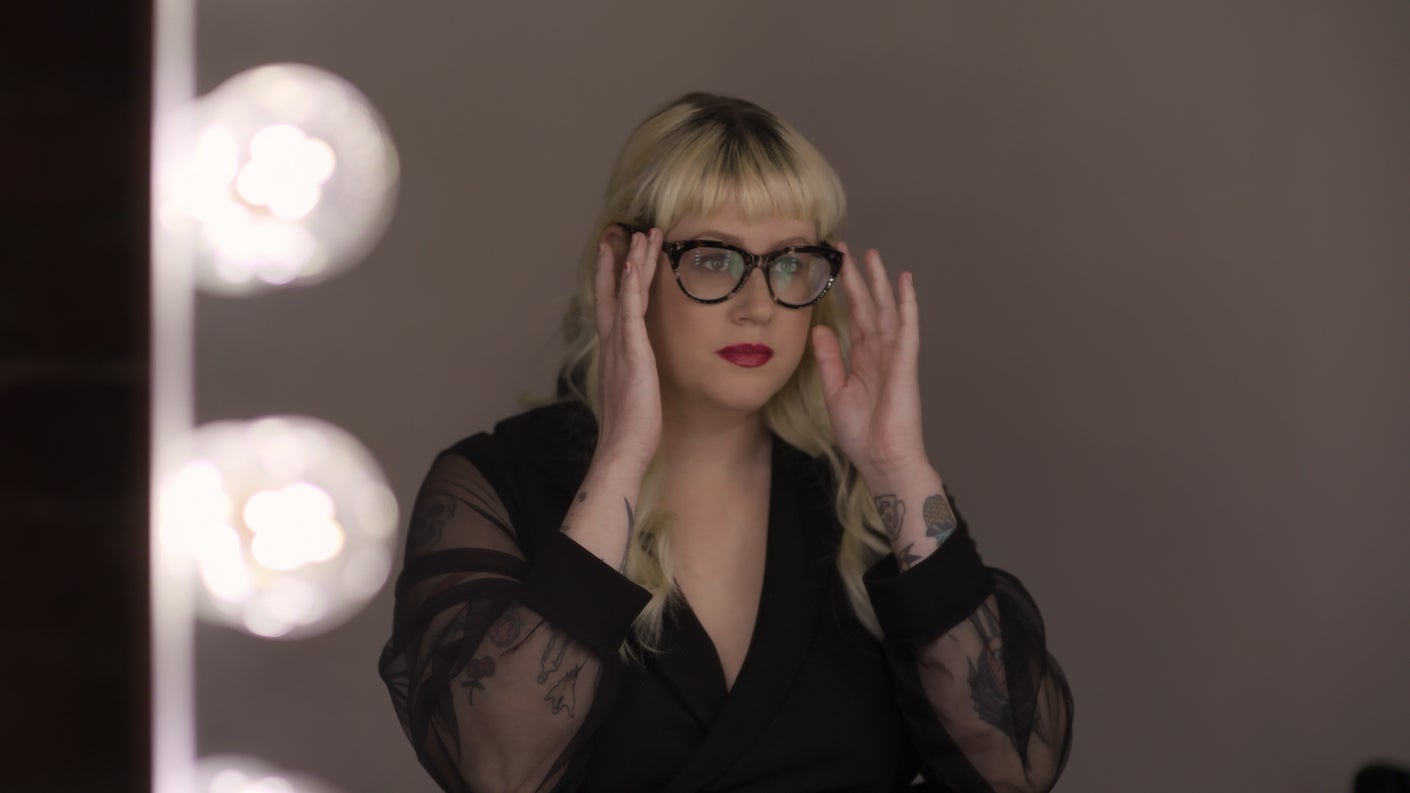
The lawsuit centers on Reality Check: Inside America’s Next Top Model, a different documentary series that revisits the legacy of the hit reality competition through interviews with former contestants, producers, and Banks herself.
According to reports, Banks alleges that the documentary selectively edited her three-and-a-half-hour interview, omitting important context, and creating a misleading portrayal of her role in the show’s history.
The legal merits of Banks’ claim will be decided elsewhere. But the lawsuit itself exposes one of the great ironies of modern television: The woman who helped define reality television is now challenging the very storytelling tools that reality television helped popularize.
For more than 20 years, audiences have argued about what is “real” in reality TV.
The answer has always been complicated.
Reality television is not a documentary record of events. It’s a story assembled from reality. Producers identify compelling characters. Editors condense hundreds of hours into 42 minutes. Narratives emerge. Conflicts are sharpened. Emotional moments are elevated. Entire seasons are built around decisions about what audiences see and what they don’t.
This isn’t deception. It’s storytelling.
And few people understand that better than Banks.
As creator, executive producer, and host of one of the most influential reality competition series ever made, Banks helped pioneer a format that transformed ordinary people into television characters. Over 24 cycles, 322 episodes, and roughly 15 years on the air, America’s Next Top Model became a global phenomenon, spawning dozens of international versions and helping define an era of reality television. Throughout nearly the entire run, Banks served as the show’s creative force and public face.
Contestants became heroes, villains, underdogs, and fan favorites. (Sadly, they rarely became successful models, as depicted in my film.) Audiences laughed, cried, rooted, and judged because the show gave them a narrative framework through which to experience the competition.
Now Banks finds herself in a position familiar to countless reality television participants before her: She’s no longer helping shape the narrative. She is the subject of it.
For example, Olivia Caridi became one of the most notorious villains in The Bachelor franchise before later arguing that the show’s edit exaggerated certain traits and omitted context that would have presented a more nuanced picture of who she was. Her complaint was not unique. Reality television is filled with participants who believe the final story did not fully reflect their lived experience.
The irony is hard to miss given Top Model’s own history. Over the years, plenty of contestants felt the show focused on certain moments while leaving others on the cutting room floor. While producing Dirty Rotten Scandals: America’s Next Top Model, I spoke with several former contestants who said seeing themselves on television was often strange. The events happened, but the person they saw on screen didn’t always feel like the person they knew themselves to be.
Cycle 2 contestant Shandi Sullivan’s traumatic experience further illuminates who controls the edit. When viewers first met Sullivan, she was the shy pharmacy clerk who seemed completely out of place in the modeling world. She quickly became one of the show’s most compelling underdogs. Then came the infamous cheating scandal during a trip overseas. It was reality television gold and produced one of the franchise’s most memorable moments. But for many viewers, that storyline became Shandi’s entire identity, overshadowing the much bigger story of her growth and transformation throughout the competition. Sullivan participated in the Netflix documentary and outlined the inaccuracy in the depiction — which focused on the infidelity and not the violation she was a victim of. She also emotionally shared how that portrayal negatively impacted her life.
Banks is now trying to make a similar point about characterization — but this time the subject isn’t a contestant. It’s the person who helped perfect the format.
That distinction matters.
Anyone who has ever sat for a documentary interview understands the strange surrender that comes with it. You may spend hours providing nuance, context, explanations, and contradictions, yet you know that only a fraction of what you say will survive the edit.
The final version may accurately reflect your views. Or it may not. The filmmaker — not the interview subject — ultimately decides.
As someone who works in nonfiction television, I can say that this responsibility is enormous.
Every documentary is built on choices.
Which clips make the cut?
Which interviews support the thesis?
Which facts deserve emphasis?
Which moments are left behind?
People often imagine documentaries as objective records of reality. They’re not. They’re interpretations of reality. Like all storytelling, documentaries are shaped by point of view. That does not mean they’re dishonest.
The irony at the heart of the Banks lawsuit is that the same audience that long accepted the constructed nature of reality television often expects documentaries to exist above those same storytelling mechanics.
Reality television traditionally prioritizes entertainment. Documentary filmmaking prioritizes understanding. But neither can escape the reality that every story is ultimately told through omission as much as inclusion.
That’s why the most interesting question raised by this lawsuit is not whether editing occurred. Of course it did. The question is where we draw the line between interpretation and misrepresentation.
That question extends far beyond Banks. It touches every documentary filmmaker, every reality television producer, every journalist, and every audience member consuming nonfiction media today.
It also arrives at a moment when the media is aggressively reassessing its recent past.
Shows that once-dominant popular culture are now viewed through a different lens. Questions about race, body image, mental health, power dynamics, and workplace treatment have reshaped how audiences interpret programming from the early 2000s.
Many of those conversations are necessary and overdue.
But as we revisit these cultural artifacts, it’s worth remembering that no television show is created by a single person.
America’s Next Top Model was a product of an era. It involved network executives, producers, editors, advertisers, casting teams, and cultural norms that were very different from those of today.
Yet history has a habit of compressing complicated systems into individual faces.
Banks became the face of the show’s success. She has also become the face of its controversies.
Perhaps that’s inevitable. But after spending months examining the legacy of America’s Next Top Model, I have come to believe that the real story is larger than any one person.
It is about how stories are made, who gets to tell them, and who gets to challenge them. And what happens when one of reality television’s greatest storytellers discovers that she no longer controls the edit. That may be the most revealing reality television lesson of all.
‘ The preceding article may include information circulated by third parties ’
‘ Some details of this article were extracted from the following source katiecouric.com ’