How do we fix the housing crisis? Welcome to The i Paper’s opinion series, in which our writers share their experiences of the UK’s dysfunctional housing system and examine how we can fix it.
The cruel bargain of only being able to buy a house when a loved-one dies
The biggest lie I was told about owning my own home
The UK’s new rental scandal that no one is talking about
The bizarre tricks estate agents are now using to sell a house
There’s nothing attractive about being a landlord anymore
Prince William – or technically, the Duchy of Cornwall – owns some of the farmland surrounding the village I grew up in. Plumtree, in southeast Nottinghamshire, is pretty but not idyllic, with a main road cutting through it. But what if the scruffy cow field over our back fence was covered in houses? How would I feel then?
Having seen young mums raising children in squalid conditions as our housing costs crisis rages, I’m all for it. Plumtree is a 20-minute drive into the city centre and half that into the suburbs. The fast-flowing Melton Road connects the M1 and this cluster of villages to Nottingham. It is a rural area well-placed for development that could certainly handle more homes.
Nottinghamshire is not at the epicentre of the UK’s housing affordability crisis. In London, house prices are 10.6 times earnings and the average deposit for a first-time buyer was £130,000 in the year to March. Knight Frank is selling a £13.75m, seven-bedroom townhouse on Elgin Crescent in Kensington with access to Rosemead Gardens (as featured in the film Notting Hill). This trophy home is just a few streets from the semi-demolished, chard skeleton of Grenfell Tower.
If the residents of Grenfell were the “have nots” – the people for whom even accessing safe shelter was not possible – then at the very top of the property ladder is the Royal Family. They are the ultimate example of property wealth through inheritance. But they – and their vast collection of land and grand homes – could both give more people a chance to own a home, and remake the monarchy for the 21st century.
While rents in London have risen 42 per cent over the last decade, with young tenants forced to turn living rooms into extra bedrooms, peripheral, “non-working” members of the Royal family, Princesses Beatrice and Eugenie, enjoy a peppercorn rent on their respective residences. The rent on Beatrice’s apartment in St James’s Palace is set at 68 per cent of market rate and Eugenie’s Ivy Cottage in Kensington Palace at 64 per cent, a report from the National Audit Office revealed last month.
What adds insult to injury is the stark shortage of social rental stock. Rising rents limit the number of rental homes for social tenants that local councils can afford out of their local housing allowance. The result? One child in 21 in the capital is technically homeless. That’s one child per classroom.
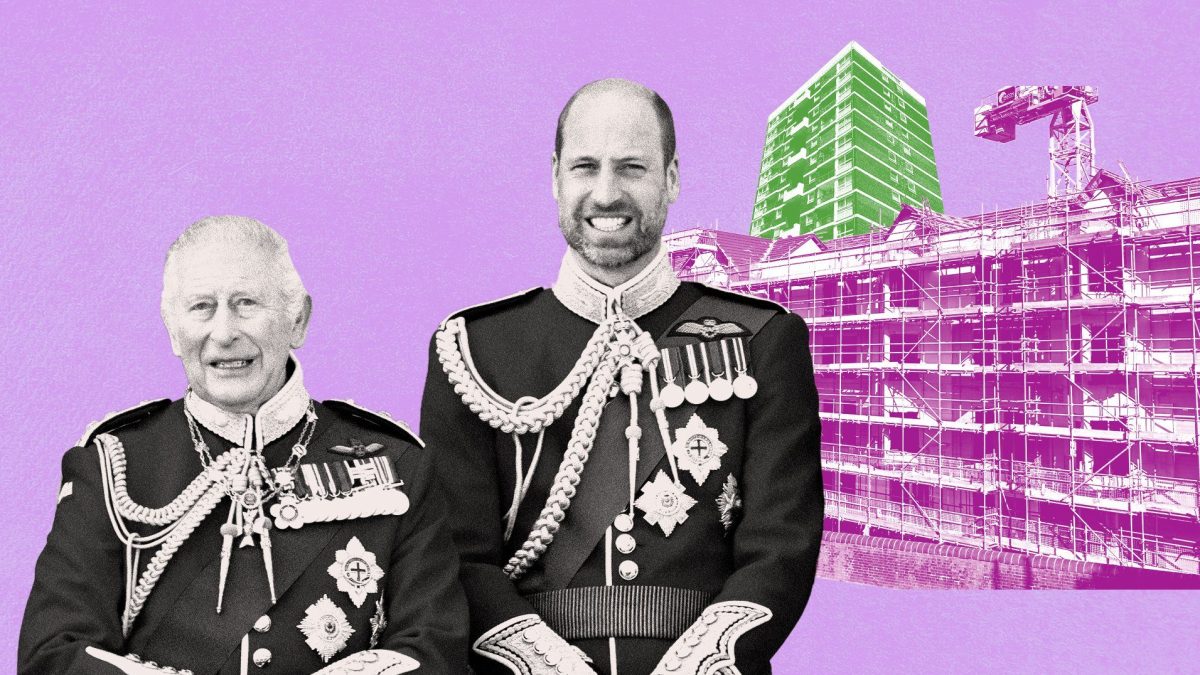
King Charles and Prince William seem aware of the poor optics. Both have pledged to slim down the number of “non-working royals” to ban them from getting preferential accommodation costs and stop them from being able to sub-let royal properties for their own financial gain.
Via a variety of different ownership structures, the Royal Family hold a bloated portfolio of palaces, castles and estates. Some sit within the Duchy of Cornwall and the Duchy of Lancaster from which Prince William and King Charles III receive income. The duchies total almost 180,000 acres of farmland, forest and coastline, and include properties such as Harrogate Ladies College, The Oval cricket ground in south London and Dartmoor Prison.
The monarchy is making the right noises. There is the sale of more than 600 acres of vacant farmland near Ledbury in Herefordshire (with a £6.65m price tag). In fact, 20 per cent of Duchy of Cornwall land will be sold off over the next 10 years to invest £500,000 into local communities and affordable and environmental projects. Prince William’s current focus is building 30 new bungalows on the Isles of Scilly. St Mary’s, the main island, has a population of 1,800 and the worst housebuilding record in the UK.
These projects are a nod to the ever-escalating housing crisis. But let’s be real: small sites in rural Herefordshire or on the Isles of Scilly are hardly going to make a dent in the UK’s housing delivery deficit.
We need large parcels of land releasing to recreate a Poundbury – King Charles’s experimental urban extension of Dorchester, built over the last three decades. The high-density neighbourhood delivered 1,800 traditional style homes. Or another Nansleden, the sustainable suburb on the edge of Newquay, on Duchy of Cornwall land. This has been under development since 2013 and will deliver 4,000 homes when completed.
But we also need to replicate these efforts closer to our main urban centres and employment hubs and – whether Andy Burnham likes it or not – closer to London, where land values and demand for homes are highest and where accommodation costs are having a negative effect on the economy and productivity levels.
What of adapting the historic 120-room, 51-acre Bagshot Park into a new commutable eco village? This is home to the Duke and Duchess of Edinburgh, who have a 150-year lease from the Crown Estate (this independent company leases some land to the royals but is not owned by them). It is part of Windsor Great Park, with a speedy train service from Bagshot village into London Waterloo, and is the perfect location for a new, rural iteration of Poundbury or Nansleden. Schemes like Trent Park in Enfield, where a Grade II mansion has been converted and joined with new builds to create 262 homes, have shown it can work.
The Government has the tools to make it happen. One of the reasons why housebuilding has fallen off a cliff in the mid-2020s is the cost of land. But in December, the Planning and Infrastructure Act 2025 received Royal Assent, with major reforms to compulsory purchasing. The act dictates that public authorities may acquire land without compensating the owners for future development potential – known as “hope value” – to keep a lid on runaway land values.
It does feel as if there is a chance here – albeit a slim one – for central government, local government and the Royal Family to come together and do some deals to kick-start a series of appropriately priced housing projects on Royal farmland and estate grounds.
If you wade through the websites of both Duchies, affordable housing and environment seem to be priorities, but there is still a lack of transparency that jars with the purported modernisation of the monarchy. The Duchy of Cornwall, for example, is not subject to the Freedom of Information Act and is largely exempt from Environmental Information Regulations. With King Charles becoming the first monarch to reveal his personal tax contribution, it’s time to demand more openness from these archaic landowning institutions as well as a holistic, national housebuilding plan.
A smattering of rural housing projects on Royal land is certainly not enough to tackle a housing crisis that is 40 years in the making. It needs to be just one part of a national vision to repurpose wasted public land with low ecological value. However, the trumpeting of intent from the King and Prince William could help set the tone for a new era of sustainable, quality housebuilding while pulling the Royals back from the brink of irrelevance.
‘ The preceding article may include information circulated by third parties ’
‘ Some details of this article were extracted from the following source inews.co.uk ’