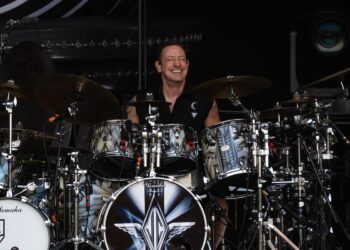

I just started reading Beefheart: Through The Eyes Of Magic, a 2010 memoir by Captain Beefheart’s longtime Magic Band drummer John ‘Drumbo’ French. Since it’s nearly 1,500 pages, I suspect I’ll be at it for a while. That’s what I get for being so late to the party. While I’m at it, I might as well add these newly updated bios of Gram Parsons and Neil Young to my list — along with coffee-table photo books on Lead Belly, classic jazz sessions and The Beatles’ Candlestick Park gig. Read all about ’em (and more):
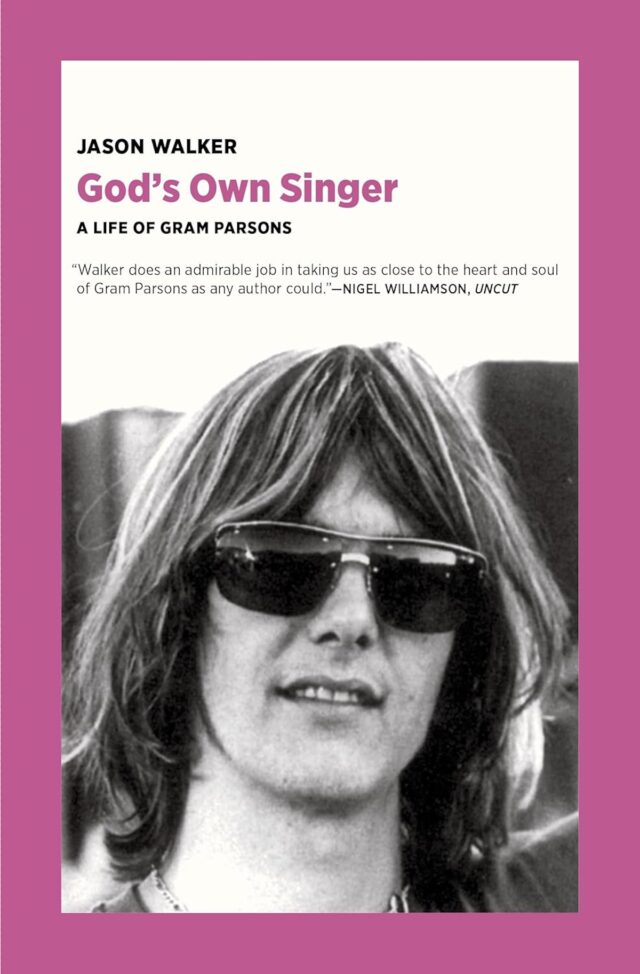
God’s Own Singer: A Life Of Gram Parsons (Updated & Revised)
By Jason Walker
THE EDITED PRESS RELEASE: “Gram Parsons sang like an angel and dressed like a country star. Sadly he was neither, at least not in his lifetime. But before his tragically early death he played a key role in bringing together the worlds of rock and country. And he made groundbreaking records whose impact has only grown in the 50-some years since he died at age 26. Born into a wealthy but ill-fated Southern family, Parsons started out playing folk music with The Shilos, whose story is told here in depth for the first time. After founding The International Submarine Band during his brief time at Harvard, Gram headed to L.A, where he turned The Byrds on to country before quitting to form The Flying Burrito Brothers. Later he recorded two magnificent solo albums that helped launch bandmate Emmylou Harris towards fame. Yet none of Gram’s music captured the imagination of the record-buying public, and his dreams of stardom were repeatedly frustrated. He nevertheless lived out the rock ‘n’ roll lifestyle to the full, and by the time his masterpiece, Grievous Angel, was released in September 1973, he had been dead for four months. The rich musical legacy of what Parsons called his “cosmic American music” paved the way for ’70s country-rock acts such as Eagles and the later alt-country movement exemplified by Wilco. But Parsons’ music and his pioneering role are often not what he is most known for. He has become an almost mythological figure, remembered less for his prodigious musical talents than for his prodigious drug intake, his friendship with The Rolling Stones, his premature death, and, perhaps most titillating of all, for the manner in which his corpse was cremated in the California desert by two drunken friends bent on honoring a promise. An accomplished musician, Jason Walker places the focus on Parsons’ music — how it developed and what makes it special. He spent seven years interviewing Gram’s friends, colleagues, and collaborators for this biography, first published in 2002 and reissued here in a revised edition. And for this reissue he turned up a source that no previous researcher had found — Michael Martin, Gram’s sometime “valet” and a participant in the abduction and cremation of his body. He had quite a story to tell.”

Tonight The Music Seems So Loud: The Meaning Of George Michael
By Sathnam Sanghera
THE EDITED PRESS RELEASE: “There is no shortage of earnest books about the cultural significance of musicians like David Bowie, Bob Dylan and John Lennon. But George Michael does not attract such attention. The music he produced is not generally deemed worthy of serious analysis, the man considered more noteworthy as a celebrity than a cultural figure. Yet such dismissals overlook how Michael’s life and work broke extraordinary boundaries and, in so doing, helped define an era. A second generation immigrant and child of a Greek-Cypriot restaurateur, Michael could barely read music, and was not trained on any instrument, yet would compose hit songs in a single afternoon and play nearly every instrument on recordings that have reached totemic status. He had the rare ability to master both rock and R&B; and was, following Freddie Mercury’s death, seriously considered as a replacement frontman for Queen. For many he became a symbol of ’80s excess, played benefit gigs for miners and nurses, and was a prolific secret philanthropist. He had massive pop hits sometimes without any promotion at all, even after launching one of the most aggressive court cases against a record company in pop history. He was a teen crush for millions of girls, and stayed in the closet due to intense homophobia from his father and the media, but then became an impassioned campaigner for gay rights. A large part of his audience was suburban, middle-aged, female, and white, yet some of his most famous tunes were essentially R&B pop songs about casual sex in the city. He was wildly popular, at times ridiculed in the press, and fêted by some of the toughest critics, often simultaneously. A deeply personal engagement with the life and music of Michael, Sathnam Sanghera’s groundbreaking Tonight The Music Seems So Loud offers a colorful, insightful story on immigration, homophobia, and fame; the glorious eras of the ’80s and ’90s; creative and musical genius; the tabloids; addiction; obsessive fans; and why the love for Michael has only grown in the years since his untimely death.”

The Beautiful Death Of Ozzy Osbourne: How Metal Teaches Us To Live
By Keith Kahn-Harris
THE EDITED PRESS RELEASE: “What is a ‘good death’? How about this: After years of terrible health, you gather friends and admirers for one last, glorious party. A couple of weeks later, you slip away, surrounded by your loving family. Then, the world comes to mourn. That is how Birmingham’s favourite son, Ozzy Osbourne, died. By his death in June 2025 — at an age few believed he’d reach — Ozzy was much-loved, far beyond the metal world. Once a feared, demonic figure to some (and a joke to others), his Back To The Beginning farewell concert raised millions for charity. In concise, arresting chapters, Kahn-Harris explores how Ozzy — of all people! — attracted such generosity of spirit. The answer, he finds, is deeply embedded within the story and culture of metal — and has lessons for us all.”

Neil Young: Reflections In Broken Glass (Updated & Revised)
By Sylvie Simmons
THE EDITED PRESS RELEASE: “ In 1966 a young singer-songwriter drives an old battered hearse 2000 miles from Canada to L.A to seek his fortune. Sixty years later he is still making music, the survivor of an astonishing career that has taken in the Buffalo Springfield, Crosby, Stills, Nash and Young, Crazy Horse, numerous collaborations and a staggering number of albums. Written by the legendary rock writer Sylvie Simmons, Neil Young: Reflections In Broken Glass was first published in 2001 as part of a series of compact books on the greatest musicians of our time commissioned by MOJO, the U.K. music magazine. Based on new interviews Simmons that conducted with Young’s friends, fellow musicians and the man himself, the book is packed with insights into his life and work — family, health issues and behind-the-scenes relationships, including a brief friendship with Charles Manson — that still remain relevant all these years on. The new edition comes with four new chapters, containing some fascinating, unfiltered interviews Simmons did with Young.”

The Beatles | Live At Candlestick Park
By Jim Marshall
THE EDITED PRESS RELEASE: “Relive The Beatles’ last live public concert through the eyes of the ultimate rock ‘n’ roll photographer Jim Marshall. This deluxe volume collects over 150 photos and proof sheets, half of them never before seen. Marshall’s photographs of The Beatles’ 1966 concert in San Francisco capture a historic convergence: One of the biggest names in music photography and one of the most beloved bands in history. Specially requested as photographer by The Beatles, Marshall immortalized not only the concert itself, but also intimate moments backstage, such as the musicians meeting the Baez sisters and hanging out in the locker room before the show. This definitive collection presents the photographs at large scale and in the rich high-contrast tones Marshall favored. An in-depth essay by music historian Joel Selvin brings the moment to life. Whether you were there or wish you had been, this is your chance to see The Beatles as you’ve never seen them before.”

Over The Influence: A Memoir
By Joanna “JoJo” Levesque
THE EDITED PRESS RELEASE: “Signed to a major recording deal at just 12 years old, JoJo catapulted to the top of the pop-and-R&B-infused charts in the mid 2000s. The relatability of her youth and the appeal of her cool-girl mystique earned her millions of fans around the world. JoJo was an undeniable superstar and pop culture fixture, spanning roles in major studio films, omnipresence on Top 40 radio, frequenting magazine covers, and appearing on national TV. Then, out of the blue, everything came to a halt and she seemingly stepped out of the spotlight, leaving many fans to wonder: What happened to JoJo? In Over The Influence, JoJo holds nothing back as she brings her against-the-odds story of adversity and triumph to center stage. From being raised by parents who were both battling addiction and depression, to emerging victorious in a never-ending lawsuit with her record label, to putting the fragmented pieces of herself together after a maddening period of rebellion and self-betrayal, she takes the reader through the turbulent years that led her to where she is now: Releasing new music under her own imprint, performing in shows and festivals around the world, headlining a Broadway show, and beyond. In this raw, behind-the-scenes look at her life, both personal and professional, JoJo’s unflinching vulnerability allows readers to connect with her on a whole new level through stories of success, heartbreak, redemption, and resilience. More than a victory lap from an artist with over two decades in an ever-changing entertainment industry, Over The Influence is an unapologetic rallying cry to anyone who’s ever been terrified to fail and still said, “Count me in.”

Jazz: Best Of The Apollo, Village Vanguard, And Riverside Sessions
By Steve Schapiro
THE EDITED PRESS RELEASE: “One of the leading social documentary photographers of the 1960s, Steve Schapiro’s images stand among the most important of the 20th century, covering Muhammad Ali, Martin Luther King Jr., James Baldwin and many others. These largely unknown jazz photos — shot just before his career breakthrough — showcase his early mastery and his empathy for his subjects, making Jazz: Best Of The Apollo, Village Vanguard, And Riverside Sessions an essential archive. In the early ’60s, when Schapiro arrived on the scene, New York jazz was enjoying a golden age. A young freelance photographer who had grown up in the Bronx and somehow snagged a gig with Riverside Records, he began voraciously documenting shows, players, venues, recording sessions and gatherings both in his native New York and later in Chicago. Whether it’s Sonny Rollins lifting weights backstage, or Bobby Timmons lost in an instant of discovery at the piano, Schapiro was on their wavelength. Written by U.S. jazz journalist Richard Scheinin, this book features dozens of never-before-seen photos of jazz legends like Cannonball Adderley, Melba Liston, Bill Evans, Wayne Shorter, Freddie Hubbard, Sonny Rollins, Count Basie and more.”

Lead Belly: A Life In Pictures (Revised)
By Steidl
THE EDITED PRESS RELEASE: “This is a new edition of Lead Belly: A Life In Pictures, the rich visual biography of legendary Louisiana blues musician Lead Belly, originally published by Steidl in 2007. Here is a treasure trove of rare photographs, news clippings, concert programs, personal correspondence (including letters from Woody Guthrie), record albums, awards and other memorabilia, some of which was discovered in a basement trunk in Brooklyn, safely stored by Lead Belly’s wife, Martha — “My wife is half my life; my guitar is the other half,” he once said. Born Huddie William Ledbetter, Lead Belly (1889–1949) was an influential Louisiana bluesman who wrote and performed some of the best-loved songs of the 20th century, including The Midnight Special, Rock Island Line and his signature Goodnight, Irene. Notable for his strong vocals and virtuosity on the 12-string guitar, he could also play the piano, mandolin, harmonica, violin, concertina and accordion. Library Of Congress folk music anthropologist John A. Lomax discovered Lead Belly serving time for assault at the infamous Louisiana State Penitentiary at Angola in 1934. Lomax, traveling through the South in search of American folk songs, immediately recognized Lead Belly as a walking anthology of African American music and arranged for him to come to New York, where he soon created a sensation. His influence on later generations of popular musicians has been significant: Keith Richards, Jimi Hendrix, Jerry Garcia, Kurt Cobain, Van Morrison, Robert Plant and Beck have all paid their respects.”

Sonic Architecture: Architecture Album Artwork
By Paul Groenendijk
THE EDITED PRESS RELEASE: “Architecture is frozen music,” wrote Johann Wolfgang von Goethe. It should come as no surprise, then, that architecture is a major source of inspiration for musicians: from classical composers to the improvisers of jazz and blues; from new wave bands to rappers singing the praises of their city. The architect-composer Iannis Xenakis collaborated with Le Corbusier, and the founders of both Kraftwerk and Pink Floyd studied architecture. Architecture Record Covers brings together the finest, strangest and most unusual covers of this remarkable overlap. With album covers made to visualize the music on the record, cover designers often make use of architectural images, from the New York skyline to the Centre Pompidou in Paris. The result is a striking assembly of diverse musical and architectural genres, from pop to postmodernism.”
‘ Este Articulo puede contener información publicada por terceros, algunos detalles de este articulo fueron extraídos de la siguiente fuente: tinnitist.com ’