The Plot Thickens
Humor and romance thread their way through this month’s selections, even as each novel leans into darker territory, letting levity and longing sit alongside obsession, violence and unraveling control.
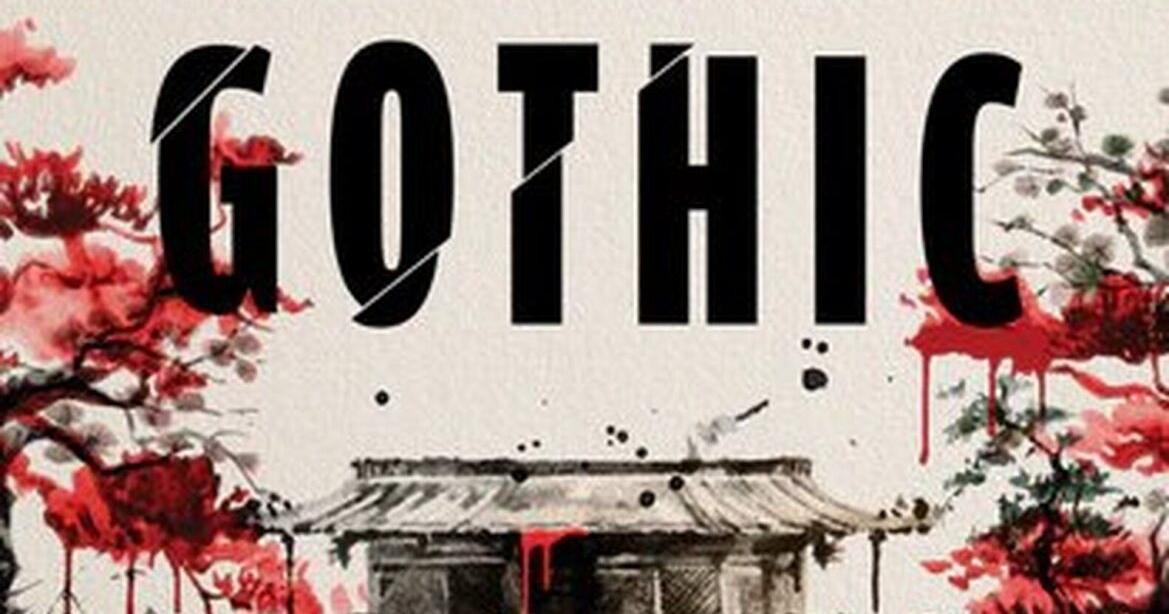
With her latest novel, “Japanese Gothic” (Hanover Square Press, $30), Kylie Lee Baker has penned a lush, unsettling triumph, one that understands horror as something felt as much as seen.
The novel unfolds across two timelines that gradually begin to mirror and distort one another: in the present, a college student on the run after a violent incident takes refuge in a remote house in Japan; in the past, a young samurai in hiding is forced to reckon with duty, loss and a world on the brink of collapse. What initially feels like two separate stories begins to blur, with the house acting as the connective tissue, holding memories, histories and something far more disturbing.
As the timelines draw closer, Baker leans into the idea that the past is never really past. Events echo across generations, choices ripple forward and the characters find themselves caught in patterns they only half understand. The mystery at the center — what happened in this house, and what it wants — unfolds in pieces, pulling the two narratives toward a shared reckoning.
There’s a steady escalation to the stakes, emotional and supernatural, as the storylines begin to converge. By the end, “Japanese Gothic” delivers a haunting, cohesive tale. One where history, identity and consequence collide in ways that are both inevitable and deeply unnerving.
For those who like their thrillers to come with a side of steam, Sandra Brown’s “Bloodlust” (Grand Central Publishing, $30), the second book in her “Blood” series, delivers a slick, high-heat blend of vengeance and desire.
A detective undone by grief, circling the truth of his wife’s death with a kind of feral persistence. A therapist who should remain at a distance, but doesn’t. And then everything gets even more complicated.
The case spirals, the chemistry spikes and bad decisions suddenly feel like the only decisions. Brown knows exactly how to ride that line, keeping things tense, a little reckless and very hard to put down.
In Canwen Xu’s “Boring Asian Female” (out April 28 from Berkley, $30), Elizabeth Zhang has a plan, and it is color-coded, percentile-ranked and allegedly foolproof. Harvard Law is the inevitable conclusion. So when Harvard rejects her, the problem, as far as Elizabeth is concerned, cannot possibly be her. It must be the system. Or the metrics. Or, more specifically, Laura Kim.
Elizabeth doesn’t spiral wildly; she tightens. She studies Laura the way you’d study for an exam you’ve already failed, convinced there’s an answer key she somehow missed. Xu makes this simultaneously painful and darkly funny; Elizabeth’s running calculations of who is hotter, smarter, more deserving start to feel like a personality trait she can’t uninstall.
And yet, you can’t look away. Every decision is terrible, yes, but also weirdly methodical. Elizabeth makes one bad decision after another, each one explained so thoroughly that it almost convinces you. There’s a strange discipline to it. That’s where the unease creeps in. The story keeps advancing on her terms, step by step, until you start to realize she’s been crossing boundaries for a while now; she just refuses to name them as such.
It’s biting and uneasy, with flashes of humor that catch you off guard. You laugh, then immediately question why.
Nicolas DiDomizio, best known for writing romances, takes a sharp left turn into the mystery genre with “A Murder Most Camp” (out April 28 from Poisoned Pen Press, $17.99), but keeps the emotional core intact. The novel opens with a punishment disguised as self-improvement: Mikey Hartford IV, heir to a supermarket fortune and full-time disaster, is told he’ll lose his inheritance unless he proves he can do something — anything — useful with his life.
The solution, according to his family, is summer camp, not as a guest, but as staff. He’s sent to Camp Lore to babysit his 12-year-old aunt and serve as a vaguely defined “activities coordinator,” which mostly means wrangling children who see right through him.
Naturally, instead of quietly redeeming himself, Mikey gets pulled into investigating a years-old counselor disappearance, because nothing says personal growth like amateur sleuthing with a group of preteens.
DiDomizio’s romance background lingers in the margins — the flirtation, the tenderness, the slow thaw of a deeply annoying man — but the real engine here is watching Mikey realize that charm and money can’t fix everything. A horrifying concept, for him.
“A Murder Most Camp” might be a little unhinged, but that’s the point. A book that understands transformation isn’t elegant. It’s loud, awkward, and, ideally, a little bit humorous.
‘ The preceding article may include information circulated by third parties ’
‘ Some details of this article were extracted from the following source www.yakimaherald.com ’