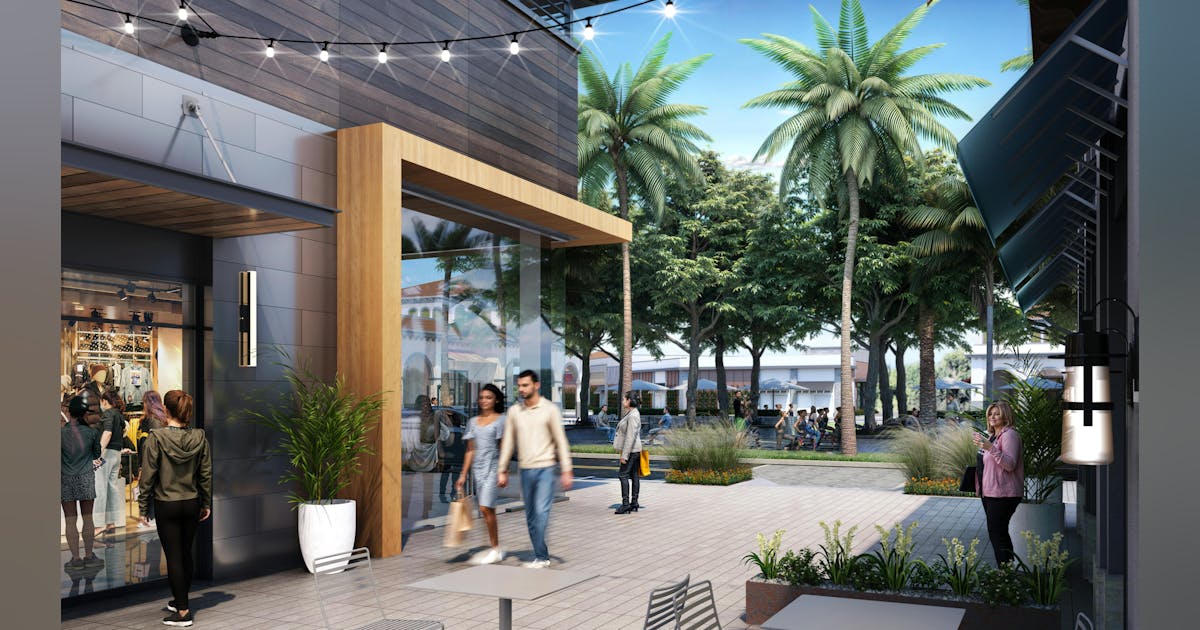
While conceptualizing grand or tight-knit spaces is definitely a priority, some industry partners and clients are “proceeding with caution,” according to Rehfuss.
“Many are deferring new store openings to 2026 and instead shifting focus toward immediate, revenue-generating strategies,” says Rehfuss. The recent tariffs announced by the Trump Administration have sent caution waves across the country. Retail corporations are prioritizing domestic production transitions, stockpiling imported goods and materials to hedge against short-term price volatility, and streamlining operations and partnerships to maintain relevance and profitability.
“The coming months will reveal the true impact of evolving tariff policies on the bottom line,” says Rehfuss.
Meanwhile, consumers are making more mindful purchases and emphasizing repair, refurbishment, and reconditioning to extend product life. As this “care culture” takes place, there is a growing shift that supports a preference for quality over quantity.
In fact, “quality” is the operative word when it comes to entertainment. As entertainment venues continue to take cues from hospitality, immersive and wellness-focused experiences are top-of-mind for many.
Fun, Food, and Fitness
Recently, global architecture and design firm MG2 released a research report on the connection between food and entertainment. Dubbed “eatertainment,” the report outlines several key factors that go into building successful entertainment spaces.
For the Thrill of It: Eatertainment Experiences That Cater to All suggests that successful eatertainment venues are driven by a hospitality mindset. Consumers value a multifaceted dining experience, from sit-down to self-serve.
Many eatertainment experiences are tied to nostalgia and an activity— shuffleboard, darts, bowling, mini-golf, etc.—with a variety of consumer types participating in the fun. MG2 outlines three personas: Funclusives, Food Fanatics, and the Competitively Social.
Funclusives are the most common persona (48% of survey respondents). They simply want to enjoy themselves and have fun. Socializing is the point. Food Fanatics (29%) expect the food offerings to be equal to or better than the entertainment experience, and Competitively Social individuals (23%) are avid fans of a particular activity—socializing and food are secondary.
‘ The preceding article may include information circulated by third parties ’
‘ Some details of this article were extracted from the following source www.bdcnetwork.com ’