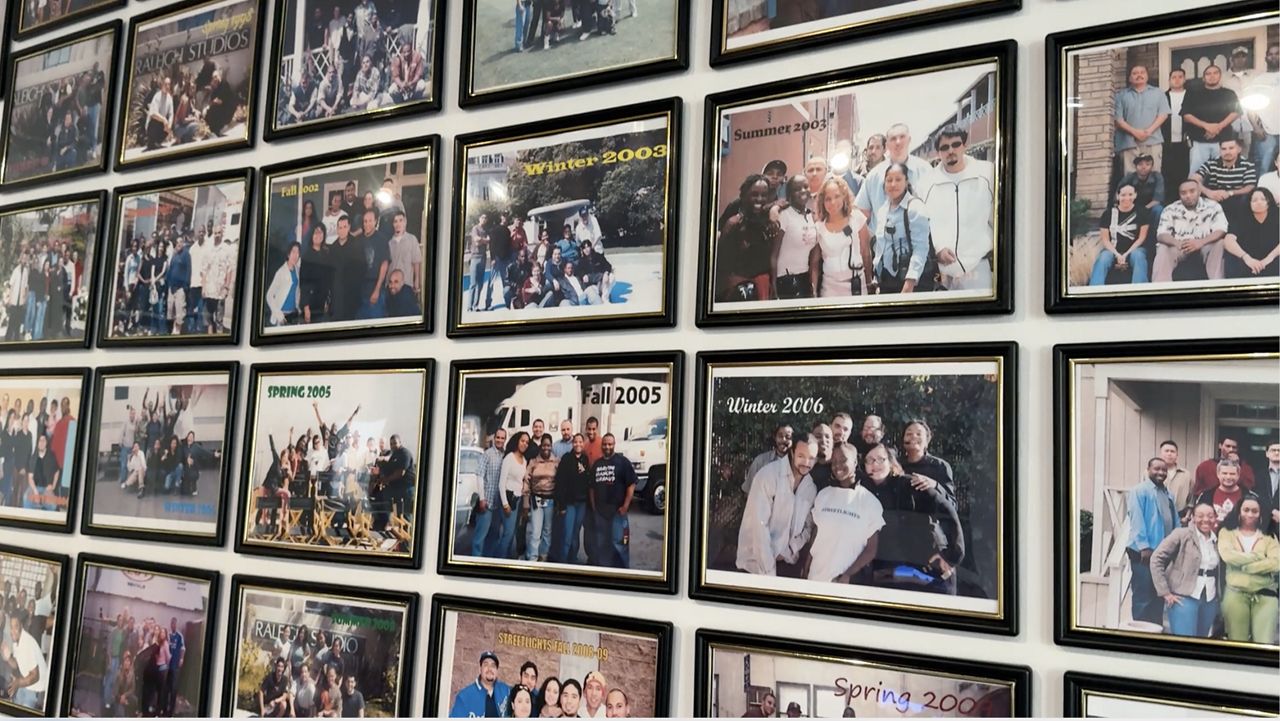
LOS ANGELES — On a quiet Los Angeles soundstage, a group of production assistants unloads gear and prepares for the day. They’re graduates of Streetlights, a nonprofit that has been training young people from underserved backgrounds for careers behind the camera since 1992.
Among them is Nshea Manning, a 2025 graduate who said the program helped her find her place in Hollywood.
“Coming with Streetlights, I ended up learning vocabulary, how to establish what I am, what I’m trying to do, understanding different languages. And now I’m on set and I’m able to use that language and see myself becoming bigger than what wasn’t available to me prior,” Manning said.
For Ayem Walters, Streetlights opened the door to work with stars like Keke Palmer. More importantly, it helped him see his own future more clearly.
“The first step is getting yourself onto a set, and if I keep myself in these jobs and prove my work ethic and how passionate I am about this industry, I will soon have the connections to get me to where I want to be, which is direct horror films,” Walters said.
Since its founding, Streetlights has trained more than 1,300 people for film and TV work. Alumni include “Hair Love Oscar” winner Matthew Cherry, and “Black Family Mafia “showrunner Randy Huggins. Many return to mentor, like Carlos Flores, who started his own company, PA Nation.
“I come probably every year to come teach the other students that are currently in Streetlights, tell them about my experiences on set, and try to teach them how to work and keep working and keep getting work,” Flores said.
But even as the program builds careers, its own future is in jeopardy. Executive Director Adele Wilson said rising costs and shrinking support have put Streetlights in its most precarious position yet.
“We are in a position where if we do not get some funding within the next, I’d say, three to four months, there is a danger that Streetlights might have to shut the lights down and lock the doors,” Wilson said.
According to FilmLA, television production in Los Angeles remains below pre-pandemic levels, making Streetlights one of the few reliable entry points into the industry. Wilson said a slower economy and changes in corporate giving have made fundraising even harder.
“The climate for giving and giving to organizations that focus on increasing representation has gained a lot of scrutiny,” she said.
Still, Wilson said the mission remains clear.
“Supporting Streetlights will help us train the next generation of filmmakers,” she said.
For Manning, the program isn’t just about landing a job. It’s about finally seeing herself in Hollywood.
“It showed me that there’s space for me. I know that I’m going to be a writer. I’m going to start my own films and create my own. I don’t need permission anymore. But I learned that from Streetlights.”
‘ The preceding article may include information circulated by third parties ’
‘ Some details of this article were extracted from the following source spectrumnews1.com ’