Stephen King is making the press rounds again thanks to the release of The Long Walk, an adaptation of his brutal story about an endurance competition that claims the lives of its competitors. The original story is inescapably grim and gory. Stephen King knew that any film adaptation could not shy away from the violence and degradation inflicted upon the young boys. He’s said as much in recent interviews, but he made a specific comparison that has gotten plenty of crusty nerds all a’tizzy.
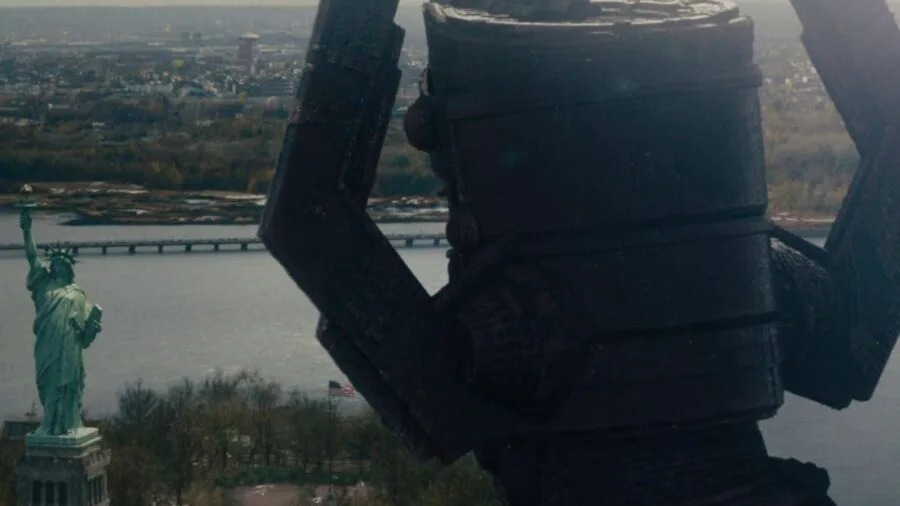
When talking about the violence in The Long Walk, Stephen King brought up superhero movies as an example where the effects of violence become softened. Specifically, he was talking about massive set pieces involving a ton of property destruction and how a lot of these movies don’t show any kind of human element in these sequences.
We’ll get into why this is something of an unfortunate dilemma but Stephen King is right when he talks about superhero movies not displaying the true effects of godlike violence.
The PG-13 Problem
A main thrust for Stephen King’s argument about superhero violence is driven by these movies needing to stay within an expected PG-13 rating. But, here’s what has always bugged me about this entire mindset. If you showcase a ton of violence but don’t display realistic consequences from that violence, that is pure fantasy which only adults (or mature minds) can fully process. Yet, that is the kind of material we deem more suitable for younger minds.
So, this leaves us in the place Stephen King is criticizing: movies intended for younger audiences are full of violence but aren’t actually portraying it in a way that reflects reality. Therefore, the fantasy of violence becomes too tame to deal with its subject matter. Granted, this all based around trying to pick apart the head of a censor, so who knows what those monsters actually think? But King’s point rings true when it comes to telling violent stories of any kind, superheroes or not.
Violence Is Vital

Look, I’m not saying that Superman needs to be a bloodbath or anything like that. What matters is that a story’s violence is in tune with whatever narrative it’s telling. The whole reason this got brought up by Stephen King was in relation to The Long Walk being faithfully adapted. Not in a targeted “exactly like the book’s events” way but rather that a movie could not betray the bleak heart of King’s original story. The violence wasn’t just a part of the story, it’s a core theme of King’s sociopolitical commentary.
I love violence in art. Being able to depict violence in art is a necessary catharsis for us as human creatures. We are violent beings, no matter how much we try and fight against our primal natures. Sometimes, the only way to prevent those feelings from becoming reality is to fictionalize them. That’s what I feel Stephen King is really getting at with his comments. We need to have affecting violence in our popular art, especially if it’s going to be a part of stories that are trying to say something crucial. For some people, fiction is far more effective than reality. They might respond more to a character getting shot in the head than a real child dying on their social media feed.
‘ The preceding article may include information circulated by third parties ’
‘ Some details of this article were extracted from the following source www.yahoo.com ’