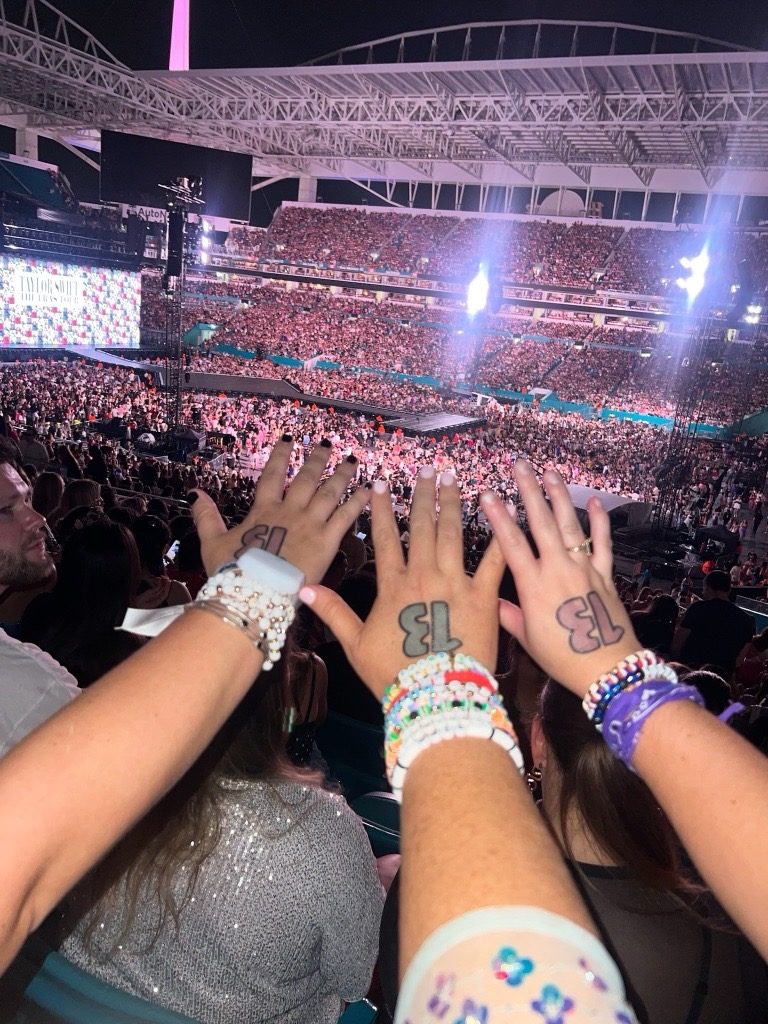
Taylor Swift’s new album, “Life of a Showgirl,” is a cultural, economic, and musical masterclass that offers lessons on reshaping the music industry, marketing, capitalizing on a brand, and the pressures of fame, say Virginia Tech experts.
Swift’s musical evolution
“The ‘Life of a Showgirl’ reads as both a personal album and a cultural allegory,” said Arianna Wyatt, a voice professor in the School of Performing Arts. “Based on the song titles, Swift reflects on the industry’s history of exploiting women while asserting her own reclaimed power—blending pop spectacle, sharp cultural critique, and deeply personal storytelling into one of her most ambitious projects to date.”
Wyatt pointed out that there are allegories threaded throughout the album:
- The Cost of Stardom & Female Objectification: “Elizabeth Taylor,” “The Life of a Showgirl,” “The Fate of Ophelia” — celebrity as spectacle, ownership, and personal sacrifice.
Patriarchy & Power Imbalance: “Father Figure,” “Eldest Daughter,” “The Fate of Ophelia” — women bearing invisible burdens in both family and industry.
Authenticity vs. Artificiality: “Opalite,” “Actually Romantic,” “Wi$h Li$t,” “Wood” — the tension between synthetic performance and lived truth.
Love, Risk & Vulnerability: “Ruin the Friendship,” “Honey,” “Actually Romantic” — intimacy as both liberation and danger.
ADVERTISEMENTSilencing & Resistance: “CANCELLED!,” “The Fate of Ophelia,” “The Life of a Showgirl” — allegories of cancel culture and the historical erasure of women’s voices.
“Being that this is Swift’s first album released entirely under her own creative and financial control following the successful reclaiming of her masters, raises broader questions about the traditional record label model—its sustainability and its impact on younger or emerging artists seeking ownership and autonomy. It positions Swift not just as an artist, but as an industry disruptor.”
Mastering the marketing
From cryptic easter eggs to carefully timed announcements, Swift has long been recognized for her savvy approach to building anticipation, said Cayce Myers, professor of public relations.
“Taylor Swift has a carefully crafted public image that uses public relations to make sure that she retains narrative control over her image and does not oversaturate the market,” said Cayce Myers, professor of public relations in the College of Liberal Arts and Human Sciences.
Myers says her relationship with Travis Kelce has created a synergy between pop music and sports that elevates both celebrities to a stratospheric level of fame. However, with that fame comes the risk of overexposure and fatigue of the Swift brand.
“Her work both in music and in terms of celebrity influence has been criticized, even by other celebrities,” Myers said. “While this is nothing new, it demonstrates how celebrity can frequently be a polarizing force as a superstar figure’s influence extends into social causes and popular culture that both reflects and shapes audience opinion and public discourse. This presents the question of how long celebrity status at this level can last, and at what point does Swift’s PR and marketing team recognize that inflection point and pivot her communication strategy.”
An economic ripple effect
Blockbuster album releases don’t move national GDP numbers, but they still matter, said Jadrian Wooten, a collegiate associate professor of economics.
When Taylor Swift announced “Life of a Showgirl,” the impact was immediate and global. Engagement soared on social media, cementing yet again the cultural and economic force she has become. But what kind of effect can an album release have on an economy still grappling with inflation, tariffs, and low consumer sentiment?
“Consumer sentiment has been fairly low, but consumer spending is still strong. People have pulled back on experiences and entertainment. However, I do expect this to be a place where consumers can reward themselves for cutting back in other places,” said Wooten, noting an economy still grappling with inflation, tariffs, and low consumer sentiment
“An album release won’t make a meaningful dent in the national economy … but in a moment when consumer sentiment is low, small boosts in spending are helpful reminders that people are still willing to open their wallets for experiences that matter to them,” he said. “The real economic value is more cultural than macroeconomic.”
The sociology of Swifties
Taylor Swift fans, known as Swifties, feel a strong devotion or kinship with the singer, said Sarah Ovink, associate professor of sociology. Such relationships are common with musicians, and social media has fueled these connections.
“Celebrities can easily share intimate details of their lives with millions of people at once, as often as they like. From a sociological perspective, it makes sense that as our everyday relationships have moved online, and as we gained facility with moving more aspects of our lives online through a global pandemic, we’re more likely to feel a parasocial kinship even with people we’ve never met in person,” Ovink said.
Swift continues to do that well, despite becoming more private on social media, compared to her early days when she personally replied to hundreds of MySpace comments, Ovink said.
“Her interactions with fans today, even as a superstar billionaire, maintain a down-to-earth feeling she’s expressed from the beginning,” she said. “Taylor Swift has a way of bringing her whole self to her music-making that feels authentic.”
Interview
To schedule an interview, contact Margaret Ashburn in the media relations office at [email protected] or 540-529-0814.
‘ The preceding article may include information circulated by third parties ’
‘ Some details of this article were extracted from the following source www.newswise.com ’