It may be harder than ever to convince the general public to get out to the cinema these days, but previous decades had their fair share of movies that utterly failed to find an audience upon their initial release too. Indeed, while the 1970s popularly revitalized moviemaking in so many ways — especially in America, where the New Hollywood movement of groundbreaking, original auteurs began to take hold along with the cultural idea of the summer blockbuster, with “Jaws” leading the charge — there are a fair share of films that didn’t gain cult or mainstream acclaim until much later. Plenty are even still relegated to relative obscurity.
At the very least, movies that flopped initially had more subsequent opportunities for success in the days when moviegoing and watching were more of an implicit, regular pastime. In fact, some movies on this list gained new life by replaying in repertory movie houses, some earned a fandom once they were released on VHS, and some caught on once they were syndicated for broadcast television. Now, in the days of the streaming void, movies have to work harder than ever to find that secondary, perhaps more devoted market. But these ’70s bombs-turned-classics, thankfully, had the structural support to ensure their ongoing legacies.
Here are 10 box office bombs from the 1970s that are worth watching.
Read more: The Greatest Character Actors Of All Time, Ranked
Sorcerer
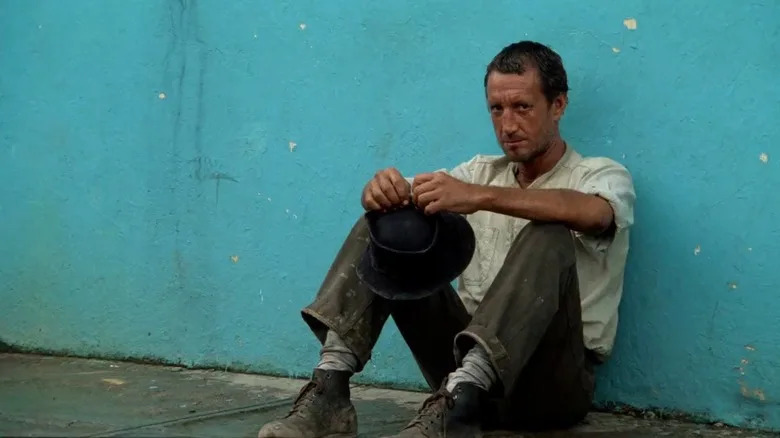
Roy Scheider as Jackie Scanlon in Sorcerer, looking really dirty and sitting against a blue wall. – Universal Pictures
“Scorcerer” is an incredible movie that had the sublime misfortune of opening up during the cultural pandemonium of a little B-movie sci-fi romp called “Star Wars.” William Friedkin’s immediate follow-up to his generation-defining horror blockbuster “The Exorcist” never stood a chance against the wild fervency of a general audience that was suddenly wholly captivated by the pulpy outer space adventures of George Lucas and not very interested in a stressful, dreary adaptation of Georges Arnaud’s 1950 novel “Le Salaire de la peur” (or: “The Wages of Fear”).
“Sorcerer” was a movie that was already met with a perfect storm of problems, making its box office crash a cruelly ironic cherry on top of a movie seemingly cursed to endure the most vexing and dangerous of production issues. But investigate the commentary of film forums and refreshed reviews today, and you’ll find a film that’s endlessly praised for its overbearingly tense execution of a plot following a group of men transporting cases of nitroglycerin ready to explode at the gentlest touch through the rocky terrain of the South American jungle.
Indeed, time has been much kinder to “Sorcerer” than contemporary audiences were, more willing to embrace the astonishingly tactile sense of blood, sweat, and tears that were poured into its production. It’s a white-knuckle masterpiece of a thriller, unparalleled in how it captures delirious madness.
The Long Goodbye

Elliot Gould looking dirty, sweaty, and downcast as Philip Marlowe in The Long Goodbye. – United Artists
Robert Altman’s 1973 film “The Long Goodbye” was met with some marked animosity from critics upon first release, and that attitude extended to general audiences — those who actually saw the movie, that is, which was hardly anyone. Robert Altman’s 1973 subversive detective procedural is an adaptation of the 1953 Raymond Chandler novel of the same name, which, notably, was not making particular strides to be any kind of discernible deconstruction. United Artists promoted it as a noir procedural, but what audiences got was an Altman movie.
Even today, that may be a hit-or-miss sell, but if you’re willing to sit back and let Altman guide you through the cool, meandering motions of the plot, you’re in for a treat. That’s, of course, largely thanks to Elliott Gould, who is perfectly insouciant in his interpretation of detective Philip Marlowe as he wanders through a mystery he often appears to be half-heartedly interested in solving. “The Long Goodbye” may be a Chandler adaptation, but its deliberately obscure method of unraveling its procedural trappings will likely remind viewers more of Paul Thomas Anderson’s Thomas Pynchon adaptation “Inherent Vice.”
Altman and screenwriter Leigh Brackett just aren’t that interested in the knotty complexities of the fairly obscure mystery, which drags a reluctant Marlowe out of bed to face the intense brightness of sunny Los Angeles. This is a movie much more concerned with time, place, and mood, checking in on the temperature of a troubled America with a breezy attitude of detached aloofness. Put simply: It’s a vibe.
Phantom of the Paradise

William Finley as Winslow Leach / the Phantom in Phantom of the Paradse, donning his mask and Phantom garb against a red background. – 20th Century Fox
Before he broke into mainstream success with the Stephen King adaptation “Carrie,” Brian De Palma was producing other singular genre films that, in classic De Palma fashion, were usually born out of remixed elements from other influential texts and artists. Take “The Phantom of the Paradise,” which throws together recognizable components of “The Phantom of the Opera,” “The Picture of Dorian Gray,” and “Faust” into a maximalist, ludicrously campy rock opera about a musician who dons a macabre new persona to terrorize a deceitful record producer who’s in a compact with the devil.
“Phantom of the Paradise” is one of the best horror movies of the ’70s, now deservedly considered a cult classic and an early indicator of De Palma’s confident artistic stylings. Led by a trio of splendid ’70s character actors consisting of William Finley, Paul Williams, and Jessica Harper, it’s an extravagantly garish, ludicrously over-the-top excursion that plays with the template and lessons of classic fable-like morality tales, with a tongue-in-cheek look at the price of artistic success.
Interestingly, though the movie flopped basically everywhere, it saw fascinating success in the local cinemas of Winnipeg, Manitoba, where it received renewed theatrical runs for over a year. The soundtrack even sold so many copies that the album went Gold in Canada! The isolated success of “Phantom” in this one Canadian city is hard to deduce, but it’s safe to say the rest of cult film circles have spent years catching up to their dedication.
Black Christmas

Olivia Hussey as Jessica “Jess” Bradford in Black Christmas, looking concerned while talking on the landline.
Lest you try to pigeon-hole the career of director Bob Clark as the guy who made two “Porky’s” movies and “A Christmas Story,” we should remember that in 1974, Clark made a decidedly different type of Christmas tale. That would be “Black Christmas,” a seasonal-set slasher movie that came out before the genre had even truly solidified itself. Led by the likes of Olivia Hussey, Margot Kidder, and John Saxon, “Black Christmas” focuses on a faction of sorority sisters who are subjected to a flurry of obscene, ominous phone calls and subsequently hunted down by a psychopathic serial killer.
A noted influence on “Halloween,” it’s striking how much of a reliable cinematic template and language Clark builds “Black Christmas” around, crafting a blueprint that would deeply influence the very core of the burgeoning genre as it exploded over the following decade. But “Black Christmas” is no underwhelming, nascent example of a genre that hadn’t been fully formed — Clark’s film is a wholly satisfying meal of a slasher that finds a genuine sense of disquiet in the tenets of the holiday season.
Given the meager box office returns, it appeared American audiences weren’t ready for the startling nature of “Black Christmas,” and they were also distracted by competition like “The Godfather II.” However, in its home country of Canada, it went on to become the third-highest-grossing domestically made film in the country, and America would catch up later on with two different remakes released in 2006 and 2019.
A New Leaf

Elaine May as Henrietta Lowell in A New Leaf, wearing unbefitting round glasses, offering a grin while looking off at something. – Paramount Pictures
A filmmaker constantly finding herself at the whims of studios prepared to butcher her vision for the sake of a more commercial final product, Elaine May had a curtailed career defined by films that failed to make a profit but would later find cinephile acclaim, from “Mikey & Nicky” to “Ishtar.” The May-starring “A New Leaf,” her directorial debut, perfectly fits that mold.
The story goes that, having never directed a film before, May accidentally let production fall behind after having to reshoot entire sequences to follow more traditional filmmaking tactics of coverage and shot set-ups. The shooting went far over schedule, as did the editing process, which kept May occupied for nearly a year. Eventually, Paramount studio heads commandeered the production, chopping it down from a then 3-hour picture to a more approachable 102 minutes.
It’s a marvel, then, that, despite the clear asymmetrical quality to the final product, “A New Leaf” is a wildly funny and forward-thinking dark screwball comedy (one that we placed on our list of the 15 best dark romance movies), following Walter Matthau as Henry, a privileged, suddenly broke New York bachelor, who concocts a plan to find a woman of means (May’s Henrietta), marry her, and kill her to obtain her fortune. Matthau and May are each strikingly funny in a film that rampantly eschews genre conventions, leaving an acerbic, bitter aftertaste that lingers underneath some of the film’s goofier antics. It is a singularly Elaine May film.
The Wicker Man

Christopher Lee as Lord Summerisle in The Wicker Man, set against the sea and looking longingly off at something. – British Lion Films
A cult film that would come to define the genre of folk horror for most general audiences — and also that would become the subject of ridicule via a terrible American remake starring Nicolas Cage — “The Wicker Man” first flopped across the pond in its home country of Britain before struggling to find an audience over in the States. Part of that was the release strategy: In the UK, it was released as the B-movie in a double feature led by the Nicolas Roeg film “Don’t Look Now,” dampening the potential impact for “The Wicker Man.”
In America, studios mostly sat on the film after disappointing screenings in select cities, unsure what to do with the thing until it received a limited release in 1979 via a new restored cut, and promptly developed a more proper niche following on VHS in the following decades. “The Wicker Man” is the ideal archetype of studio bungling and audience disinterest that makes for a true-blue cult classic.
It’s fortunate that the hard work that went into making “The Wicker Man” finally found a dedicated fanbase. You’re unlikely to see another movie that better wholly encapsulates the folk horror subgenre, with stars Edward Woodward and Christopher Lee top-lining this eerie, erotic, unsettling story about a police officer who arrives at a remote Scottish village in pursuit of a missing girl whom the locals claim doesn’t exist. “The Wicker Man” is the original template of how to make an alarming, atmospheric cult movie.
Harold and Maude

Bud Cort as Harold Parker Chasen in Harold and Maude, sitting in a very nice looking house in a suit and tie, looking concerned off out of frame. – Paramount Pictures
The second feature by director Hal Ashby, “Harold and Maude,” was hung out to dry by Paramount Pictures, who were perhaps slightly put off by the film’s macabre story of a young, morose, death-obsessed young boy who falls in love with a 79-year-old Holocaust survivor. Played as a dark comedy, the story tenets of “Harold and Maude” are ripe with intentionally prickly dynamics. Combined with the lack of a marketing presence, it made for a movie that was basically dead-on-arrival.
But audiences gradually took to “Harold and Maude” as it continued to run in repertory houses, with several cities even breaking lifetime performance records as it continued to receive audience demand. Critical reception at the time was mixed, but has now grown considerably, the general public having more properly caught up with Ashbys progressively acerbic sense of humor that supports ultimately uplifting themes.
It’s ironic that the reputation of a film with the ultimate age-gap romance would grow when that concept is regularly scrutinized when depicted now by prudish, literal-minded viewers, but perhaps that too speaks to Ashby’s sensibilities in crafting what often feels like a darkly comic but secretly lighthearted fable about the human condition.
Night Moves

Gene Hackman as Harry Moseby in Night Moves, wearing a tan jacket in a room with a lot of art on the walls, looking out at something. – Warner Bros.
An undervalued movie to this day, Arthur Penn’s Gene Hackman-starring neo-noir “Night Moves” saw favorable contemporary critical reception but ultimately failed to find a larger commercial audience. Though it was released a week before Steven Spielberg’s “Jaws,” the marketing machine behind the seminal blockbuster likely steered some attention away from the more quietly pensive, moody personality of “Night Moves.”
Now revered enough to have a Criterion Collection 4K release, the character-focused, downcast mood of “Night Moves,” which prioritized understanding the interiority of its leading players over frantically deploying schlocky noir plot mechanics, left many audiences cold upon release. It’s taken time for cult film fans to warm up to the film’s muted stylings, but it’s a film that deserves its place within the pantheon of great, scuzzy ’70s crime pictures.
Featuring a knotty and layered performance from Hackman, one of the greatest performers of any generation, it’s hard not to find something of value when approaching “Night Moves” for what it is. It captures a certain psychological and social malaise enveloping the country within the paranoid, distrustful mood of its particular decade in America, representing a national temper that suddenly felt all too cynical — a cynicism that would linger for decades to come, affording “Night Moves” even more everlasting power.
The Rocky Horror Picture Show

Tim Curry as Dr. Frank-N-Furter in The Rocky Horror Picture Show, donning the slinky glam garb and looking intently into the camera. – 20th Century Fox
The movie that most people now exclusively reserve for seeing in theaters pretty much bombed when it was initially unleashed in cinemas. Director Jim Sharman’s glam-rock camp horror comedy, “The Rocky Horror Picture Show,” of course, now regularly plays at indie cinemas and repertory houses all over the country to scores of dedicated fans, clad in their Frank-N-Furter costume gear and studied up on all the lyrics to sing along in unison, and even augment the movie with their own live performances with fellow fans.
That’s not how the initial reception went upon release in 1975. Contemporary critical reactions were universally unfavorable, and the film was pulling such small audiences that 20th Century Fox pulled its planned Halloween-night New York City release. It wasn’t until it started running as a novelty midnight release in 1976, beginning reruns at the Waverly Theater in New York City, that it quickly developed its word-of-mouth cult following via an audience that felt acknowledged by the shamelessness of its countercultural elements of sci-fi B-movie kitsch and parody.
It’s a legitimately inspiring story of a film that had every reason to be discarded as a failure by its studio that was afforded a second life — “The Rocky Horror Picture Show” is now the perfect cinematic sanctuary for freaks. On top of that, there really is no other film quite like it, from an impeccably ostentatious Tim Curry performance, to its flashy glam soundtrack, to its goofy and erotic flamboyancy in its rendering of embracing idiosyncratic individuality.
Willy Wonka and the Chocolate Factory

Gene Wilder as Willy Wonka in Willy Wonka and the Chocolate Factory, sipping from a flower petal tea cup in the factory’s garden. – Paramount Pictures
Yep, the family-film classic that you probably watched as a kid over the course of three hours on broadcast television did not do particularly well upon its initial release in 1971. “Willy Wonka and the Chocolate Factory,” Mel Stuart’s adaptation of the Roald Dahl novel, received underwhelming audience reactions upon release and only found an audience via VHS releases and TV reruns in the years following.
Numerous factors contributed to the film’s original failure — most notably, the studios simply failed to market the film correctly. On top of that, though credited as the film’s screenwriter, Dahl had publicly left the project over creative differences, providing only an outline, which highlighted key points in the novel, that would later be finished by David Seltzer. And then there’s the most amusing cause: the film was principally funded by Quaker Oats to sell real-life Wonka Bars they would manufacture, only for the bars to run into production issues that prevented the company from actually promoting the bars, or the film.
Even so, the strange fairytale surreality, and occasional unsettling terror, of “Willy Wonka and the Chocolate Factory” would eventually find its audience, enough of one to spawn an ongoing franchise of films that most recently materialized as a prequel starring Timothée Chalamet as Willy Wonka. It goes to show you should make that movie where little exotic orange guys work for a psychopathic capitalistic chocolatier who punishes children who don’t really know any better — you’ll find your crowd and eventually get a LEGO set.
If you’re looking for the easiest way to keep up with all the major movie and TV news, why not sign up to our free newsletter? You can also add us as a preferred search source on Google.
Read the original article on SlashFilm.
‘ The preceding article may include information circulated by third parties ’
‘ Some details of this article were extracted from the following source www.yahoo.com ’