The story says poor hygiene could also explain an odour, as could infection or the fact that “the body is draining fluids, and the patient is wearing tight compression garments that can trap sweat, moisture, and bacteria against the skin.” That last bit is per New York-based plastic surgeon Dr. Douglas Steinbrech. Please note, all of these explanations are actually just due to having a body, and according to the experts’ own quotes, not one of them is specific to BBLs—not even fat necrosis, which btw, other plastic surgeons quoted in far more credible outlets say is usually odourless.
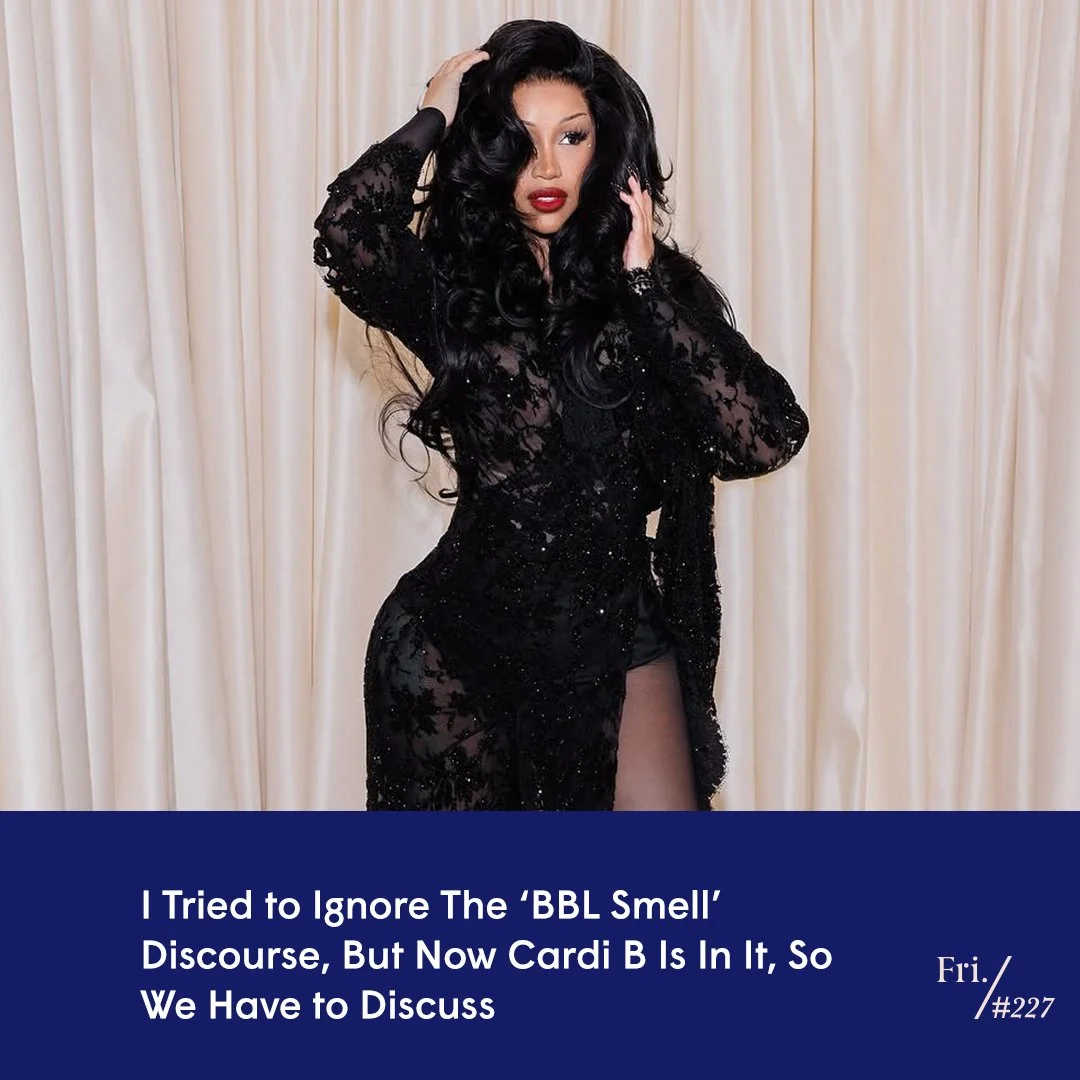
So, what these doctors are actually communicating, once you strip out the bombastic quotes, is that the only time a BBL should emit an odour is if something is wrong—either you’re not able to clean yourself properly, or you have an infection or complication. But the framing of each article says the opposite: that there is an odour specific to this procedure. Of course, if you read several of these articles, you see that many, if not all, of the ones that proclaim BBL Smell is real actually just picked up the Daily Mail’s reporting and are recycling Dr. Anderson’s quotes. However, the bigger problem is that the quotes simply don’t back up the thesis of the article, and maybe I’m being extra here, but I think that’s a problem. Journalists have a responsibility to be accurate in all parts of the story, including what it implies or alludes to. Philosophically, this is an important element of journalistic integrity. But also, this kind of reporting comes with a real risk of perpetuating stigma, which doesn’t actually make anyone healthier. (Again—highest mortality rate of any aesthetic procedure.)
I will absolutely take this opportunity to talk about the politics of smell, though
Also, It’s not an accident that BBL Smell is trending now. What I think we’re seeing is a cultural desire to punish women for not adhering to today’s trending beauty standards. I referenced this last year in my newsletter about Lindsay Lohan’s new face, but it’s even more relevant here: In the West, we are moving to a new must-have body type and overall aesthetic, and it’s one that emphasizes or mimics whiteness, in everything from body type to makeup styles. There’s data to back this up; in November 2024, The Hollywood Reporter reported on the “de-Kardashian-ification of America,” citing plastic surgeons from New York and L.A. who were seeing their customer base demand more subtle, natural-looking augmentation, instead of Kardashian-style curves. (This is an aesthetic evolution that we’ve even been seeing among the famous family themselves, for the record.) I’m not saying this is logical, or even conscious, but it does feel like there’s a sort of collective shaming of women who invested their time and money, and risked their health, to achieve a body type that is falling out of (mainstream, white) fashion.
And smell is a powerful way to do that. As my current favourite academic, Ally Louks, explained in an article for The Conversation, “it is well documented that smell has been used as a justification for expressions of racism, classism and sexism. Since the 1980s, researchers have been assessing the moral implications of perceptions and stereotypes related to smell… I suggest that smell very often invokes identity in a way that is meant to convey an individual’s worth and status. In Parasite, for instance, a working-class man overhears his employer say that his ‘smell crosses the line,’ which the director describes as a moment when ‘the basic respect you have for another human being is being shattered.’”
‘ The preceding article may include information circulated by third parties ’
‘ Some details of this article were extracted from the following source www.fridaythings.com ’