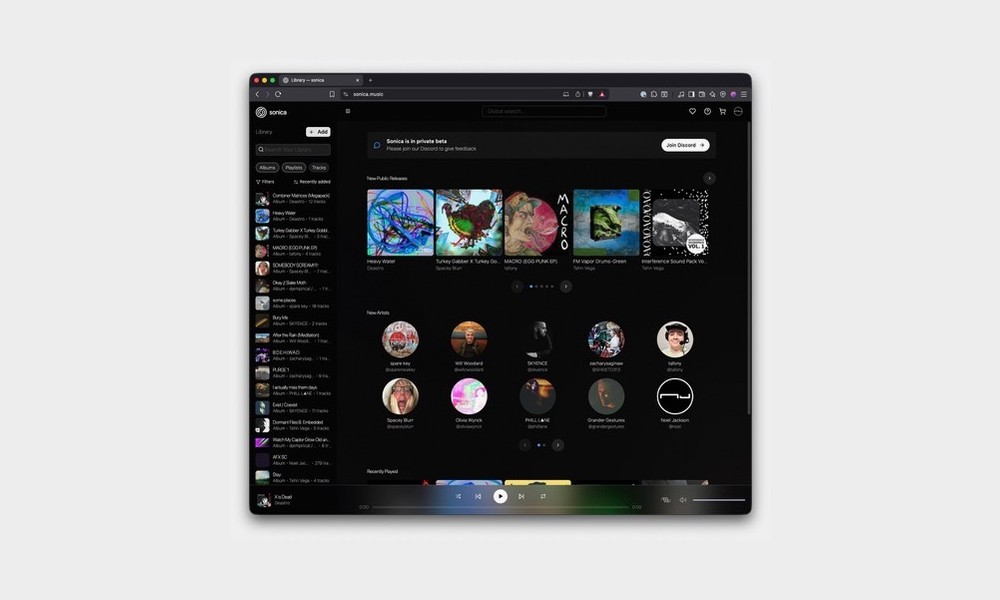
Sonica has become the most recent startup to launch a service for independent music artists, described as “a complete platform for organizing, sharing, and selling your music”.
Artists control how to share and make money from their music, organise their catalogue, and can create a Linktree-style streamlined link connecting fans to all their information.
Artists keep 100% of their sales, with Sonica making its money from subscriptions if they want more than 4GB of storage for their music. Prices start at $5 a month.
Launching a new music platform is no easy feat, considering the highly competitive landscape, all the necessary R&D and concentration of resources among big players.
According to Midia Research’s latest music-subscriber market estimates, Spotify ended 2024 with a 32% market share, followed by Chinese firm Tencent Music on 15%, Apple Music on 12% and Amazon Music and YouTube Music both on 10%.
Perhaps what these emerging platforms can reasonably angle for, then, is a piece of what the larger platforms cannot or haven’t yet volunteered to provide. One strategy has been a tipping service niche in complement to other platforms — like MyPie and Tipify, which break down donations to artists by tracking Spotify activity.
Some other approaches have been leading towards the appeal of higher sound quality and per-stream rates, like Qobuz, community elements and customised curation from partner labels, like Cantilever and Nina, or opposition to algorithms and AI, like Coda, which allows users to filter out AI-made tracks and flag unlabelled content for review.
In the long term, Midia Research predicts that we may see the market splitting into two: with large DSPs serving mainstream, lean-back consumption, and more niche platforms presenting opportunities for more active listening, community and addressing artist pain points.
Sonica is one of the growing number of startups in the second category hoping to find success.
‘ The preceding article may include information circulated by third parties ’
‘ Some details of this article were extracted from the following source musically.com ’