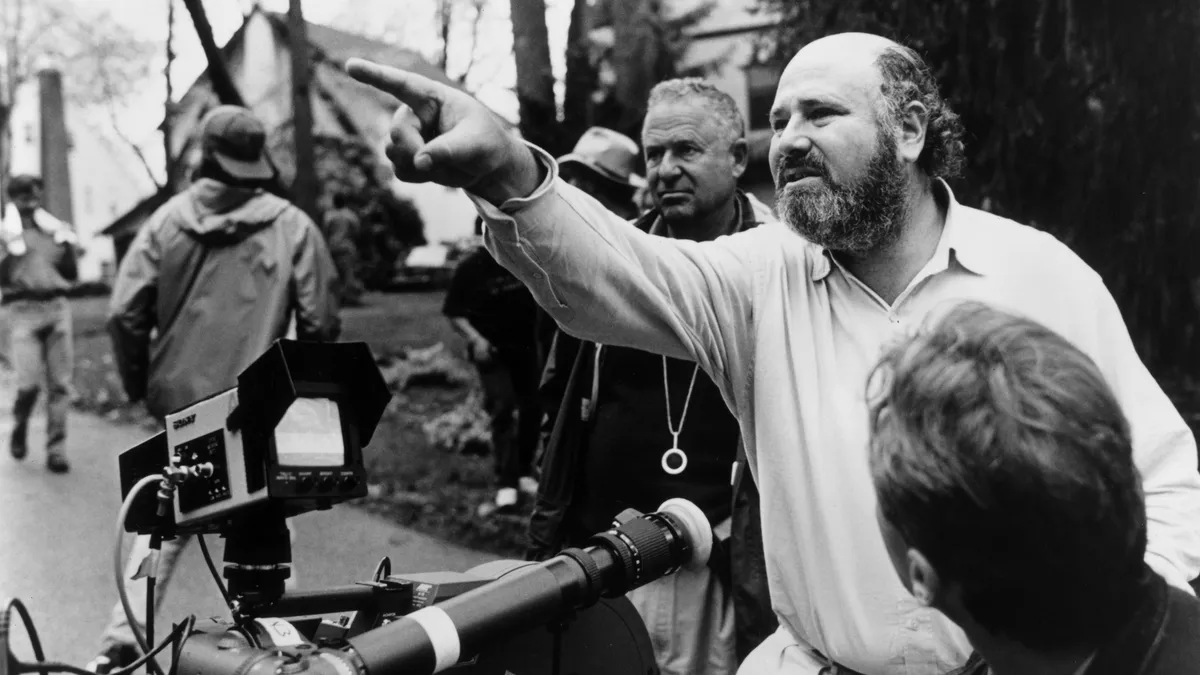
On the Wednesday, December 17 2025, episode of The Excerpt podcast: Following their shocking deaths, famed director Rob Reiner and his wife Michele are being remembered for their iconic work in Hollywood as well as in the world of politics. USA TODAY Entertainment Reporter Ralphie Aversa joins The Excerpt to discuss their legacies.
Hit play on the player below to hear the podcast and follow along with the transcript beneath it. This transcript was automatically generated, and then edited for clarity in its current form. There may be some differences between the audio and the text.
Podcasts: True crime, in-depth interviews and more USA TODAY podcasts right here
Dana Taylor:
Tributes to the beloved Hollywood director, Rob Reiner and his wife Michele have poured in since their tragic deaths on Sunday since shockwaves through the industry. Their son Nick Reiner was taken into police custody that same day and booked for murder. It’s according to a Los Angeles Police Department news release. Reiner, whose career spanned more than five decades was most known for his work on ‘All in the Family’, ‘The Princess Bride’, and ‘When Harry Met Sally’, all iconic productions that were defining cultural moments for Hollywood. What will his legacy be?
Hello and welcome to USA TODAY’s The Excerpt. I’m Dana Taylor. Today is Wednesday, December 17th, 2025. For more on how Hollywood and America will remember the famed director is USA TODAY Entertainment Reporter, Ralphie Aversa. Thanks so much for being here, Ralphie.
Ralphie Aversa:
Always a pleasure, Dana, despite the circumstances, of course.
Dana Taylor:
Ralphie, how has Hollywood responded to the deaths of Rob and Michele Reiner?
Ralphie Aversa:
It’s been interesting. I mean, there have been a number of tributes that have poured in, which is to be expected for Rob and his wife, Michele, who certainly was beloved and was not only Rob’s partner, but his colleague as well in many ways, which we’ll talk about. But certainly the manner in which that all of this has played out from when we first learned that two bodies were discovered in his mansion to now their son, Nick, being under arrest facing two counts of first degree murder with a special circumstance of multiple murder, among other charges. It’s just added an extra layer of a sorrow really to this. In addition to obviously wanting to pay tribute by pretty much every account, universally the great people that they were, and then also the great work that they’ve done, specifically all of the work that Rob did in Hollywood.
Dana Taylor:
We do want to talk about their work. There were actors who had career defining roles in some of his films. There was Meg Ryan in ‘When Harry met Sally’, Jack Nicholson in ‘A Few Good Men’, Kathy Bates in ‘Misery’. What strikes me about those movies though and those roles is how different they all were. Can you share your thoughts on how Rob Reiner influenced multiple genres in film?
Ralphie Aversa:
Yeah. I mean, you look at that 10 year stretch with ‘Spinal Tap’ and with ‘Misery’ and ‘A Few Good Men’ and ‘When Harry Met Sally’. I think one of the interesting things about Rob’s career specifically as a filmmaker is how he was able to set the benchmark for these genres. And for rom-coms, really create the genre in a sense, right? Or certainly redefine it. And again, you go to mockumentaries with ‘Spinal Tap’, ‘When Harry met Sally’ for rom-coms. You talk about the Stephen King adaptations with ‘Standby Me’, and then of course ‘Misery’ as well. The procedural, the military courtroom drama with ‘A Few Good Men’. One of my personal favorites, I’ll be honest, an American president, Michael Douglas, so good. The diversity in those films and the way in which they were received, he wasn’t just churning out films for a streaming service or a short theatrical run. I mean, these are films that have been talked about for decades and will be talked about and viewed for decades to come. Really, really fascinating.
Dana Taylor:
Of course, not all great film directors began their careers as actors, but Rob Reiner did as meathead in the classic television show ‘All in the Family’. The chemistry of that cast is legendary. Tell me more about his role and how you think it may have influenced his work as a director?
Ralphie Aversa:
Absolutely. So I think one of the things about his early career with ‘All in the Family’ is we go back to Rob’s childhood. He was born in the Bronx, New York, and then his father, of course. You talk about famous, incredibly large footsteps to follow in, but Carl Reiner as well, the comedic legend. Carl moves his family out west to pursue this career. And then Rob decides that he’s also going to follow in his father’s footsteps. And so to do that, to land that role on this iconic show, and then to really… Norman Lear, creator of ‘All in the Family’, certainly a TV pioneer in his own right, kind of ends up becoming a second father to Rob as well. And so that role really set the groundwork for what was to come with Rob, not just as an actor, as you mentioned again, but certainly as a filmmaker.
Dana Taylor:
It’s impossible to separate the script from the actor, from the director, but Rob Reiner was the common denominator across multiply iconic films that are quoted so often. “You can’t handle the truth.” That’s a line that always comes to mind for me from ‘A Few Good Men’. Can you speak to that part of his legacy?
Ralphie Aversa:
“I’ll have what she’s having.” How about that one? I mean, again, we talk about the tributes that are pouring in from Hollywood and from all across the country. I mean, Katz Deli posting on Instagram, it seemed like a photo that was actually from the film set of, I believe, maybe the owner of Katz at the time, along with Rob and Billy Crystal and Meg Ryan too. So again, going back to these iconic films, any iconic film, any iconic song, any iconic piece of art, television show, you’re going to have a quotable line or two or three. And certainly the two examples we have, and I’m sure there are more, we see that in some of these benchmark films that Rob created throughout his career.
Dana Taylor:
Ralphie, ‘The Princess Bride’, that’s another Rob Reiner film. That one has stood the test of time. That movie continues to connect with both children and adults. Why do you think it’s so enduring?
Ralphie Aversa:
Well, look, again, that’s another film and we’re trying to, again, recap Rob’s entire career. I mean, that 10 year stretch, you talk about fantasy films and that genre, that movie set the benchmark there as well when it was released. And another little interesting tidbit, you look at Rob’s filmography, things he’s directed, written, acted in, appeared in. He appeared in the HBO documentary on Andre The Giant that Bill Simmons, the famed sportswriter and podcaster put together. Because again, of the many interesting parts of that film, Andre’s the Giant who was almost literally a larger than life figure, was in that role as well. And so that was another notable part of that film. So again, it’s fascinating as we look just at his career, how many different things he was involved in and how many different people were impacted by works that he created.
Dana Taylor:
A little under 10 years ago, Reiner made a film which his son Nick co-wrote called ‘Being Charlie’. Both said the film was largely drawn from their real life experiences and portraying a young man struggles with addiction and mental health. Ralphie, might this tragedy help bring the struggle with addiction further out of the shadows?
Ralphie Aversa:
I think so. I mean, look, I think the conversation around addiction has changed a lot over the past 10 to 20 years as more and more public figures have become more open with their struggles, whether we talk about substance addiction, whether we talk about other mental health issues. And from the reporting that we’ve seen, Nick, Rob’s son, dealt with both of those, whether they were hand in hand or separate issues, those are things I think that people are still trying to parse out. I do think when you put out a body of work like ‘Being Charlie’, and then you have the father and son do a somewhat limited press run where they’re talking about not just the film, but the way in which they learn things about each other and the way they work together on set. I was thinking of an interview that they did for AOL Build, which is now defunct, but the two of them, Rob and Nick talking about ‘Being Charlie’. And Rob admitting that he learned things about Nick and about his perspective when it came to addiction, that as a father, he didn’t realize until they worked together on that film.
And so again, they’re selling a film when you do a press run like that, but it did seem like it brought them, at least at that time, closer together.
Dana Taylor:
I’m going to turn now to Michele Reiner, who was a photographer and also a film producer. What can you tell me about her work and creative legacy?
Ralphie Aversa:
Well, a couple things about Michele. She was a photographer. Quite ironically, she photographed Donald Trump for ‘The Art of the Deal.’ Now it’s ironic because both her and Rob worked on a number of social justice and Democratic issues. And of course, Rob was a frequent critic of the current president, but they met, Michele and Rob met on the set of ‘When Harry Met Sally’. And as the story goes, they met on set, they began to fall in love. And how much did it influence Rob? He actually changed the ending of ‘When Harry Met Sally’ so that the two lead characters ended up together and falling in love because that mirrored his actual life. What a beautiful tribute that is, in addition to, of course, the incredible legacy that that movie overall has, specifically in the rom-com drama.
But Michele, again, as we shift back to her professional work, she did work with Rob and was the co-president of Castle Rock Entertainment. We’ve all seen that little Castle Rock Entertainment jingle at the beginning or at the end of some of our favorite television shows, including ‘Seinfeld’. One of the many tributes from Hollywood to come in was from Jerry Seinfeld, who credited Rob with really giving that show a chance, helping it get green lit on NBC and sticking with it. Even when the show got off to a very shaky start with its pilot episode and subsequent episodes, things weren’t looking great for it. Rob still felt that they had something. And well, I’d say Rob was right.
Dana Taylor:
Ralphie, as you mentioned, Rob and Michele both were also well known for their advocacy and political circles. Michelle Obama was a guest on Jimmy Kimmel Live Monday night and shared that she and Barack were supposed to see them Sunday night. What can you tell me about his influence politically?
Ralphie Aversa:
Well, they co-founded the American Foundation for Equal Rights, and that was a big, big, big… Or that organization rather was a big advocate in helping to overturn the same sex marriage ban in California and then in helping really nationally as well to advocate for that. One of the photos that we see so often that a number of news outlets, including ours USA TODAY, using of Rob and Michele is from the, I believe, human rights campaign, the HRC Gala, I think one of the more recent ones over the past year or two. And so again, the two of them were very outspoken about their beliefs. They have been characterized by many people as two people who really cared about their country. And I will say, of course, obviously they cared about Democratic causes, and so we will hear people on the Democratic side of the aisle sing their praises and pay tribute to them.
One at least conservative actor that did that was James Wood, who had worked with Rob as well. And he said that despite their political differences, Rob never held it against James. They always got along and certainly they worked well together on set as well. So this was a guy who, yes, was very dedicated to his beliefs, dedicated to trying to make the country a better place, but also didn’t let that get in the way of civility, which is something that, at least in our discourse, seems kind of rare these days.
Dana Taylor:
Hollywood and the world are grappling with the deeply disturbing ending of both of their lives and just a devastating family tragedy. Our conversation today though is centered on the body of work that remains with us. What are your closing thoughts here, Ralphie?
Ralphie Aversa:
Well, again, we go from ‘All in the Family’ to writing the pilot episode for ‘Happy Days.’ We saw part of that tribute from Ron Howard when he spoke out on social media about the death of Rob and the death of Michele as well, of course. And then you look at the work that Rob and Michele did together from ‘When Harry met Sally’ until their untimely passing. And so it’s work that will endure. And I will say maybe the one thing that is, in addition to the circumstances, certainly, just looking at his body of work, he never received an Oscar and it didn’t really feel like he received the kind of recognition that somebody with that body of work would receive.
Certainly from a financial standpoint, of course, he did very well for himself. And again, he did receive a number of accolades throughout his career also, but it’ll be interesting as we move into the top of the year and into awards season, how these various award shows, starting with the Golden Globes on January 11th, will pay tribute to Rob. And again, the fact that his work is so beloved, it’ll certainly keep his memory alive for many generations to come.
Dana Taylor:
Ralphie Aversa is a USA TODAY Entertainment Reporter. Thank you so much, Ralphie, for being on The Excerpt.
Ralphie Aversa:
Dana, thank you.
Dana Taylor:
Thanks to our senior producer,Kaely Monahan for her production assistance. Our executive producers is Laura Beatty. Let us know what you think of this episode by sending a note to podcasts at usatoday.com. Thanks for listening. I’m Dana Taylor. I’ll be back tomorrow morning with another episode of USA TODAY’s The Excerpt.
‘ The preceding article may include information circulated by third parties ’
‘ Some details of this article were extracted from the following source www.usatoday.com ’