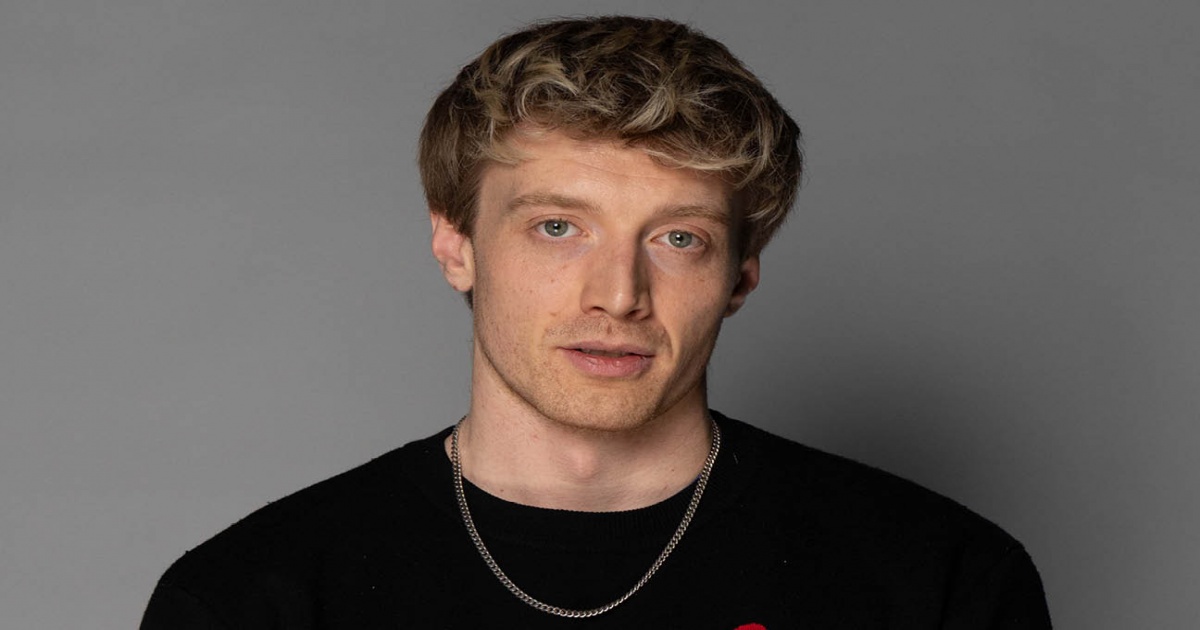
BBC Radio 1’s Jack Saunders has welcomed the return of “real voices” in pop music.
The host of Radio 1’s New Music Show was speaking in the latest edition of Music Week about the key role the slot plays for the UK industry, including Radio 1’s Hottest Record.
Skye Newman was recently crowned winner of the BBC Radio 1 Sound Of 2026. And there have been encouraging signs of a chart revival for domestic talent.
Saunders won the Radio Show category at the Music Week Awards 2025. The presenter and tastemaker admits to feeling “incredibly proud” about the honour, which now sits on top of his home record collection.
“It’s next to my vinyl player,” he told Music Week. “I haven’t won much for my broadcasting over the years. I’ve only ever had my head down trying to improve. So to be recognised was a really nice thing; it meant a lot to me.”
Here, Jack Saunders offers his take on the impact of UK talent amid high hopes for a new wave of breakthrough stars…
Considering the domestic and international success of some key British acts in the past year, how would you assess the state of UK talent right now?
“Two years ago, it felt quite bleak. We didn’t really know where the next voice was coming from, but something clicked [in 2025]. People want real voices in pop music, like Olivia Dean, Lola Young, Skye Newman, Sienna Spiro, Rachel Chinouriri. Sam [Fender] has also done brilliantly, but a lot of them are amazing British female talents being impactful because they’re writing music that people can attach to and imprint their lives onto. It’s down to the artists, their songwriting, and how they’re able to bring their experiences to life.”
People want real voices in pop music, like Olivia Dean, Lola Young, Skye Newman, Sienna Spiro, Rachel Chinouriri
Jack Saunders
Do you see the trend of global UK breakouts continuing in 2026?
“Yeah, 100% – and not just in pop music, look at rap as well – EsDeeKid is flying. Over the years, the likes of Skepta, Central Cee, Stormzy and others have ruffled feathers [in the US], but they’ve never quite dug their claws in. Central Cee has probably got closest, but it feels like EsDeeKid, Fakemink and Jim Legxacy can move the dial, affect the culture and the sound. I think US rap is in a tricky spot at the moment. There was a story that, in October last year, it was the first time in 30-odd years [since February 1990] that there hadn’t been a US rap track in the Hot 100 Top 40, so people are looking elsewhere, and with a more universal viewpoint.”
Rock music – a genre dear to your heart – also returned to the mainstream this year. What do you think is behind its comeback?
“I think rock needs its EsDeeKid, so to speak. It needs that culture-shifting band to make an impact. I don’t think labels are necessarily picking up bands like they used to; it’s harder to work them because of costs, but it’s the same at the grassroots level as well. Why would I start a band when I could just open my laptop and start producing beats or singing in my bedroom? That’s why local venues are so important, because they bring those creatives together. And with the right kind of drive to make sure we’re keeping these venues open and accessible, I think we can get back to a good place.
“But you’re right, at the upper end, [the likes of] Sleep Token are flying the flag. They’ve bucked the trend and done something different, and that’s what people want – that fresh, exciting, new thing that they’ve discovered or been a part of. Sleep Token and Bring Me The Horizon are British-born and bred, and at the top of their game. They’ve opened their world, genre-wise, and feel more expansive and global, but that’s taken years. I don’t think you can expect a band to come along and do that instantly. That’s going to take time.”
What other genres or scenes are catching your eye at the moment?
“I mentioned it already, but the UK rap scene is so exhilarating right now. I’m also excited to see where the fledgling popstars like Sienna and Skye will go. They are starting to make their mark and I think they could have a big moment this year.”
Rock needs that culture-shifting band to make an impact
Jack Saunders
In your view, what is the role of radio in terms of helping new acts?
“Consistency. It’s not a flash-in-the-pan moment. If someone hears a song on the radio on a consistent basis, twinned with it popping up on their timelines and algorithms, plus hearing it in shops or on adverts, all of a sudden, the dots start to join and it starts to make sense. But radio is key to tying it all together. It legitimises the music, so it continues to hold such an important piece of the puzzle for an artist and their growth.”
Do you think the music industry look after artists well enough?
“I think it’s gotten a lot better – a lot better – at understanding that artists need space to have downtime and you can’t just run them ragged. If you run your artists into the ground and don’t give them the support they need mentally, they’re going to burn out.”
Is the business looking for new music in the right places?
“I think it’s slowly getting there. Live is taking precedence again. Covid didn’t help things; I think it put everyone’s focal points in the wrong places. It goes back to what I was saying earlier: people want music with tangible humanity, and the only place you’re going to find that is by going to see a band live or sitting down and really listening to a piece of music. Someone with five million monthly listeners doesn’t necessarily dictate a big audience, in a live sense. If you want to really see if an audience is engaged with an artist, go and see them live.”
Subscribers can read the full Music Week Interview with Jack Saunders here.
‘ The preceding article may include information circulated by third parties ’
‘ Some details of this article were extracted from the following source www.musicweek.com ’