As the dust settles on the debut of Emerald Fennell’s Wuthering Heights and the months of discourse begin – Penguin Random House editor and Bronte enthusiast Joelle Owusu-Sekyere weighs in

Controversially, swathes of the book are cut from the film(Image: AP)
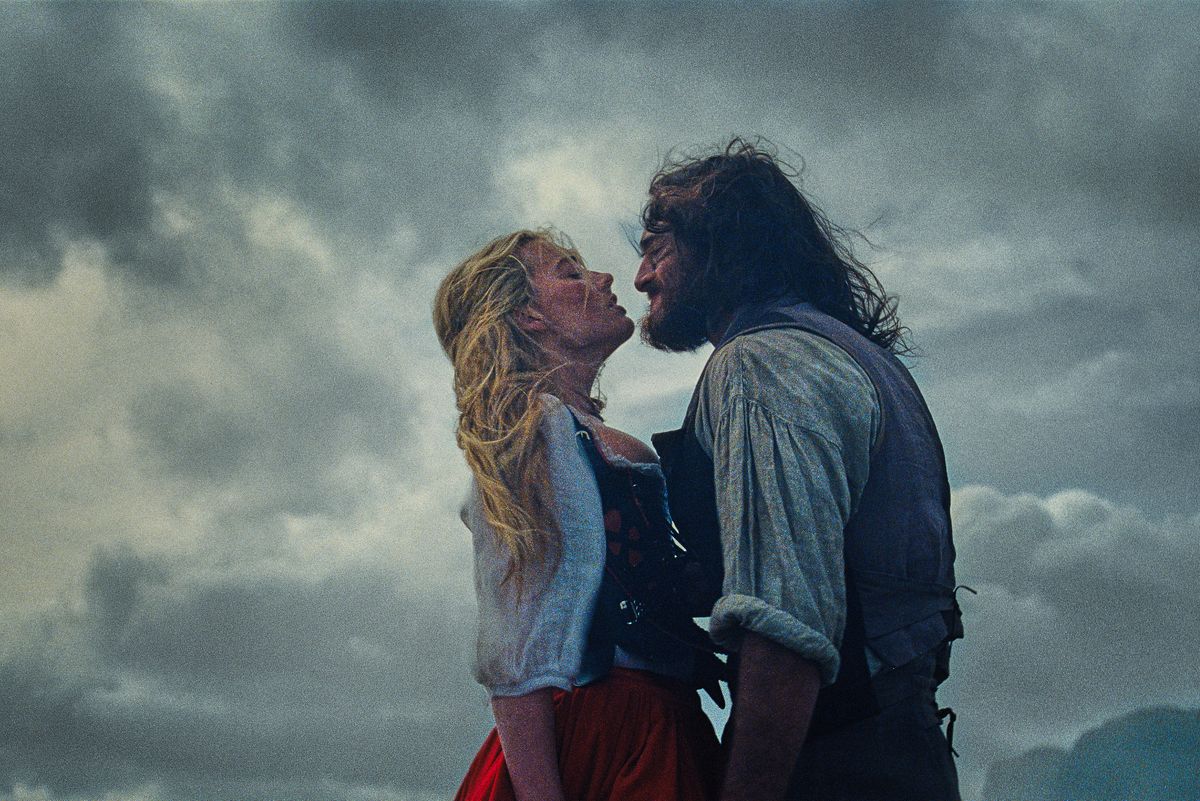
Emerald Fennell’s ultra modern bodice ripper take on Wuthering Heights is leaving audiences taking Victorian gasps of shock and women swooning en masse at Jacob Elordi’s brooding two metre high presence.
However, the critics are unimpressed. With all the spectacle of Saltburn, Margot Robbie’s depiction of Cathy Earnshaw has been unconvincing for Emily Bronte purists. One of these people is Bronte enthusiast Joelle Owusu-Sekyere, Editorial Director at Penguin Random House.
Her post-mortem is simple. She told the Mirror: “For those with short attention spans who prefer aesthetics and moody romance over moral complexity? Four stars. For people who’ve read the book? Deep frustration. Two stars.”
She added: “It’s an Emerald Fennell film, so you expect shock value, provocation and months of online discourse. After Promising Young Woman and Saltburn, you’d be naïve not to.
“With her take on Wuthering Heights, Fennell delivers exactly that – a highly stylised, divisive, aesthetically intoxicating spectacle. What she doesn’t deliver is an adaptation of Wuthering Heights. And that’s the problem.

Owusu-Sekyere was unimpressed(Image: Provided)
“In purely visual terms, it’s a beautiful piece of art. But period drama adaptations are meant to be at least cohesive. This film is messy – an unsubtle collage of cherrypicked erotic scenes rather than a fully realised world with real politics, history and morals. Style repeatedly trumps substance and this is gothic by way of TikTok and Pinterest.
“It was frankly cringe watching Robbie and Elordi deliver teenage dialogue that felt painfully modern in the mouths of 18th-century characters. Robbie, in particular, could have benefited from longer sessions with a dialect coach.”
Fennell has been transparent about her meandering away from the script – notably putting the title itself in quotation marks to show her divergence from the source material. This is a “cop out” in Owusu-Sekyere’s view. She said: “Fennell should have committed to either properly adapting from the original source material or reimagining the story with a new title.”

Fennell’s shots verge on kitsch (Image: AP)
However, one thing seems to be agreed upon. Elordi’s brilliance as a leading hunk. Owusu-Sekyere said the Kissing Booth star “shines as a leading man, sporting a surprisingly decent Yorkshire accent and carrying the film’s brooding physicality well.”
“Among the supporting cast, there are stirring turns – Martin Clunes brings gravitas, Alison Oliver impresses as the eccentric Isabella, and Hong Chau as Nelly gives one of the most grounded performances in the film. I was pleased to see Nelly given prominencen – as narrator in the original novel by Emily Brontë, she deserves it.
“But strong performances cannot mask the film’s most frustrating choice – its relentless cherry-picking.
“This is not the greatest love story of all time, as the trailer arrogantly suggests. It is a story of obsession, revenge, class, race, social exclusion and toxic emotional dependency.
“Heathcliff is not simply a wronged romantic hero – he is denied education, brutalised by racism and classism, and shaped by systemic cruelty. Remove that context and you flatten him into a two-dimensional, horny brute with daddy issues.

The high fashion costumes have only the shimmer of the Victorian era and everything of a 21st century catwalk(Image: AP)
“Whitewashing (when the author clearly states in the opening chapter that he is ‘dark skinned’). Heathcliff once again strips away crucial understanding of why he is treated so abysmally.
Fennell has defended her decision of casting Elordi as Heathcliff saying she cast what she conjured up in her coming of age childlike imagination when she first read the book at 14, as he was the spitting image of the man on the front of her copy.
“The racial undertones – uncomfortable, shambolic, vital – are erased. So too are complex themes of class and literacy. In the novel, his education is deliberately cut short by Cathy’s older brother, fuelling both his exclusion and his rage.
Owusu-Sekyere said: “ Here, that motivation is largely absent mainly because the character of Hindley Earnshaw is completely erased.
“The result? A sanitised, commercial, TikTok-friendly romance á la the disastrous film adaptation of Coleen Hoover’s It Ends with Us.
“Yes, the film is emotional. In the final five minutes, as the montage swelled and the score soared, I saw women around me wiping away tears. It’s easy to win over an audience with perfectly spliced childhood-to-adulthood flashbacks and a rousing orchestral score.

Margot Robbie and Jacob Elordi star in the film(Image: PR)
“But I couldn’t help wondering how many were waiting for the gothic haunting that never arrived. The biggest omission – and the one that left me genuinely baffled – is the ghost.”
Indeed, the entire second half of the book is cut out – in its place we get a sprawling sequence of stolen sex scenes.
“It’s less Wuthering Heights and more Cathy + Heathcliff: Part I, which is more appropriate if you’re only telling half the story. After all, 10 Things I Hate About You isn’t called The Taming of the Shrew.”
“Anyone who has read the novel knows its most haunting element – the ghost of Cathy returning to the window, pleading to be let in. The supernatural is not an aesthetic flourish; it is the emotional and thematic spine of the book.
“When Cathy dies in this film – covered in leeches and without children, no less – it becomes clear the entire second generation, the cyclical revenge, the redemption arc, the haunting legacy… all gone.
“I glanced at my watch, wondering how on earth they’d fit in the rest. They don’t. It’s erased. For a story embedded in western cultural consciousness for nearly 200 years, that’s a brazen decision.

The film is very different to the book(Image: AP)
“Updating a classic for a new generation is one thing. Stripping away its darkness, gore, psychological torment and social commentary – leaving only yearning and erotic charge – is another.
“Turning Isabella, a victim of domestic abuse in the novel, into a quirky BDSM sub is certainly… a choice.
“I’m not a purist. I love when filmmakers turn text into immersive 3D worlds but here, the elevation feels superficial and deliberately hollow. The infuriatingly unlikeable characters and obsessive brutality that makes Wuthering Heights endure has been replaced with ‘#vibes’.
The aesthetic choices of this film, are singular and transportative – but have also come under fire.
Owusu-Sekyere’ said: “Bleak Yorkshire moors, fabric textures you can almost feel through the screen, candlelit interiors that look torn from a high fashion magazine.”
One absurd feature was a room with walls a blown up study of Robbie’s skin. Other moments such as obviously out of place cling film curtains seemed a call to Sofia Coppola’s Marie Antoinette where lilac Converse are spotted among low slung period-accurate heels.

Fans love the film – critics less so(Image: Warner Bros)
Owusu-Sekyere added: “The production designs and cinematography are stunning and the costumes and suggestive food imagery are striking, if occasionally peculiar.
“The score swells at exactly the right beats and the script does well to highlight some of the best lines from the novel. All these aspects will no doubt be recognised at next year’s awards season.
“The score – including a soundtrack from Charli XCX – feels at times misplaced, though occasionally enchanting in the way ‘Young and Beautiful’ elevated Baz Luhrmann’s The Great Gatsby. It works emotionally, but not narratively.”
The problem of the original source material is central to the nay-sayers. With Robbie boldy admitting she hadn’t read the book as a choice to help her embrace Fennell’s version more sincerely.

Jacob Elordi’s performance has been praised(Image: PR)
Owusu-Sekyere said: “2026 marks a National Year of Reading and this film will no doubt bring more readers to Emily Brontë’s novel. However, the greatest irony of all is that Fennell has either not reread the book in recent years or misinterpreted its themes and meanings.
“This matters, especially when paperback tie-in editions featuring a swoon worthy Gone with the Wind-esque film poster on the cover hit shelves suggesting otherwise.
“This film has every right to exist, and modern audiences have every right to be entertained by a filmmaker’s interpretation of a classic novel.
“But marketing this as an adaptation rather than an inspiration feels misleading. This is Emerald Fennell’s version – perhaps how she first read it. A woman of privilege reshaping a text that is fundamentally about exclusion and deprivation.
“In trying to carve out a contemporary romantic lens, she has paradoxically produced something asinine and uncomfortable. Reactionary filmmaking, sexual shock factor and colourful costumes are ultimately – a distraction.
“As Aretha Franklin once quipped – “great gowns, beautiful gowns. I left the cinema asking a simple question: what was the point – and who, exactly, was it for?”
‘ The preceding article may include information circulated by third parties ’
‘ Some details of this article were extracted from the following source www.mirror.co.uk ’