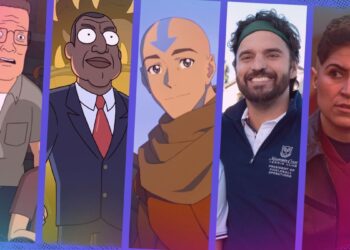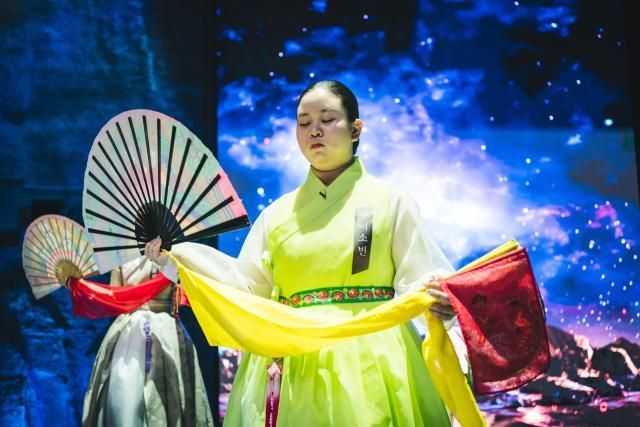
A scene from Disney+ fourtune-telling survival show “Battle of Fates” / Courtesy of Walt Diseny Company Korea
Kim Ji-eun, 35, starts her morning with a ritual — asking ChatGPT for her daily fortune.
“I used to visit a fortune teller for the New Year or when I had worries, but now I just ask ChatGPT,” she told The Korea Times. “I tried it once for fun and the result was surprisingly similar to what I’d heard at a fortune teller’s, so now I ask about things like money problems or whether my boyfriend and I are a good match. It’s not like I trust it completely, but I don’t think it hurts to be a bit more careful.”
She also watches Disney+’s “Battle of Fates,” a shamanism-themed competition show that has left her with goose bumps.
“Watching these so-called Gen MZ (Millennials and Gen Z) shamans casually deliver ‘messages from the gods’ was actually fun and all the different ways they tried to read people’s fates were fascinating. I didn’t even know foot reading was a thing, and seeing them pick out a homeless person just by looking at someone’s feet was really shocking,” she said.
Kim is far from alone. Shamanism-themed content is surging in popularity among younger Koreans, spilling from streaming platforms into everyday consumer culture and reshaping how a generation thinks about fate, identity and the supernatural.
From mystical fringes to mainstream TV
Since February, “Battle of Fates” has featured 49 fortune-tellers competing in wild challenges to prove their powers.
In each round, tarot readers, saju experts, foot physiognomists and shamans tackle missions like guessing someone’s cause of death from just their name and birthday, spotting the person who “struck it rich” with a winning lottery ticket versus the one who survived being struck by lightning in a lineup or predicting a guest’s current life from childhood photos. They also pinpoint a guest’s two surgery scars or pit rival shamans against each other to see who reads fates most accurately.
The show drew buzz for putting shamanism front and center in a high-stakes survival competition. But it soon sparked backlash over certain missions and off-base comments from contestants — especially one where fortune tellers guessed how a firefighter died, turning real tragedy into cheap reality TV thrills.

A scene from SBS “Shinpal Talk Show: A Strange Story” / Courtesy of SBS
Producers took heat for the missteps, prompting talks about ethics in content creation and even some re-edits. Still, experts say the bigger story is how shamanism has stormed into mainstream entertainment — and that trend deserves a closer look.
Hits like the global smash “KPop Demon Hunters” and 2024’s box-office phenomenon “Exhuma” have cleared the way for a wave of shamanism-themed shows. Variety hits like “Fortune Tellers’ Love,” “Shinpal Talk Show: A Strange Story,” “MBTI vs. Saju” and the drama “The Haunted Palace” are riding the trend. YouTube is flooded with it, too — search “mudang” (shaman) or saju and you’ll find shamans reading viewers’ fortunes or guessing their pasts, with videos pulling hundreds of thousands of views.
Once a secretive, mystical world, shamanism is now mainstream entertainment for all ages. Fans don’t just pay for readings anymore — they binge vlogs of shamans’ daily lives and counseling sessions, turning them into influencers. Viewers get hooked on the spot-on predictions but also crave the comfort and reassurance in their words.
The trend is not confined to the screen. “Aengmagi myeongtae” key rings — shaped like the dried pollack traditionally hung above doors to ward off bad luck — have become a popular accessory among younger consumers, while fortune-telling apps that combine traditional saju reading with ChatGPT-style AI functions are also on the rise.

A key ring in the shape of “aengmagi myeongtae,” or bad-luck-banishing dried pollack / Captured from GS Shop
Between comfort and blind faith
Culture critic Jung Duk-hyun noted the old image of shamans as shadowy, secretive figures is giving way to bright, relatable “Gen MZ shamans” known for their warmth and accessibility.
“One reason they’re surging in popularity is that they counter the emotional coldness of our AI-driven, hyper-smart society,” he explained. “Who deals with raw feelings — resentment, grief and pain — more directly than a shaman? They treat those emotions like messages for the supernatural, soothe them away and help the living move forward. That’s very different from Western exorcists who just cast out evil spirits and it’s why [Korean-style] shamans are getting fresh attention even in the West.”
Not everyone views the trend so favorably. Baek Kwang-hun, director of the Center for Cultural Communication, a Christian organization, warned that packaging shamanism as mainstream entertainment carries risks.
“As shamanism becomes a sure-fire box-office draw, we are seeing a wave of content that normalizes it and makes it easier to accept without resistance. In the process of shamanism being polished and glamorized under the label of ‘culture,’ the market surrounding it is expanding and evolving across generations,” Baek said.
“This trend can loosen people’s sense of caution toward shamanism, spur real-world consumption and even shape individual decision-making. It is too risky to treat it as nothing more than light entertainment. We need a more critical awareness across society to prevent this from sliding into obsession or blind faith in shamanism.”
‘ The preceding article may include information circulated by third parties ’
‘ Some details of this article were extracted from the following source www.koreatimes.co.kr ’