The tide seems to be turning on keeping quiet about family estrangement, and I’m here for it.
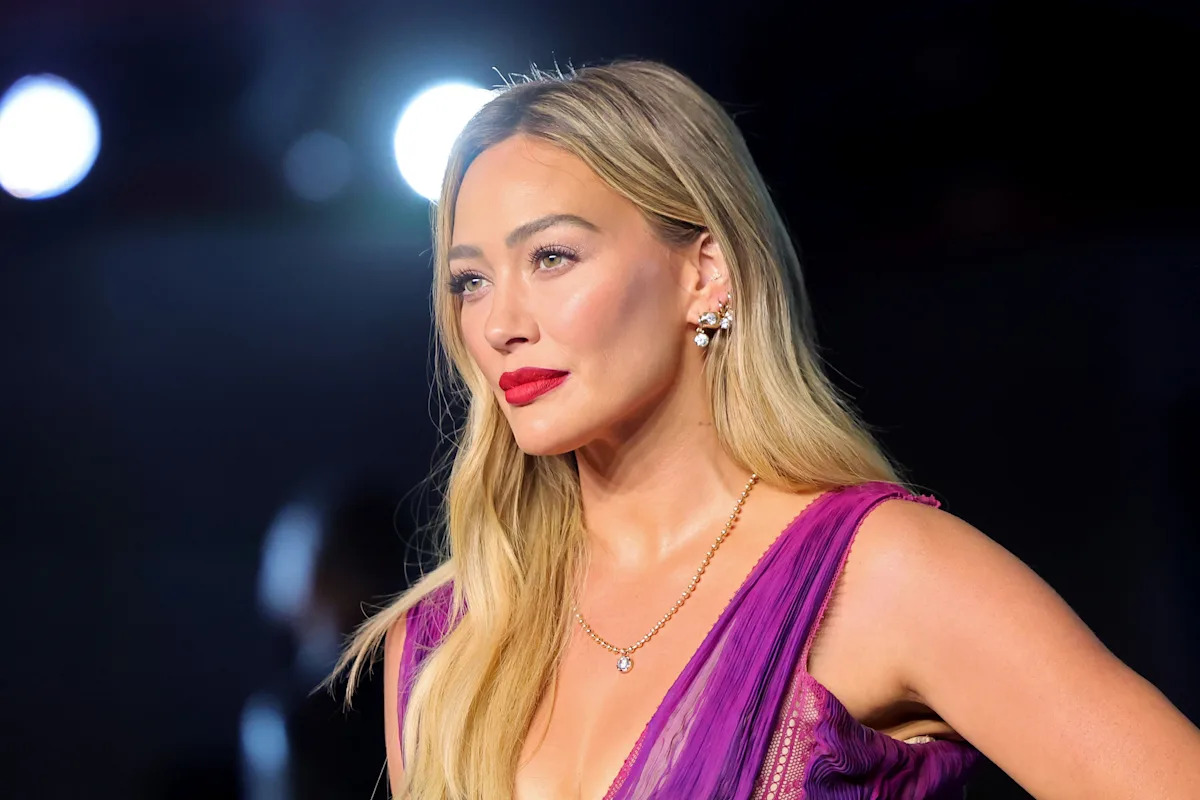
Hilary Duff — former child star and “How I Met Your Father” alum — is the latest in a string of celebrities who have turned to art and social media to air their complicated family dynamics. In February, Duff released her first studio album in more than a decade. In multiple songs on “Luck… Or Something,” Duff signals a barely existent relationship with her father (“The Optimist”) and estrangement from her sister (“We Don’t Talk”).
This week, in an episode of the podcast “On Purpose with Jay Shetty,” Duff shared sentiments that would resonate with all adult children estranged from a parent: “It’s devastating. It doesn’t matter what age you are, you want your parents to feel like they care about you.”
I am well acquainted with complicated family dynamics. My mother and I haven’t breathed a word to each other in more than seven years.
And I agree with Duff. A desire for a parent’s unconditional love — to believe, at your core, that they are and always will be your safe place — does not have an age limit. Therapy taught me that this desire is hard-wired, as much a part of a person as their DNA.
I am 45 years old and, even today, after multiple birthdays, holidays and other milestones that passed without acknowledgement from my mother, I still wonder how a parent can abandon their child, whether age 4 or 40. That question is unanswerable, as far as I can tell. Judging by her latest music, Duff doesn’t seem to have solved the puzzle either.
A desire for a parent’s unconditional love — to believe, in your core, that they are and always will be your safe place — does not have an age limit.
I was well into adulthood before I began to understand that my family dynamic was not normal. I will never forget the first time I met the people who would become my in-laws. Matt and I had been together for only a little while then, and I was struck by how kind his family was toward me — but also toward one another. I was not used to parents and extended relatives who were anything other than antagonistic, bordering on contemptuous and brutal. My intergenerational family legacy is one in which the adult members turn on one another before eating their young. The consequences of this brand of love can be devastating.
Matt’s parents were, in a word, mind-boggling. Where were the relentless fights, I wondered? The criticisms, intimidation, public humiliation, manipulation? The unbridled contempt? The silent treatment?
Six years after we met, Matt and I got married. And as I tried to fit into his family’s loving dynamic, I was — at least initially — profoundly uncomfortable. I privately wondered why everyone wasn’t at each other’s throats or on the brink of some sort of emotional warfare.
Once I was exposed to what families are supposed to be for one another, I couldn’t unsee it. I’ve since written about the drama surrounding my grandfather’s death, my estrangement with my mother and my desire to remain childfree, a decision that stemmed from a narcissistic family abuse cycle.
With each article I published, people would reach out — some I knew personally but also some strangers — and tell me that it was my job to rectify and manage all that had gone wrong with my mother. In the court of public opinion, she was my victim and I was her villain — simply because she is my mother.
Once I was exposed to what families are supposed to be for each other, I could not unsee it.
I briefly considered a moratorium on writing about family. Society is deeply uncomfortable with the idea that, sometimes, an unhealthy mother’s love is withering. Why did I bother speaking my truth if no one was prepared to believe me?
Such experiences alone are reasons Duff should be praised for her new music. It debuted in the top 10 on four Billboard album charts and at No. 2 on Top Album Sales. Every time a celebrity makes waves for speaking their truth about toxic family dynamics — think model and actress Brooke Shields; child star turned author Jennette McCurdy; actress Jennifer Aniston; Victoria and David Beckham’s eldest child, Brooklyn — something shifts in society that makes it a little bit easier for us regular people to feel validated and seen.
I have been lucky enough to leverage my experiences with complicated family dynamics into a career. I am now a writer for children, and the parents I create in my stories teeter-totter between somewhat loving and emotionally damaging. It’s like my therapist said: Families like mine (and Duff’s and so many others) are far more the norm than the blissfully loving families that populate social media feeds — the kind of imagery I grew up seeing in children’s books or on prime-time TV. And while I did not sign up for the Toxic Family Olympics, I view it as my responsibility to speak to people — especially kids — who have a hard time seeing their own experiences reflected in the art they consume.
It is both a pleasure and a relief to see that art reaching the mainstream. We need more of it. Duff’s normalization of family estrangement ventures into this territory in ways that few other mainstream singers have. I commend her use of her platform to tell her own stories. And for this adult child, it’s about time that music entered the conversation.
The post Hilary Duff’s new album normalizes family estrangement. Some of us need that. appeared first on MS NOW.
This article was originally published on ms.now
‘ The preceding article may include information circulated by third parties ’
‘ Some details of this article were extracted from the following source www.yahoo.com ’