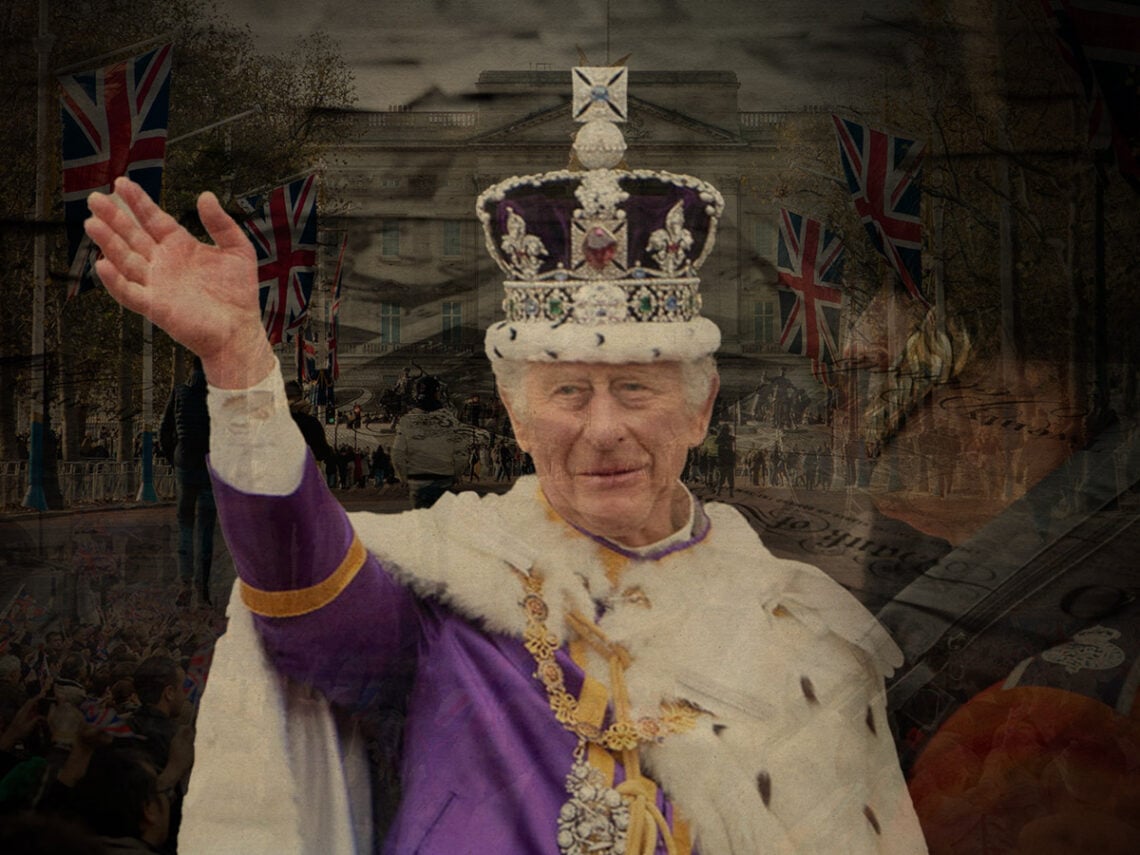
(Credits: Far Out / HM Government / Public Domain)
It’s not been a great period for the monarchy in the United Kingdom, with Jeffrey Epstein and his links to Andrew Mountbatten-Windsor, formally known as Prince Andrew, dominating the news cycle.
This has sparked a whole new debate around the place for the Royal Family in modern Britain, with some suggesting it’s time for a republic and others hoping that they can get past this unfortunate period. Whether it’s the cash in your pocket, the anthem being played before England games or our stamps, there are near-daily reminders of the Royals in our lives.
One of the most common arguments in defence of the Royals is their benefit to the country in terms of tourism, but just how true is that, really?
Before we get started, it’s important I nail my colours to the mast, given the subject, but those colours are fairly muddied. I certainly don’t love the Royal Family, and I don’t think any of them are more important than the average Briton, but at the same time, there are plenty of bigger problems in society, leaving me really unfussed.
So, how much cash do the Royals really generate for the country? We know that every year, visitors to the UK flock to the royal palaces among other heritage sites, so it’s hard to really put numbers to some of these things, but Brand Finance estimates that the ‘monarchy brand’ brings in around £2.5billion to the economy every year, thanks to tourism, merchandise and cultural influence.
Between 2019 and 2020, over 3.28m people visited royal residences, per the Royal Collection Trust, which generated £49.9m in admission fees, and if you add in the estimated £20m of sales from the gift shops during that year, then you’d have more than enough money to buy Epstein Island.
Visit Britain research claims that tourism related to the Royals generates over £500m per year in visitor spending, while approximately 60% of visitors to the country, coming from overseas, say that they’d seek out royal locations during their stay. Add in events such as King Charles III’s coronation, which generated £323m in additional tourist spending, and you can see that they do bring in money, but the issue is just how much of this truly comes from the Royals.
If the country did become a republic, then would it stop tourists from visiting their former homes, such as Buckingham Palace or Windsor Castle? That seems very unlikely, and our European neighbours, such as France and Russia, still profit from their former Royal families. The Palace of Versailles is one of France’s most important attractions, and as a country, they have more tourists than the UK anyway, despite being a republic.
Both sides of the argument seem to cherry-pick the data that best serve their argument, but let’s look at this rationally. Most of the world’s most incredible tourist destinations still exist, and bring in huge visitor numbers, despite being no longer being relevant, which is the case from France’s palaces and the pyramids of Giza, all the way through to Machu Picchu. Incredible, historical sites will always continue to be that, and even within the UK, areas such as the Jurassic Coast get big visitor numbers, and it’s not because tourists are expecting to walk into a T. Rex on their coastal ramble.
Tourism, as a whole, only accounts for three per cent of the UK’s total economic output, lower than the average of 4.5% in the European Union, so even if the Royal Family do bring in a lot of tourist value, does that really matter to the country in the wider sense? There’s definitely a symbolic marketing value to the Royals, although that does, at least anecdotally, seem to have declined with the passing of Queen Elizabeth II. As for the wider question of whether the Royals really matter to British tourism, the answer is probably yes, but with the caveat being that the monarchy doesn’t need to exist for a large chunk of that value to remain.
If you’re really looking to argue the case, pro or against, the Royal Family, then it’s best to treat this tourism angle as a minor point, a footnote, that shouldn’t really impact the argument hugely either way.

‘ The preceding article may include information circulated by third parties ’
‘ Some details of this article were extracted from the following source faroutmagazine.co.uk ’