Summary:
– Rainier Development Company and University of Oklahoma Foundation finalized a master plan for the arena district.
– Oklahoma Supreme Court invalidated a referendum petition, allowing the project to proceed.
– Local group ORED alleges Open Meetings Act violations and threatens further legal action.
City, county face pressure from local organizers
NORMAN — While developers formalize the construction schedule for Norman’s billion-dollar arena district, a local organization seeks a referendum vote on funding while alleging open meetings act violations by the city and county.
Rainier Development Company and the University of Oklahoma Foundation announced Tuesday they have executed the Master Development Agreement for the 269-acre site and are planning to begin construction phasing.
Danny Lovell, chief executive officer of The Rainier Companies, said this agreement is between Rainier and the landowner, so neither the City Council of Norman nor the Cleveland County Commissioners need to approve it.
The project features a planned 8,000-seat arena designed for concerts and University of Oklahoma football, a billion-dollar project funded in a public-private partnership with over $600 million in taxpayer funds.
The development is projected to create more than 3,000 construction and permanent jobs, according to Rainier. The project includes retail, dining and housing.
Legal shadows
Public sentiment in Norman over the arena district has remained fractured since the City Council first approved two tax increment financing districts in a 5-4 vote in September 2024. Soon after, reports surfaced showing a contractor for the Norman Economic Development Coalition paid OU students $12–$15 per hour to fill council chambers and take up seats during that 5-4 vote.
Two days after the original vote, residents representing Oklahomans for Responsible Economic Development (ORED) filed a referendum petition to put the TIF to a public vote. Organizers then collected 10,689 signatures in 30 days: nearly twice as many as the required amount.
In February 2025, Cleveland County District Judge Jeff Virgin ruled the referendum petition invalid, stating that the summary provided to petition signers was legally insufficient. Petition organizers then submitted an appeal to the Supreme Court. In March 2025, Cleveland County Commissioners moved forward by approving the economic development agreement and a bond anticipation note for up to $50 million.
A year later in February 2026, the Oklahoma Supreme Court affirmed the lower court’s ruling in an 8-1 vote, ruling the petition invalid and allowing the project to proceed without a public vote. In March 2026, ORED sent a demand letter to the City, claiming violations of the Open Meetings Act and threatening further litigation unless the council repeals the TIF or calls for an election.
The letter alleged the city’s violations occurred in the September 2024 special meeting where the original 5-4 vote took place.
The letter also alleged violations by the county and county authority in connection with special meetings on March 2, 2026.
“In those meetings, the County Authority authorized issuing bond and short-term debt in an illegitimate effort to race forward with the Arena TIF Project before the City of Norman could, as is its legal right, repeal the Arena TIF Ordinance and put the Project to a vote of the people,” ORED’s letter stated.
ORED stated that organizers would pursue litigation based on the alleged Open Meetings violations if council did not seek additional clarity on the petition.
At Tuesday night’s Norman City Council Meeting, an agenda item was added addressing the possibility of the city seeking a declaratory judgment to put the petition to a vote, but the motion to address the item did not receive a second. It failed before it could reach a vote.
City Attorney Rick Knighton had recommended seeking the judgment to see if the council even had the legal authority to order a referendum in the first place.
At Tuesday’s meeting, Councilmember David Gandesbery motioned to pursue discussion of the agenda item, but since the motion failed, there was no official discussion.

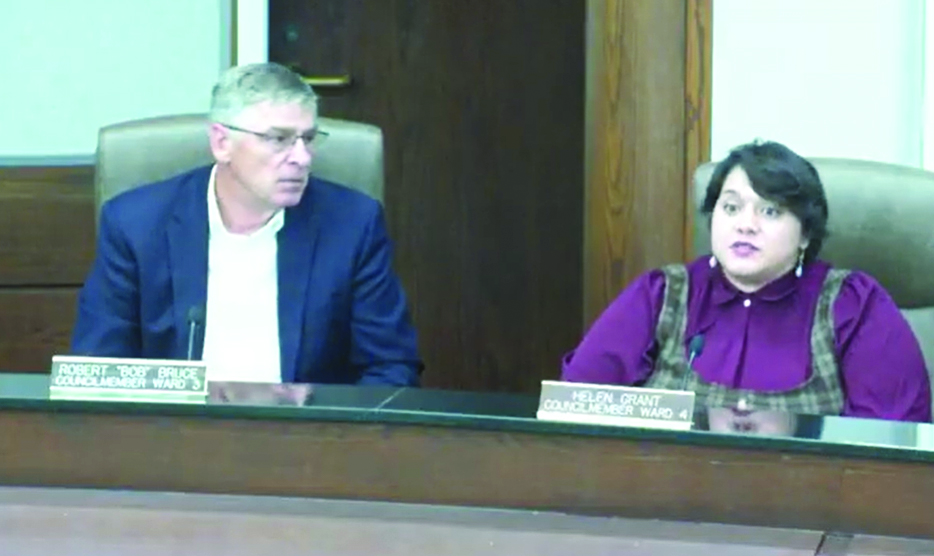
Councilmember Helen Grant said that seconding the motion could expose councilmembers to personal liability and lawsuits from developers since the City Council already has an economic development agreement with the developers. Norman city councilmembers are paid $100 per month for their positions.
According to February statements by the Norman City Attorney, the city faces a minimum liability of $230 million if the council attempts to repeal the TIF ordinance approved in 2024.
Chelsea Hinkle, licensed professional counselor and wife of Councilmember Josh Hinkle, said the legal window for opposition has closed and that the arena will be a positive economic move for the city.
Andrew Rosenow, weather research scientist at OU and Norman resident, stated that since the city is not a beneficiary of the County’s trust associated with the arena district, this could be a risky financial move.
The trust he is talking about is the same organization tied to the blank RFP approved by county commissioners. The trust had approved the concept of an RFP in early August 2025. Five days after that, the RFP was published.
“You guys are sending hundreds of millions of tax dollars, and you’ll have no recompense if they decide to just sell the arena right away. That is a breach of trust, in my opinion,” he said.
“This is a mess,” Rosenow said.
Infrastructure crews are expected to begin on-site preparation within the next 90 days.
‘ The preceding article may include information circulated by third parties ’
‘ Some details of this article were extracted from the following source journalrecord.com ’