The conversation started in her bedroom. One of Naomi Watts’ kids spotted a tube of lube and did not know what it was.
Watts, 57, did not deflect. “Yes, yes, you know, by the way, lube is sold at Urban Outfitters now,” she told her child. The response: “No way, no way!”
“And I said, ‘Yeah, it’s a real thing,’ ” she recalled. “So, yeah, the stigma is definitely reducing.”
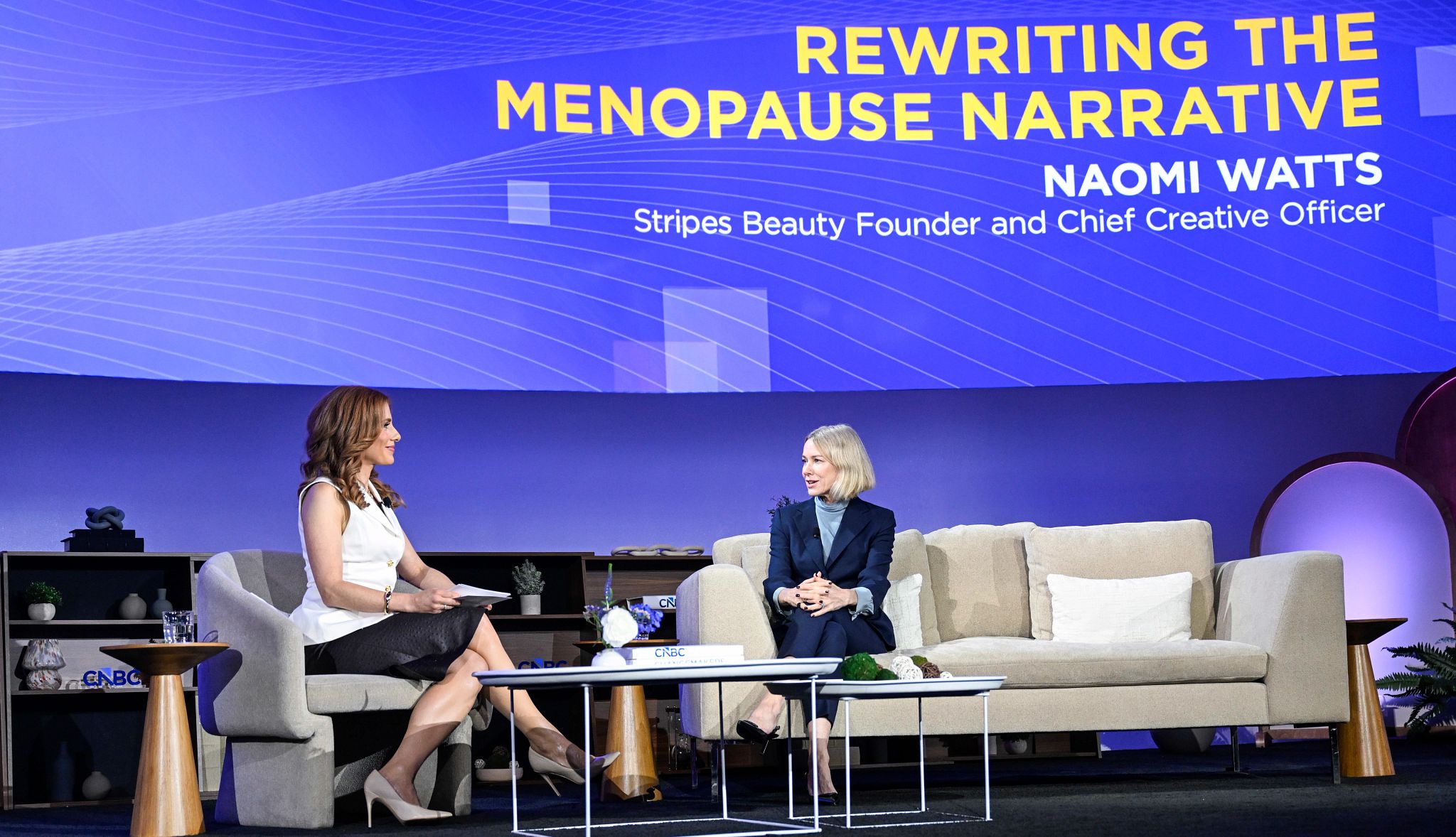
Watts shared the exchange on April 16 at the CNBC Changemakers Summit in New York City. The room got the joke. But the point behind it was not funny at all. She has spent years trying to normalize a conversation about menopause.
Watts had no idea what was happening
Watts knows firsthand the silence of withheld information on menopause. She first experienced perimenopausal symptoms in her mid-30s, shortly after the birth of her second child, as she told People in 2022.
When she called her mother for answers, the conversation revealed how deep the silence ran. “She said, ‘Well, these were the conversations I never had with you because my mother never had them with me,’ ” Watts told People.
Guide to menopause
Learn about the expected — and unusual — menopause symptoms, along with cutting-edge treatments and research-backed tips from top experts in women’s health.
That experience became the foundation for her book, Dare I Say It: Everything I Wish I’d Known About Menopause, published in February. Part memoir, part practical guide, it blends her own story with input from doctors, hormone experts and nutritionists.
Every year, roughly 1.3 million American women enter menopause, according to AARP. Around 90 percent of women 35 and older experience menopausal symptoms, some of which can be debilitating, according to AARP research. Nearly half have turned to supplements to manage those symptoms, products that doctors note are not approved by the Food and Drug Administration and may not work. Yet the conversation still carries stigma.
At the CNBC event, Watts put the question plainly: “Why is it so taboo when we are half the population? It is just biology.”
She has tried to change that at home with her son, Sasha, 18, and daughter, Kai, 17. At the summit, she described asking them early on whether they knew what menopause was. One thought it meant wetting the bed, having found the sheets damp from her night sweats. Another guessed it was “when old ladies die.”
“Why doesn’t the education start as early as sex ed in sixth grade?” Watts asked. “It’s just part of the story.”

Naomi Watts talks about menopause at a CNBC event in New York on April 16, 2026.
Scott Gries/CNBC
Watts’ advocacy has paid off
At the CNBC event, she said the public reception to her advocacy has shifted. People whom she doesn’t even know thank her.
“They’re coming up to me with tears in their eyes sometimes, or just wanting to say thank you for giving me the permission, or the dialogue, so I could speak with my husband or partner or family members and not have shame about it,” she said. “That gives me great joy.”
She added, “After 50, I have felt so much better about knowing who I am, so much more comfortable in my skin. Stay connected to women. Women are everything. I am nothing without the community of women I have around me.”
‘ The preceding article may include information circulated by third parties ’
‘ Some details of this article were extracted from the following source www.aarp.org ’