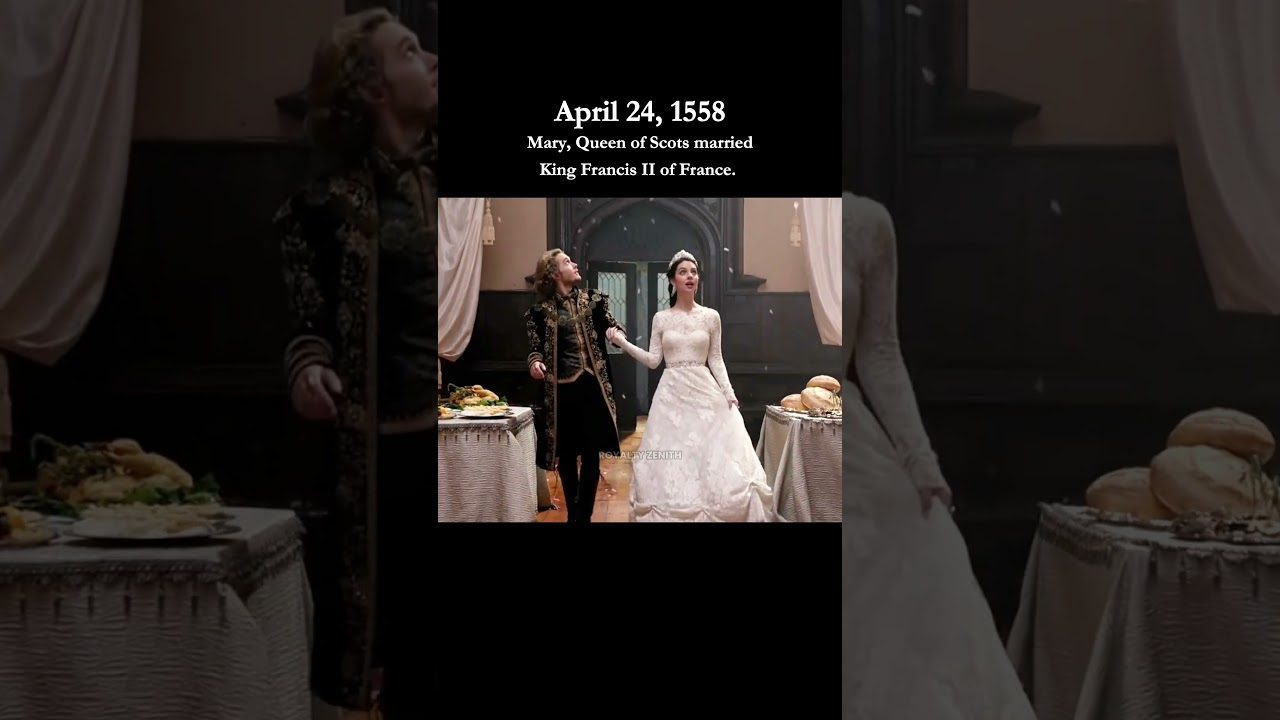
On April 24, 1558, at the age of fifteen, Mary, Queen of Scots married fourteen-year-old Francis, Dauphin of France, at Notre-Dame de Paris, a spectacular union meant to cement the “Auld Alliance” between Scotland and France. Having been raised in the French court alongside her betrothed, the young couple shared a close bond. Their marriage quickly escalated in importance when, in July 1559, Francis’s father, King Henry II, died in a jousting accident, raising the young, frail Francis to the French throne as Francis II, with Mary becoming Queen Consort of France.
However, the union was short-lived, marred by Francis’s consistently delicate health. After a reign of only seventeen months, in late November 1560, Francis fainted after experiencing severe dizziness and ear pain. He developed a severe abscess behind his left ear—likely caused by an ear infection that turned into a terminal condition, such as mastoiditis or meningitis—leading to violent seizures, severe fevers, and delirium. Despite the care of his mother, Catherine de’ Medici, and a desperate, failing medical intervention by court surgeons, Francis died on December 5, 1560, in Orléans, at the age of sixteen.
Mary was left a widow at eighteen, devastated by the loss and now politically adrift, as the Guise family—her maternal relatives—lost their monopoly on power in France. The death of her husband meant a loss of French backing for her claim to the Scottish and English thrones, and she soon departed France to return to a Scotland that had grown Protestant during her absence.
Video Source