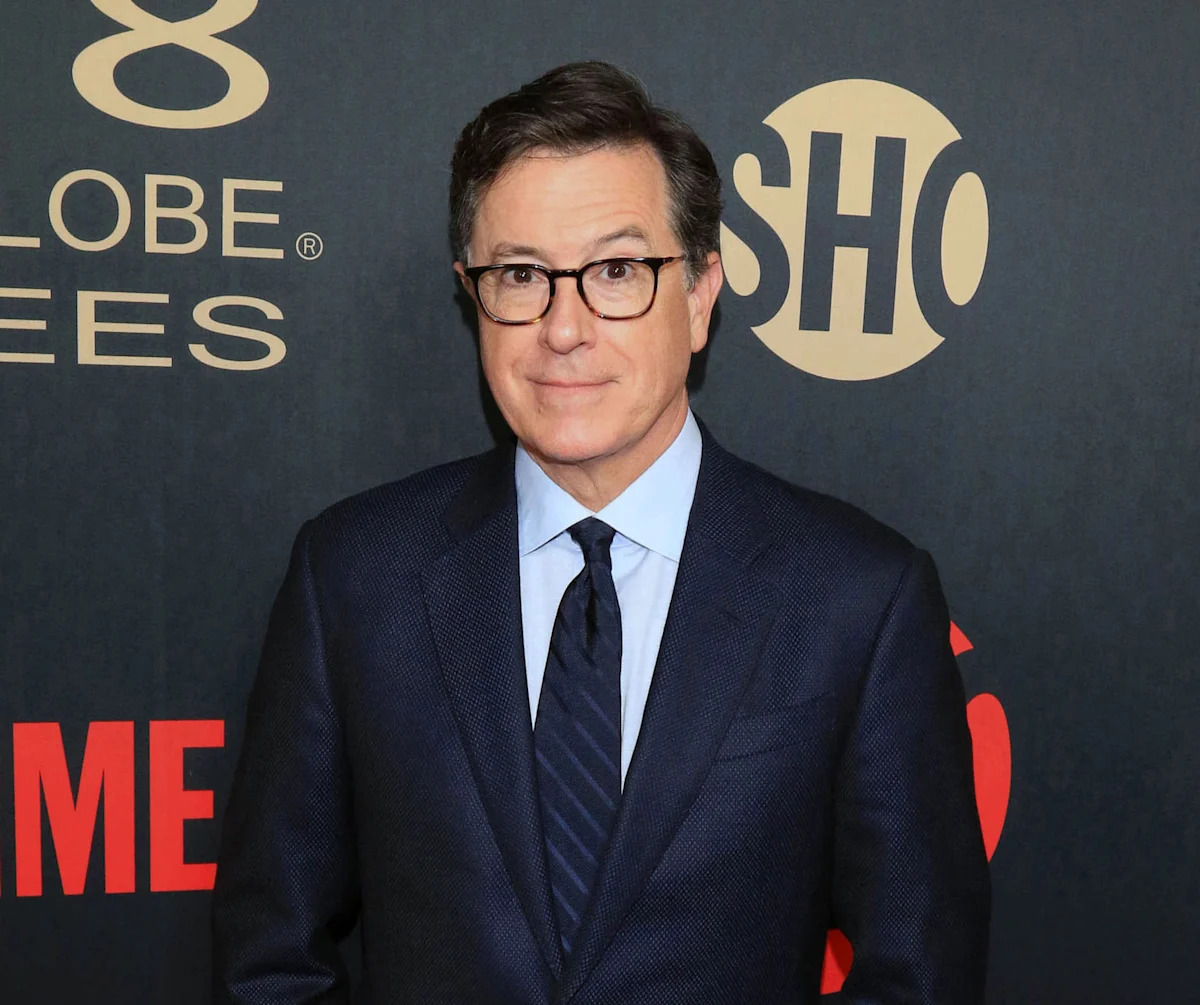
As Stephen Colbert prepares for the end of CBS’s “The Late Show” – the finale airs Thursday night – one theme has been on the minds of other late-night hosts.
“I’m Seth Meyers,” NBC’s “Late Night” host told the crowd gathered at an NBC industry preview event in New York last week. “Or as the FCC calls me: ‘Next.’”
“Yes, the president tried to get me canceled over the last six months. That’s one way to look at it,” ABC’s Jimmy Kimmel said at a network event last week. “Another way is you could also say I’ve ‘generated unparalleled engagement across a variety of platforms.’”
President Donald Trump has long been critical of the late-night comedy shows that roast him daily. But his second term has been marked by his hostility toward late-night comics and his administration taking action against the networks that carry these shows. In some cases, networks made programming decisions that carried suspicions of political interference.
So, how have the late-night hosts reacted? Not by relenting in their skewering of Trump, his administration or his policies. In fact, they’ve turned up the heat, according to a Washington Post analysis of six late-night comedy shows critical of the president.
Since Election Day, Trump has remained the most frequently mentioned individual, and hosts have continued satirizing and critiquing Trump over his policies, scandals and legal troubles.
And as his second term progressed, Trump has been mentioned more frequently by these late-night hosts, not less. The proportion of late-night material with Trump as the target of the joke has steadily climbed, even amid the administration’s threats and criticism from top officials.
“Nobody in their right mind cares what out-of-touch woke celebrities in Hollywood say or think,” White House spokesman Davis Ingle told The Post in response to the findings.
And yet this term, Trump has rooted for late-night hosts to get fired and voiced a desire to take credit when they’ve gone off the air. He did just that when CBS canceled “The Late Show” last year, a decision the network said was “purely financial” but coincided with parent company Paramount seeking federal sign-off on an $8 billion merger with Skydance.
“I absolutely love that Colbert got fired,” Trump wrote on social media last year. Trump has also repeatedly predicted Kimmel would be next, rooted for “Tonight Show” host Jimmy Fallon to lose his job and said that Meyers’s “100% anti Trump” stance was “probably illegal.”
And Trump also wrote on social media that if network news and late-night shows “are almost 100% Negative to President Donald J. Trump, MAGA, and the Republican Party, shouldn’t their very valuable Broadcast Licenses be terminated? I say, YES!”
When John Oliver’s “Last Week Tonight” won a writing Emmy last year, writer Daniel O’Brien said he was sharing the award with all of “late-night political comedy, while that is still a type of show that’s allowed to exist.” The camera happened to pan to Kimmel, who would soon abruptly be pulled off the air after remarks he made after the killing of conservative influencer Charlie Kirk.
Brendan Carr – the Trump-selected chair of the Federal Communications Commission – suggested that ABC parent company Disney’s broadcast licenses could be jeopardized: “We can do this the easy way, or we can do this the hard way,” Carr said on a podcast. Later, the FCC said that talk shows were no longer exempt from the “equal time” rule for political candidates.
The Post analyzed the transcripts of more than 400 hours of video clips posted to the YouTube channels of six late-night comedy shows generally critical of Trump since the 2024 election: “The Late Show With Stephen Colbert,” “Jimmy Kimmel Live,” “The Tonight Show Starring Jimmy Fallon,” “Late Night With Seth Meyers,” “The Daily Show” and “Real Time With Bill Maher.” None of these shows responded to The Post’s requests for comment.
The first four of those shows are on broadcast networks – NBC, CBS and ABC – that more directly fall under the FCC’s purview to ensure the public airwaves are being used in the “public interest.” (The commission doesn’t issue network licenses but approves them for affiliates that carry the networks.)
The last two are on cable channels, owned by companies – Paramount and Warner Bros. Discovery, respectively – that have had, or will have, pending business before federal regulators. Trump saves most of his vitriol for the network hosts, though he has a hot-and-cold relationship with Maher and has previously deemed Jon Stewart “not very bright and totally overrated.”
Meanwhile, Trump has praised Fox’s more conservative option for late-night comedy, “Gutfeld!,” which airs at the earlier, 10 p.m. hour, and has more total viewers than the later comedy shows. The Fox program had a far lower share of jokes about Trump, The Post analysis shows.
All of these shows rely on topical humor, so it’s logical that the president of the United States would be the most frequently mentioned individual in the shows that The Post analyzed. And the dominance of Trump jokes dates back to his first term; late-night hosts who leaned political saw a bump in their ratings, as they veered toward mocking Trump and delivering serious monologues about his impact on the world. Back then, some of the comedians also hoped to provoke the president into paying attention to them: Colbert gleefully celebrated when, six months after the election, Trump finally responded to his nightly eviscerations by calling Colbert “a no-talent guy.”
But the pressure on hosts has been markedly different this term. At the start of Trump’s second term, the FCC reinstated complaints against three major networks and initiated several actions investigating media companies, including CBS, ABC and NBC, over the content they aired.
The FCC has also started enforcing the equal time rule on entertainment talk shows, maintaining they don’t have a blanket exemption because they operate similarly to news programs, a change in a decades-old practice. The agency said that ABC’s “The View” had violated the rule, and in February, Colbert told his audience that he was prevented from airing an interview with a Texas Democrat running in the state’s Senate primary over FCC concerns. (Carr at the time said “there was no censorship here at all” and CBS simply had to give interviews to his political rivals.)
Meanwhile, Trump has targeted media companies through several lawsuits filed before he was even sworn in for his second term. ABC settled one lawsuit for $15 million. CBS owner Paramount, in the midst of a merger, settled another Trump lawsuit for $16 million in July.
“I believe this kind of complicated financial settlement with a sitting government official has a technical name in legal circles: It’s big fat bribe,” Colbert joked on air. A few days later, CBS announced Colbert and the entire “Late Show” franchise would be canceled, surprising Colbert and the show’s staff. The network said it was “not related in any way to the show’s performance, content or other matters happening at Paramount.”
The cancellation didn’t affect Colbert’s joke output: The Post analysis found that, even after CBS canceled “The Late Show,” Colbert continued to criticize the president and his administration.
“Now, admittedly, the idea of paying a billion dollars to obey Donald Trump seems a little steep,” Colbert joked on Jan. 22 about the cost for nations to secure a permanent seat on Trump’s Board of Peace. “After all, CBS got to do it for just 16 million.”
Meanwhile, Kimmel was taken off the air for about a week by ABC after his Kirk comments, sparking concerns about free speech and bowing to government pressure. Sen. Ted Cruz (R-Texas) labeled Carr’s comments about the host “dangerous as hell.” Customers called for boycotts of Disney, and hundreds of celebrities signed a letter saying Kimmel was taken off the air “after our government threatened a private company with retaliation,” calling it “a dark moment for freedom of speech.”
Kimmel again attracted the ire of the president last month for a parody of the White House Correspondents’ Dinner that aired a few days before the event; in it, he said that Melania Trump had “a glow like an expectant widow.” After a gunman tried to storm the dinner (Cole Tomas Allen was arrested and charged with attempted assassination), the first lady released a statement criticizing what she called Kimmel’s “hateful and violent rhetoric.” The president once again called on Disney and ABC to fire the host. (Kimmel later said he was making a joke about the couple’s age gap and noted his history of advocacy against gun violence.)
The Post analysis found that late-night hosts joked about a variety of themes, but some specific news items dominated their material. In particular, these shows focused on the controversy surrounding the Jeffrey Epstein files, the Iran war, Trump’s tariffs and the president’s many construction projects.
“If you were wondering how bad these Epstein files are, for Trump, turns out they’re ‘invade Venezuela’ bad,” Kimmel said on Jan. 5.
(Trump had a long-standing friendship with Epstein, and they had a falling out in the mid-2000s. Epstein would later be charged with sex crimes. Authorities have not accused Trump of participating in Epstein’s criminal conduct.)
On March 26, Meyers took a dig at Trump’s White House remodeling efforts: “During today’s Cabinet meeting, President Trump complained that you can’t find gold paint that looks like real gold. Oh yeah, buddy, we noticed.”
And on April 10 of last year, Fallon’s monologue included a bit about Trump pausing his tariffs.
“I read that actually he did it because he was afraid that it would lead to a depression. Yeah, but Trump said that ‘if we do have a depression, it’ll be greater than the Great Depression, it’ll be the Greatest Depression.’ The Great Depression is also what Trump calls his spot on the couch.”
Methodology
The Post downloaded the transcripts of show clips posted to YouTube by six late-night shows: “The Late Show With Stephen Colbert,” “Jimmy Kimmel Live,” “The Tonight Show Starring Jimmy Fallon,” “Late Night With Seth Meyers,” “The Daily Show” and “Real Time With Bill Maher.” We also separately downloaded videos from Fox’s “Gutfeld!” For most shows, we used playlists that focused on monologues and news-related segments; for Kimmel, whose channel didn’t have curated playlists of that kind, we used all the videos uploaded to the show’s YouTube channel. We limited our analysis to clips posted after Trump was reelected on Nov. 5, 2024.
The Post ran the transcripts through a machine-learning-based name-recognition process that scanned every clip to identify the people mentioned. Next, we broke the transcripts into short passages and used an artificial intelligence model to identify the jokes, what the jokes were about and who was the target of the jokes. Finally, we used another machine-learning technique called topic modeling to automatically discover the specific topics that came up across multiple jokes. The result is a database of individual jokes linked to the people they mention, the topics they cover and the dates they were posted, which allowed us to track how late-night shows responded to the Trump administration over time.
Related Content
‘ The preceding article may include information circulated by third parties ’
‘ Some details of this article were extracted from the following source www.yahoo.com ’