The Plot Thickens
Every month brings another stack of mysteries promising shocking twists, but the books most worth your time offer something more. These three novels take the familiar genre and find entirely new ways through it.
There are plenty of books about serial killers. Far fewer ask what happens after they decide to work on themselves.
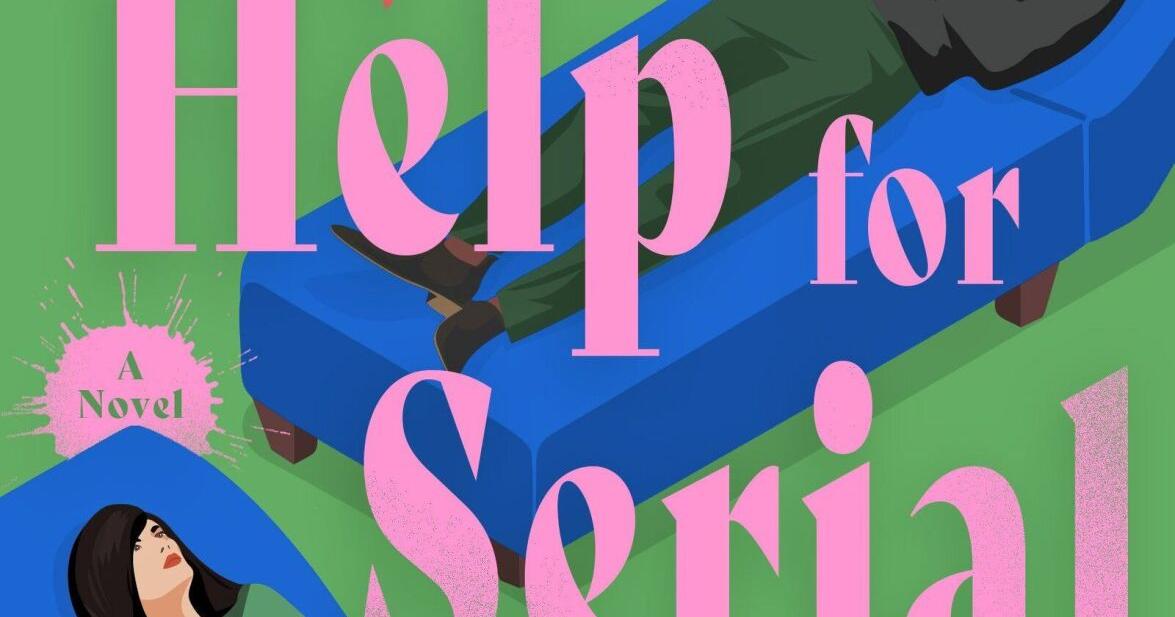
Asia Mackay’s “Self-Help for Serial Killers” (Bantam, $31), a continuation of “A Serial Killer’s Guide to Marriage,” gleefully answers that inquiry by treating murder like just another relationship issue requiring communication, boundaries and, apparently, a decent therapist.
Hazel and Fox are still juggling parenthood, suburbia and disposing of terrible men, only now they’re also wrestling with insecurity, marital strain and the sort of work-life balance most couples don’t have to explain to the police.
The mystery occasionally stretches the bounds of credibility, but the passionate dynamic between Hazel and Fox never does. Their marriage remains the novel’s greatest achievement — messy, funny and unexpectedly convincing. For all its bloodshed, “Self-Help for Serial Killers” is really about the work of staying interesting to yourself and the person who knows you best. Perhaps a far more difficult trick than getting away with murder.
If “Imperfect Women” on Apple TV earned Araminta Hall a spot on your must-read list, “Unreliable Narrator” (G.P. Putnam’s Sons, $30) is a worthy addition to the author’s repertoire. Hall’s latest is an elegantly constructed mind game that satisfies in exposing the gap between what happened and what people choose to believe.
Hope Jenkins lands what seems like a dream job assisting celebrated novelist Ambrose “Rosie” Glencourt at his sprawling, eccentric estate — then the dream curdles. Ten years after a summer that shattered her life, Hope discovers Rosie has turned her trauma into his bestselling novel. Unfortunately for him, his version isn’t the only one.
There’s something deliciously fitting about a novel called “Unreliable Narrator” refusing to let you trust a single page of it. Every time the pieces seem to click into place, Hall swaps out the puzzle. It’s an irresistibly clever match of perception, memory and manipulation where the most dangerous weapon isn’t a gun or a secret — it’s a really good story.
True crime makes celebrities of serial killers. “The Death Row Club” (Gallery/Scout Press, $29) asks readers to consider a group almost never discussed: the children of the killers.
V.A. Vazquez builds her debut around an inspired premise. Nicola Fischer’s life implodes after her father is revealed to be a serial killer, leaving her unemployable, isolated and viewed with suspicion by everyone she meets. An invitation to a private retreat for other children of notorious murderers offers the first glimpse of people who understand exactly what she’s carrying. Then someone dies, turning the gathering into a mystery where everyone has inherited a reason to be feared.
Serial killers have become one of crime fiction’s most familiar fixtures. Vazquez sidesteps the killers themselves to explore the lives permanently altered by their crimes, giving “The Death Row Club” a welcome sense of originality.
‘ The preceding article may include information circulated by third parties ’
‘ Some details of this article were extracted from the following source www.yakimaherald.com ’