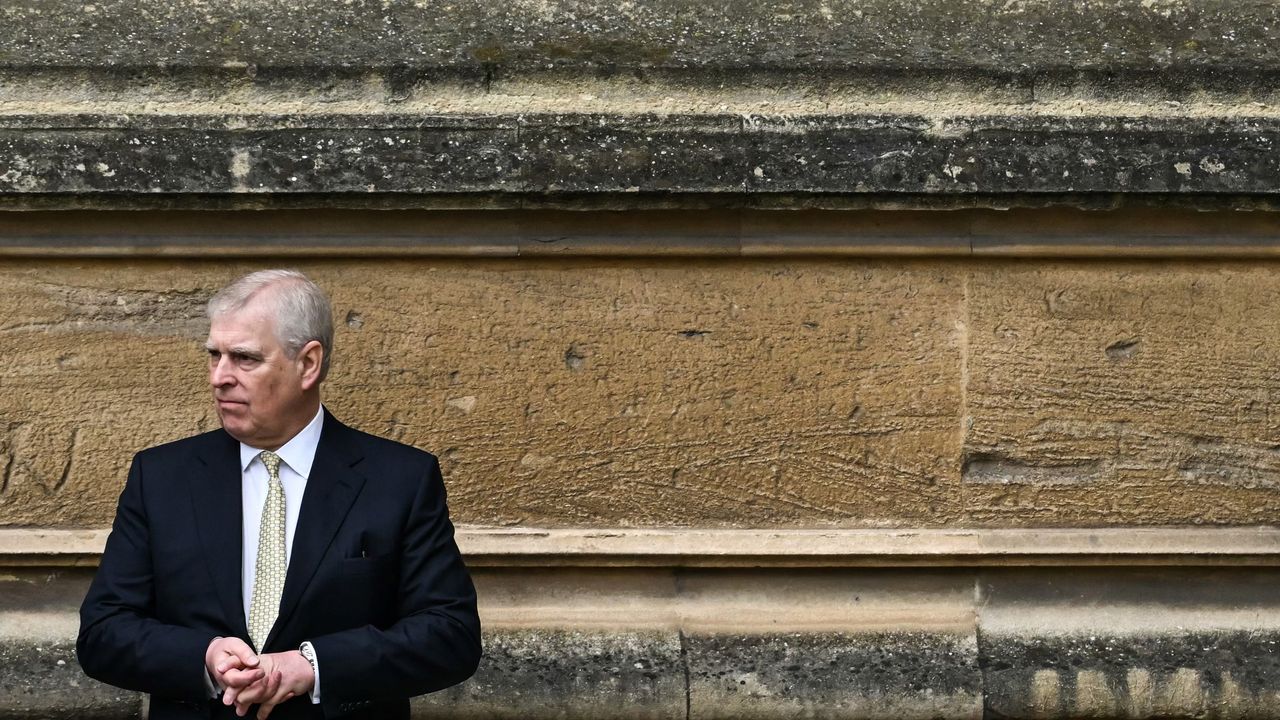
Last year King Charles III stripped Andrew Mountbatten-Windsor of his official titles, meaning that he could no longer consider himself a prince. The move was the most severe consequence the king could impose without the involvement of parliament—but it didn’t end public outcry about Mountbatten-Windsor’s presence in the Epstein files, particularly after he made another appearance in a cache released this past winter. In February, following his appearance in the Epstein files, Mountbatten-Windsor was arrested in connection with an investigation into suspicion of misconduct in public office. (Mountbatten-Windsor has previously denied any wrongdoing, and he has not been charged with a crime.) Now the inquiry into Mountbatten-Windsor seems to be widening. According to The Times, police are currently looking into allegations outside of the ones related to the former prince’s inclusion in the Epstein files, including an accusation that Mountbatten-Windsor “behaved inappropriately” toward a waitress at the Royal Ascot horse racing event in 2002.
Following his arrest, Mountbatten-Windsor was interviewed under caution by police on suspicion of misconduct in public office and released after 11 hours. In late May, after a few months of silence, the Thames Valley Police announced that its investigation was ongoing. In accordance with the usual conventions of British law enforcement, the official statement didn’t include Mountbatten-Windsor’s name, but it did include details—a man in his 60s, the February arrest, information from the United States Department of Justice, addresses in Berkshire and Norfolk—that made him identifiable.
In its statement, the police department encouraged witnesses to come forward and said that it was also working with the Crown Prosecution Service on the case. “Our team of very experienced detectives are working meticulously through a significant amount of information that has come in from the public and other sources,” said the force’s assistant chief constable, Oliver Wright. “We are committed to conducting a thorough investigation into all reasonable lines of enquiry, wherever they may lead.”
Investigators previously noted that they were looking into allegations that Mountbatten-Windsor shared confidential information gathered during his time as a trade envoy for the UK government, a role he held from 2001 until he stepped down over his ties with Epstein in 2011. The Times also reports that the police are interviewing key witnesses, including royal officials, former cabinet ministers, and senior civil servants, about his role.
Mountbatten-Windsor’s appointment to the position of trade ambassador happened in private—but in May, British lawmakers released a series of documents that showed the late Queen Elizabeth’s role in securing him the job. In a 2000 letter, an executive at British Trade International told then foreign secretary Robin Cook that Queen Elizabeth was “very keen” for her middle son to take on an official role promoting national interests.
On May 21, Minister of State Chris Bryant told parliament that the documents confirmed that Andrew’s role was unpaid, with his expenses and travels having been approved through formal processes. “We have found no evidence that a formal due diligence or vetting process was undertaken,” Bryant added. “The government is cooperating fully with Thames Valley Police on their investigation into Andrew Mountbatten-Windsor and possible misconduct in public office.”
After his February arrest, Mountbatten-Windsor’s departure from the police station to return to Wood Farm, his temporary cottage on the Sandringham estate, was captured by a photographer, and the image went viral. (Vanity Fair has reached out to Mountbatten-Windsor’s representatives for comment.) Ever since, the former prince has been keeping out of the public eye. He has also relocated to Sandringham’s Marsh Farm and reportedly been out of contact with his older brother. Even though the king made a short visit to the estate in late May, The Times reported that he had no plans to visit Mountbatten-Windsor.
‘ The preceding article may include information circulated by third parties ’
‘ Some details of this article were extracted from the following source www.vanityfair.com ’