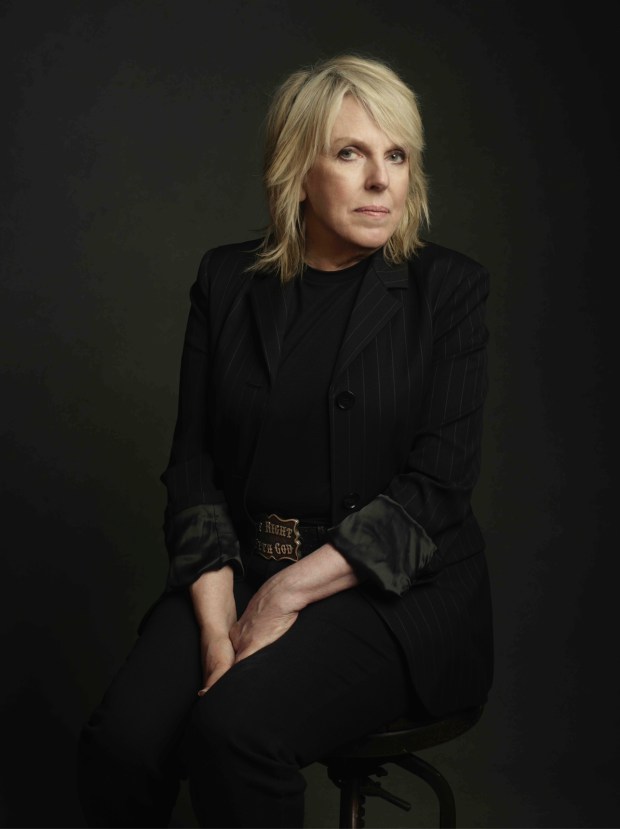
In the year 2026, news feeds reflect how chaotic and complicated current events have become on a daily basis. It was enough of a concern for Lucinda Williams to record “World Gone Wrong,” an album in which she tapped into the spirit of the protest music of her youth to inspire that same feeling of hope and outrage in the face of what she views as flagrant injustice.
“The inspiration [for this album] would be the madness and craziness in the White House,” she said in an incredulous tone during an early May interview. “The chronic and pervasive thing that was and is still happening. You read about it in the newspaper or hear on the news about another crazy, insane idea being put forth. It’s happening every day, and it starts eating at you. I felt the need to write about and express some feelings about it. Those kinds of songs made an impression on me back in the day. For a while now, I’ve been wanting to write something like that, but haven’t been able to for whatever reason. They are harder to do.
“The point I’m trying to get across is that things are as bad as you’re hearing. Just from talking to people, this is the U.S.A., and things like that don’t happen over here. Guess what? Yes, they do,” she elaborated. “It was always about this kind of thing happening in other countries and not over here. We’re the land of the red, white, and blue, peace and freedom, and all of that. That’s how it’s supposed to be, and it has been in the past, but it’s being threatened. I don’t think people are awake enough to realize that. They’re too complacent. And where is the movement today? What happened to that? Did they just all die off when they started getting older or something?”
Williams claims her struggles with this current batch of nine original cuts stemmed from a desire to avoid songwriting clichés, a lifelong promise she made to herself from the time she was bowled over by Bob Dylan’s “Highway 61 Revisited” as a folk-music-loving 12-year-old in Baton Rouge and decided making music was her path going forward.
You can hear it on “Something’s Gotta Give.” Amid the growling riffs provided by guitarists Marc Ford and Doug Pettibone and Brittney Spencer’s plaintive harmonizing, the Louisiana native wearily sings “There’s a darkness/To these days/Things happen out of sight/As the light fades away.” Same with the punk-blues of “How Much Did You Get For Your Soul?” whose jangle and upbeat cadence juxtaposes its composer pointing out, “The Devil is a master salesman/You weren’t hard to convince/He closed the deal as only he can/And made you feel like a crown prince.”
Tapping into creative influences like protest era-Dylan, The Youngbloods, and Peter, Paul, and Mary, Williams was rightfully proud of this recent collection of songs — and even more so when she was able to play them for a supportive crowd in Oregon shortly after U.S. Immigration and Customs Enforcement started cracking down in Portland and was met by vigorous counter-protests in June 2025.
“When I wrote these songs, the feeling I was trying to drum up was what you felt when you had those great songs like ‘We Shall Overcome’ back in the day,” Williams explained. “When I was writing some of these, I was thinking about that a lot. I was thrilled to see the demonstrators in Portland. We played there at the time this was all going on. I walked on the stage and told the audience that I came armed and loaded because I had all these songs. I played every single one of them, and the audience went wild and loved it. For a few minutes there, I had that feeling of unity between myself, the band, and this somewhat younger audience. I said, ‘Look, y’all — music is going to be your best weapon now.’ It was just a great feeling.”
Williams promises more of the same as she hits the road as both a headliner and opening for Dylan on a run of dates, including a stop at the Acrisure Arena in Palm Desert on Saturday, June 20. With 16 studio efforts and counting, her canon, which includes 1998’s Grammy-winning “Car Wheels On a Gravel Road” (which is being inducted into the Grammy Hall of Fame this year), offers plenty for the 73-year-old singer-songwriter to “kick out the jams” with.
“Folks can expect a great rock and roll show,” Williams said with a laugh. “I always mix it up. I don’t only do the songs on the new album. I try to balance it out between all the albums, if possible, and whenever we have enough time in the set. There are certain songs I try to include every time, like ‘Lake Charles,’ ‘Drunken Angel.’ And then at the end of the show, we always end up with a rousing rendition of ‘Joy’ and ‘Rocking in the Free World.’ I love to walk out toward the edge of the stage, pumping my fist, and before you know it, the whole audience is up on their feet. I like to get them kind of riled up like that.”
In the midst of continuing to release powerful and socially relevant material, Williams’ efforts haven’t gone unnoticed, as the most recent compositional accolades she’s received include being named to the New York Times list of “30 Greatest Living American Songwriters,” which was shaped by input from hundreds of critics and music industry experts. Ever the modest sort, Williams was both pleased and squirmed a bit when the topic was brought up.
“While I was completely delighted to get the news when I was chilling with my husband/manager Tom [Overby], I also felt a certain amount of humility,” she said. “I felt like, ‘God, really? I’m on this list, too?’ It really took me a few days to kind of digest that.”
And while juggling a new album, weighing in on Lucinda’s, the East Village bar she opened with Overby and some partners, and fielding these latest accolades makes for a full dance card, Williams is never far from thinking about making good musical trouble during these distressing times. Blame it on the man who once called himself Blind Boy Grunt.
“The songs I was inspired by in that milieu of protest, or topical songs as I like to call them, are what continue to influence me,” Williams said. “Stuff Bob Dylan was writing, like ‘Masters of War’ or even ‘Blowin’ in the Wind’, is unlike anything else anybody else was writing at the time. They are still relevant now and are just great, original, and unique. I fell in love with that sound, and it’s what I try to do — strike that balance between great music and great lyrics.”
‘ The preceding article may include information circulated by third parties ’
‘ Some details of this article were extracted from the following source www.pressenterprise.com ’