Entertainment Weekly’s new ranking of the 25 greatest stop-motion films ever made shines a spotlight on a tradition that has long distinguished Czech cinema. Five Czech productions appear on the list, more than any country outside the United Kingdom and the United States, reflecting the outsized influence Czech animators have had on the development of the handcrafted medium.
The selection spans more than five decades of Czech filmmaking, from Jiří Trnka‘s pioneering puppet animation in the 1950s to the surreal works of Jan Švankmajer and Jiří Barta in the 1980s, 1990s, and 2000s. Throughout the feature, Entertainment Weekly repeatedly points to Czech animation as a unique artistic tradition, praising its blend of craftsmanship, folklore, and darker storytelling.
Czech animation earns international recognition
Entertainment Weekly notes that “puppeteering is a cherished and nurtured tradition in Czech culture,” describing Czech stop-motion as a distinctive school of animation that continues to influence filmmakers around the world.
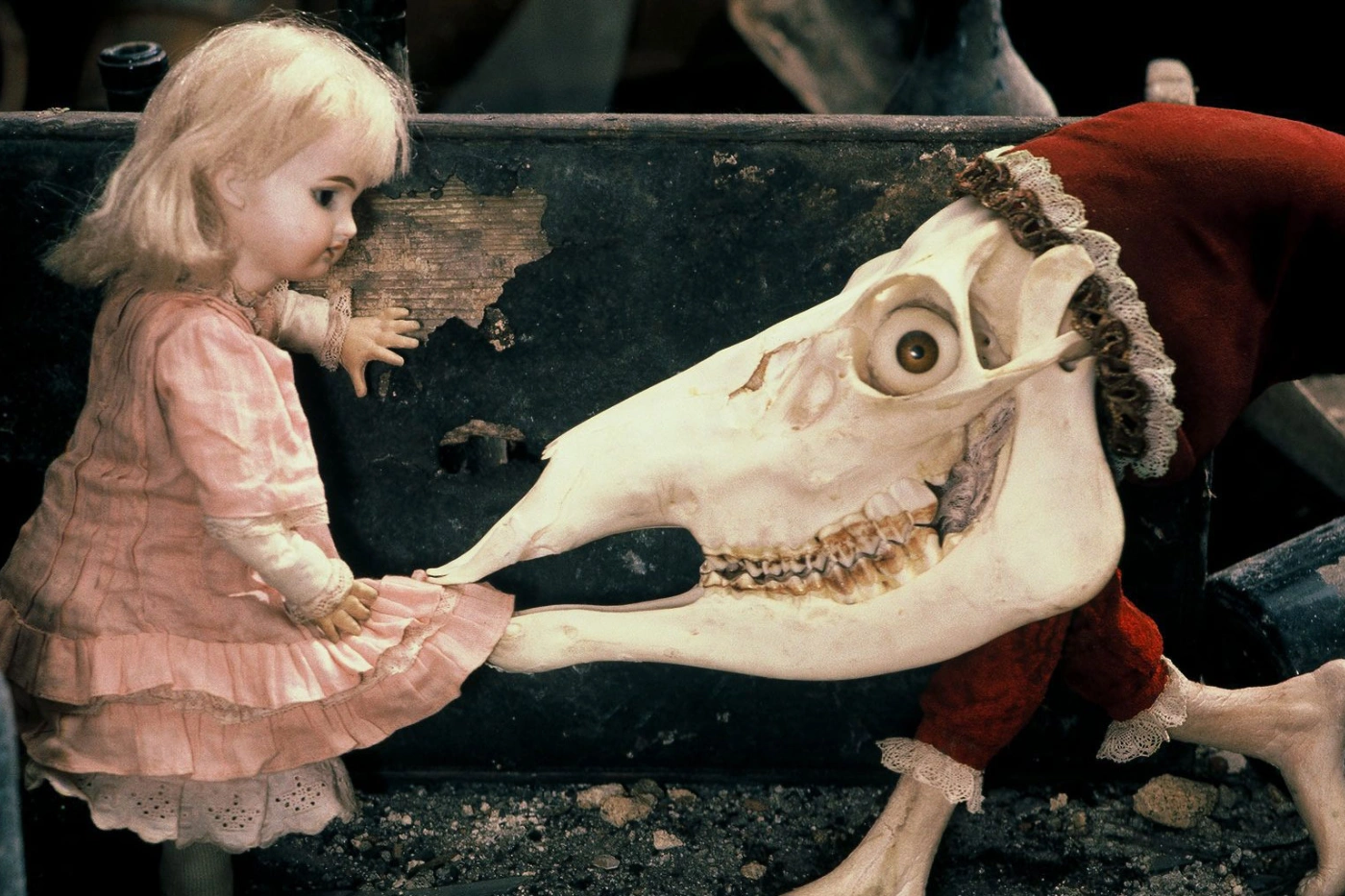
Among the five selections is Alice (1988), Švankmajer’s unsettling interpretation of Lewis Carroll’s classic novel. The magazine calls Švankmajer “one of the most important names in envelope-pushing stop-motion animation,” praising his adaptation as “equal parts whimsical and sinister.” It highlights the film’s inventive use of household objects, taxidermied animals, and decaying textures to transform a familiar children’s story into something far stranger and more psychologically complex.
Švankmajer appears on the list a second time with Faust (1994), which the publication suggests may even surpass Alice as his finest achievement. The publication praises its seamless combination of live action and oversized puppets, describing the film’s dreamlike imagery and surreal narrative as a uniquely imaginative interpretation of the classic legend. Rather than explaining every detail, the film invites viewers to immerse themselves in its symbolic world.
The oldest Czech title included is The Good Soldier Schweik (1954), directed by Trnka, one of the pioneers of puppet animation. Entertainment Weekly describes the title character as “something of a national mascot” in Czechia and notes that Trnka’s adaptation remains the definitive version among the many retellings of Jaroslav Hašek’s famous anti-war satire. The publication praises its combination of carved wooden artwork, miniature puppets, and slapstick humor while emphasizing the story’s underlying message of pacifism.
Dark fairy tales and handcrafted worlds
Like Švankmajer, Barta is represented twice in the ranking, underscoring his importance within Czech animation.
His The Pied Piper (1986) is praised as “yet another Czech masterpiece.” Entertainment Weekly notes that Barta drew inspiration from medieval art and German Expressionism, using intricately carved wooden figures to create an unusually stylized version of the Hamelin legend. The publication also observes that, like many Czech animated films, it balances fairy-tale storytelling with unexpectedly dark themes, remarking that this approach is “probably more in keeping with actual fairy tales than the versions Hollywood usually offers.”
Barta’s later feature Toys in the Attic (2009) also earns a place among the publication’s favorites. While acknowledging similarities to Pixar’s Toy Story in its premise of toys coming to life, the publication argues that Barta’s film belongs “in a whole other category” because of its extraordinary handcrafted detail. The article also points to its mixture of stop-motion puppetry, clay animation, and traditional illustration as evidence that “with great art there are no rules.”
The prominence of Czech films throughout the ranking reinforces the country’s longstanding reputation as one of the world’s leading centers for stop-motion animation. While British studio Aardman, American productions from Laika, and works by directors including Wes Anderson and Henry Selick dominate much of the list, Entertainment Weekly repeatedly returns to Czech cinema as a source of some of the medium’s most imaginative and artistically ambitious works.
The recognition also highlights the enduring international reputation of filmmakers such as Švankmajer, Trnka, and Barta, whose handcrafted productions continue to influence contemporary animation decades after their original release.
Entertainment Weekly’s 25 best stop-motion films ever made:
- The Adventures of Mark Twain (1985)
- Alice (1988)
- Anomalisa (2015)
- Chicken Run (2000)
- Chronopolis (1982)
- Coraline (2009)
- Corpse Bride (2005)
- Fantastic Mr. Fox (2009)
- Faust (1994)
- The Good Soldier Schweik (1954)
- Isle of Dogs (2018)
- Junk Head (2017)
- Kubo and the Two Strings (2016)
- Mad God (2021)
- Marcel the Shell with Shoes On (2021)
- Mary and Max (2009)
- Memoir of a Snail (2024)
- My Life as a Zucchini (2016)
- The Nightmare Before Christmas (1993)
- ParaNorman (2012)
- The Pied Piper (1986)
- A Town Called Panic (2009)
- Toys in the Attic (2009)
- The Wolf House (2018)
- The Wrong Trousers (1993)
‘ The preceding article may include information circulated by third parties ’
‘ Some details of this article were extracted from the following source www.praguereporter.com ’